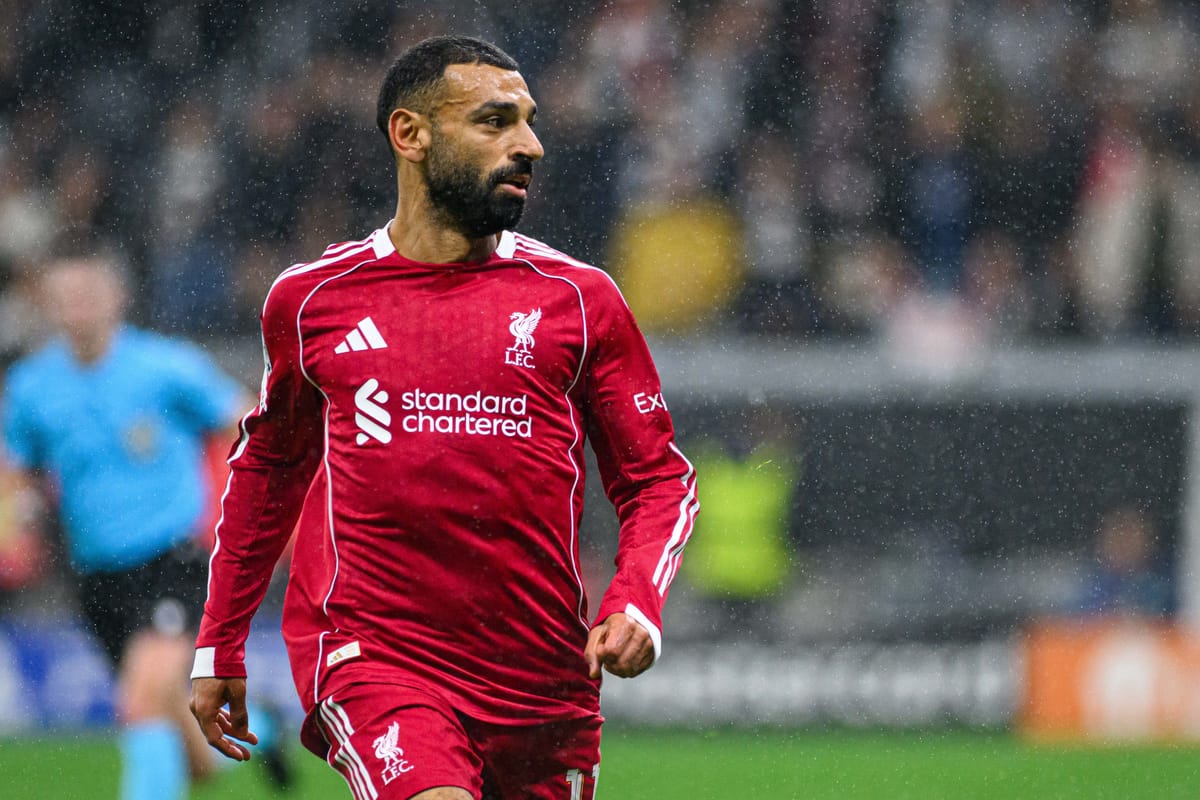
Mohamed Salah is, by virtually any measure, the greatest Egyptian footballer who ever lived. On Sunday in Vancouver, he proved it again, scoring and assisting as Egypt recorded their first World Cup victory in history. The celebrations in Cairo will last for days.
But here in Israel, where we tend to notice things that the rest of the world prefers to overlook, Salah's triumph arrives with a familiar asterisk.
The record is not new, and it is not subtle. In 2013, when Salah's Swiss club Basel faced Maccabi Tel Aviv in Champions League qualifying, he went to the side of the pitch to change his boots rather than shake hands with the Israeli players before the first leg. In the return match in Tel Aviv, he made shushing gestures to the Israeli crowd that jeered him, and reportedly said before the game that he would do everything possible to stop "the Zionist flag" from appearing in the Champions League.
Years later, ahead of a match in Netanya, Salah was quoted in a pre-game interview saying: "In my thoughts I am going to play in Palestine and not Israel, and I am also going to score and win there." He also allegedly told Liverpool's management he would refuse to play alongside Israeli striker Moanes Dabour, whom the club was considering signing.
These are not the positions of a man who simply prefers to stay out of politics.
To be fair, the picture has some nuance. After October 7, Salah called for an immediate end to violence and insisted that humanitarian aid must reach Gaza urgently, saying the scenes at the hospital were "horrifying." He was, notably, heavily criticized in Egypt and the Arab world for not going further, with fans accusing him of letting his people down by choosing his Western sponsorships over a clear statement of solidarity.
In other words: the Arab world thinks he didn't say enough against Israel, and Israelis remember clearly what he did say.
His agent, Rami Abbas, is reported to have steered Salah toward carefully calibrated language throughout the conflict, calculating that his sponsor relationships, including with Vodafone, Pepsi, and DHL, could be at risk if he took harder public stances. The result is a man who has spent years navigating between private convictions and commercial obligations, landing somewhere that satisfies no one fully.
None of this diminishes what happened Sunday. Salah's goal was real. Egypt's joy is real. The history books will record this day without asterisks.
But the World Cup has a way of placing athletes on pedestals they haven't fully earned off the pitch. As the cameras pan to Salah lifting his arms in Vancouver and the world swoons, it is worth remembering that Israel exists in his worldview primarily as a place he refuses to acknowledge.
For a man of his stature and global platform, that is a choice, not an accident.