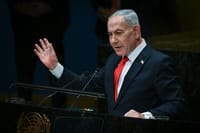
Naftali Bennett has directly confronted the tensions between military service and religious observance in the ongoing Haredi draft debate, telling Kikar HaShabbat that he cannot guarantee soldiers will emerge from service with their religious identity intact, and that such guarantees are an unreasonable demand.
Speaking to journalist Yishai Cohen, Bennett grew visibly frustrated when pressed on whether the government could ensure that drafted Haredi men would remain religiously observant after military service. "Now am I supposed to commit that every [son will exit] Haredi?" he said. "I can't [even] commit that my son will come home alive, so I don't know how to commit that."
The former prime minister reframed the question as one of state responsibility versus parental obligation. "I know how to commit to provide the conditions," he said. "I will provide the conditions so the child comes out Haredi. If that mother doesn't know how to educate her child to Judaism, then I will provide the conditions."
Bennett's frustration appears rooted in what he views as an impossible standard being applied to the state. He invoked his experience meeting with wounded soldiers to explain why the conversation about religious guarantees rankles him. "I've met in the last two years people who lost hands, legs, head injuries and I need to give an insurance certificate to a Haredi mother," he said. "In the end there's also responsibility to the child."
The remarks cut to the heart of a central dispute in Israel's Haredi draft controversy: whether military service itself is compatible with maintaining religious observance, and where responsibility for that outcome ultimately lies. Haredi community leaders have long expressed concern that military service would secularize young men, leading to their estrangement from religious life. Some have demanded government guarantees of religious accommodation and post-service support.
Bennett's position suggests a division of labor: the state bears responsibility for creating institutional conditions that allow religious observance during and after service—infrastructure, accommodation, employment pathways that permit continued religious commitment. Parents and community members bear responsibility for transmitting religious values and identity to their children in the first place.
The comment reflects Bennett's broader positioning in Israeli politics as someone seeking to bridge the secular-Haredi divide while insisting on the legitimacy of state security needs and military service.