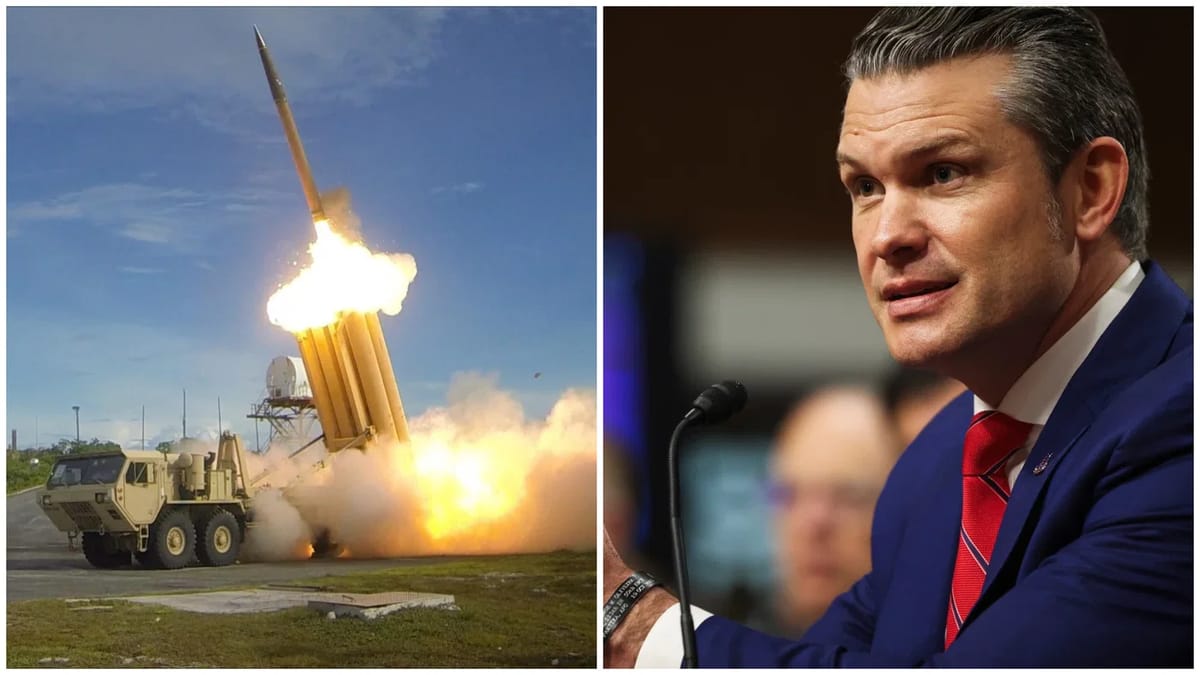
President Donald Trump reportedly confronted Defense Secretary Pete Hegseth during a Cabinet gathering at Camp David last Friday, demanding answers about severe ammunition shortages that are limiting Washington’s military options against Iran.
According to two people familiar with the exchange who spoke to The Washington Post, Trump told Hegseth that he believed the munitions problem “had been fixed.” The newspaper reported that shortages of long-range guided missiles and air-defense interceptors contributed to Trump’s recent decision not to launch another large-scale attack on Iran.
Trump said earlier this week that he had prepared and then suspended what he called “the biggest attack since World War II” while potential negotiations over reopening the Strait of Hormuz continued.
Hegseth Reportedly Blamed His Deputy
During the Camp David confrontation, Hegseth reportedly defended his own handling of the matter and blamed Deputy Defense Secretary Stephen Feinberg for failing to ensure that Trump was fully informed about the condition of American weapons stockpiles.
The White House categorically denied the account.
“This is 100% fake news. Literally never happened,” White House Press Secretary Karoline Leavitt told the Post, adding that Trump retained full confidence in Hegseth.
Pentagon spokesman Sean Parnell likewise denied that Hegseth misled Trump or blamed Feinberg. Parnell described claims about depleted inventories and internal divisions as “equally fictional.”
The Post nevertheless reported that the episode reflects mounting frustration inside the administration over a war that was initially presented to Trump as likely to produce a relatively quick victory.
US Has Used ‘Virtually All’ of Key Long-Range Missiles
The report follows a separate Reuters investigation concluding that the US Army has expended “virtually all” of its available ATACMS and Precision Strike Missile, or PrSM, inventory during the five-month war with Iran.
The missiles allow American forces to strike heavily defended targets from long distances without placing pilots directly in danger. Their depletion could therefore force the administration to choose between limiting future attacks or relying more heavily on crewed bombing missions.
US Central Command has reportedly replenished some of its regional stocks by transferring weapons from American military inventories elsewhere in the world. However, officials cited by Reuters expressed concern that doing so could weaken US readiness for another major conflict, particularly one involving China or Russia.
Reuters also reported that the United States has used slightly less than half of its worldwide Tomahawk cruise-missile inventory since the Iran war began, although the news agency said it could not independently verify that figure.
Trump rejected suggestions that the United States lacks sufficient weapons, telling Reuters that America possesses “far more munitions than anyone in the world” and “far more than we need.” He also said American defense companies were expanding production and manufacturing munitions at record levels.
Defensive Missile Stocks Also Under Pressure
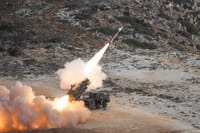
The strain extends beyond offensive missiles. The Washington Post reported that the United States fired more than 850 Tomahawks and over 1,000 Patriot and THAAD interceptors during the first month of fighting alone. More than 1,300 Army tactical ballistic missiles were reportedly launched during the war’s opening weeks.
A July analysis by the Center for Strategic and International Studies estimated that the United States had fewer than 1,000 Patriot interceptors remaining and approximately 250 THAAD interceptors. CSIS warned that depleted inventories could force US commanders to accept greater risks when deciding which incoming missiles should be intercepted.
Because new Patriot missiles and other sophisticated weapons may require years to manufacture and deliver, recently announced production agreements will not immediately restore the depleted stockpiles.
Hegseth, Feinberg and Joint Chiefs Chairman Gen. Dan Caine have requested an additional $67 billion from Congress to cover Iran-war expenses and replenish American arsenals. Hegseth previously characterized the request as “urgent” and “necessary,” but Senate Republicans have not yet agreed on how to advance the funding package.
The shortages could have consequences far beyond Iran. ATACMS missiles have also been supplied to Ukraine, while Patriot systems are critical to Ukrainian defenses against Russian attacks. US officials and analysts are additionally concerned that rebuilding inventories for the Middle East could reduce the weapons available to deter China in the Pacific.