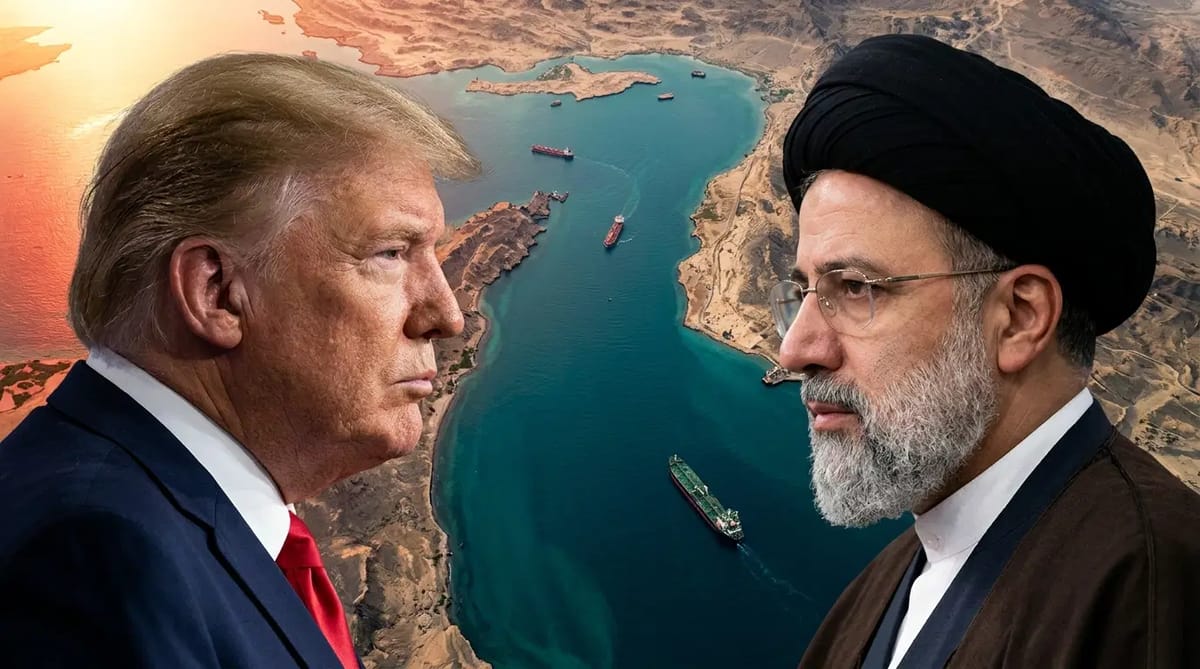
When the United States and Iran went to war earlier this year, Israel was a partner. When they sat down to negotiate a way out, Israel was largely not in the room.
That gap, between Israel's centrality to the conflict and its near-total exclusion from the diplomatic process, now defines Jerusalem's uncomfortable position as a tentative 60-day framework deal takes shape between Washington and Tehran.
Prime Minister Benjamin Netanyahu said Sunday he had spoken with Trump the previous evening, and that the two agreed "any final agreement with Iran must eliminate the nuclear danger" - meaning the dismantling of enrichment sites and the removal of highly enriched uranium from Iranian soil. Trump reaffirmed Israel's right to defend itself "on every front, including Lebanon," Netanyahu added.
The statement was carefully worded, supportive of the process, firm on the destination. But behind it lies a deep unease that Israeli officials have been less careful to conceal.
A senior Israeli official, speaking without authorization to do so publicly, called the emerging agreement "bad." Israel's core fear, the official indicated, is that the deal will ultimately deliver only its first half, Iran reopens the Strait of Hormuz, sanctions ease, oil flows again, while the far harder second half, curbing Iran's nuclear program, simply never arrives.
It is a fear with historical resonance. Israeli governments have watched international agreements with Iran expire, collapse, or be circumvented before. The memory is acute.
Excluded but Bound
Despite the deal's profound implications for Israel, negotiations have reportedly been conducted with near-total exclusion of Jerusalem. Israel will not officially be party to whatever agreement emerges, yet will effectively be bound by it — limited in what it can achieve militarily without U.S. participation, and with Netanyahu unlikely to be seen torpedoing the president's deal-making on such weighty matters.
That constraint is the central paradox Israel faces. It cannot easily say no to Trump. It cannot easily say yes to a deal that may leave Iran's nuclear infrastructure intact.
What leverage does Jerusalem actually hold? Analysts say it is more limited than it appears. It remains unclear what concrete steps Israel is taking beyond phone calls between Netanyahu and Trump to ensure its concerns are reflected at the negotiating table.
The Nuclear Arithmetic
The numbers themselves concentrate Israeli minds. Iran currently holds approximately 440 kilograms of uranium enriched to 60 percent purity — a stockpile that, if further enriched, could theoretically yield enough material for several nuclear devices. The 60-day framework defers resolution of this question entirely, creating a negotiating window but no guarantee of an outcome.
Netanyahu, in a CBS interview, acknowledged that regime change in Iran was "possible, not guaranteed" — a formulation that underscored how far the goalposts have shifted from Israel's original war aims.
Iranian officials have been equally explicit about their red lines. Iran's state television reported that under the draft memorandum, Iran and Oman would jointly manage traffic through the Strait of Hormuz — a claim the White House immediately dismissed as "a complete fabrication." Trump later stated that no nation would control shipping through the strait. The competing characterizations illustrated how much basic interpretive daylight exists between the two sides, even on what they claim to have agreed.
Gulf States, Abraham Accords, and Overlapping Pressures
Israel's situation is further complicated by Trump's decision to link the Iran framework to his broader regional agenda. The president has conditioned his enthusiasm for the deal partly on Gulf Arab states, Saudi Arabia, Qatar, the UAE, moving toward normalization with Israel under the Abraham Accords umbrella.
Gulf Arab countries that were attacked by Iran during the war were all on a call with Trump over the weekend, alongside Netanyahu, as the president sought to coordinate regional buy-in for the emerging framework. For Israel, this creates a dual dynamic: the same diplomatic process that worries Jerusalem on nuclear grounds may simultaneously advance normalization goals that Jerusalem has long sought.
It is not a comfortable position. Israel wanted Iran's nuclear program dismantled. It may get a regional architecture instead, and be asked to call it a victory.
The Off-Ramp Problem
Both Israeli officials and independent analysts have noted the structural flaw at the heart of the 60-day framework: it rewards Iran for agreeing to negotiate, before the negotiations have produced anything. The deal would avoid an escalation of the war and decrease pressure on global oil supply, but it remains unclear whether it will lead to a lasting peace agreement that addresses Trump's nuclear demands.
For Israel, that uncertainty is not abstract. It is the difference between a Middle East in which Iran's nuclear capacity has been rolled back, and one in which it has simply been paused, with international legitimacy restored and sanctions eased in the meantime.
Netanyahu's public position remains one of cautious alignment with Trump. His private position, by all accounts, is considerably more anxious. The prime minister who co-launched this war now finds himself a spectator at its conclusion, urging, lobbying, phoning, but watching the decisive choices being made in rooms he was not invited to enter.