Get our mobile app
Download on the App StoreGet it on Google Play

U.S.-Canada Trade War

Trump Doubles Canada Auto Tariffs to 50%

U.S. president announces dramatic increase on vehicle imports starting January 2027 after weekend negotiations fail; Canada vows dollar-for-dollar retaliation

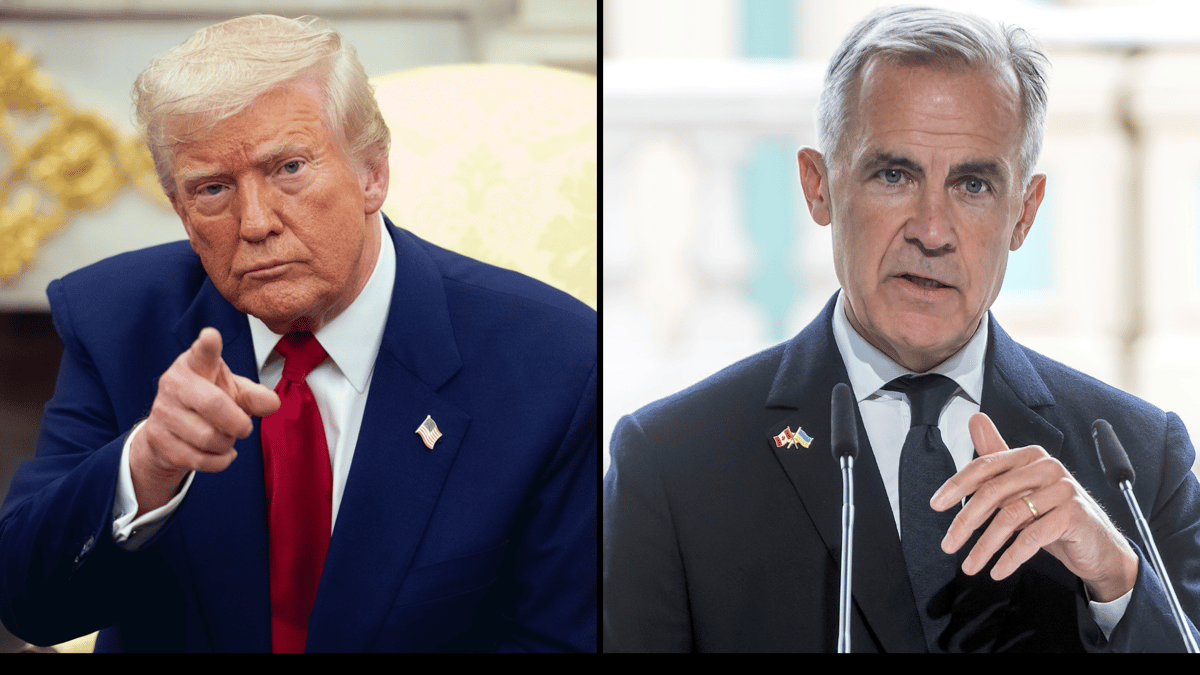
On the right, Canadian Prime Minister Mark Carney; on the left, U.S. President Donald Trump.

President Donald Trump announced that the United States will raise tariffs on imported cars, trucks, and auto parts from Canada to 50%, effective January 1, 2027. The declaration follows the breakdown of trade negotiations between the two countries over the weekend.

In a post on Truth Social, Trump accused Canada of exploiting American interests for years, claiming the northern neighbor has harmed U.S. farmers through its tariff policies. "Not sustainable, and not anymore!" he wrote. "On January 1, 2027, tariffs on all cars, trucks, large and small, auto parts and steel, will be increased to 50%."

The new tariff rate represents a doubling of the current 25% levy on Canadian vehicle imports. Canada had sought to reduce automotive tariffs through a new trade agreement with the United States, but discussions fell apart over the weekend. American tariffs on Canadian steel imports already stand at 50%.

On Saturday, the U.S. imposed 50% tariffs on approximately $20 million worth of Canadian products, including wine, cement, and hockey sticks, in response to alleged trade discrimination. These tariffs would have been avoided had the parties reached an agreement, but the Canadian negotiating team left Washington on Friday without results.

U.S. Trade Representative Jamieson Greer told CNBC that "in the final hours, I think there were things the Canadians simply, you know, they wanted more." Canadian Prime Minister Mark Carney, meanwhile, pledged to respond "dollar for dollar" against the new American tariffs.

Mark Carney, Canada's new Prime Minister, on the day of his swearing-in.
Mark Carney, Canada's new Prime Minister, on the day of his swearing-in. (Canadian Government)

Trump continued his criticism, declaring that Canada "will no longer be treated like a state within the U.S.!" He characterized Canada as "among the worst nations in the world to deal with" on trade and other matters.

"They feel entitled, and yet, we don't need Canada, they need us! They do 95% of their business with the U.S., with us, and the opposite is true!" the American president wrote.

The Canadian automotive market is significantly smaller than America's: fewer than 2 million new vehicles were sold in Canada in 2025, compared to more than 16 million sold in the United States. Only 5.4% of vehicles manufactured in Canada, approximately 861,000 units, were sold in the U.S. last year.

Detroit automakers have reduced their Canadian production in recent years, while Japanese manufacturers like Toyota and Honda have significantly expanded theirs. Toyota and Honda accounted for 76.5% of Canadian vehicle production in 2025, with each producing more vehicles in Canada than Ford, General Motors, and Stellantis combined.

Trump's tariff policy creates major uncertainty for automakers whose supply chains were built on free trade between the nations. The decision is expected to significantly impact the automotive industry in both countries and consumer prices.


Ready for more?

Join our newsletter to receive updates on new articles and exclusive content.

We respect your privacy and will never share your information.

Enjoyed this article?

Yes (16)
No (1)
Follow Us:

Unmissable content


Loading comments...

Also of Interest