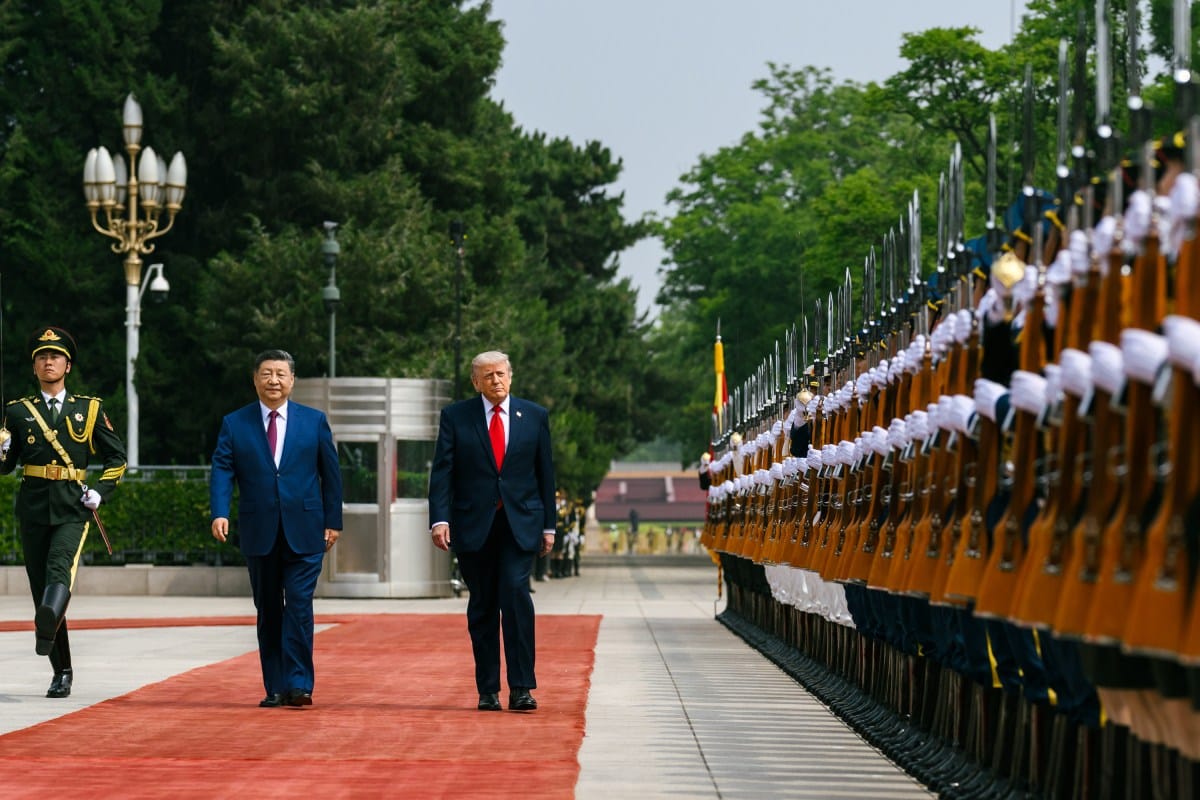
President Donald Trump will host Chinese leader Xi Jinping in Washington this week for a sensitive diplomatic summit, where the two leaders are expected to discuss a range of critical issues including trade, artificial intelligence, and Taiwan's status.
The historic visit comes just months before the November expiration of the trade agreement between the two superpowers, providing both sides an opportunity to assess the future of their economic and diplomatic relationship.
Xi is scheduled to land at Andrews Air Force Base, where Trump will personally greet him. The White House will then host an official ceremony featuring hundreds of military personnel and a military flyover in honor of the Chinese leader.
The meeting marks the Chinese leader's first state visit to the United States in nearly a decade, and the third meeting between the two presidents since Trump began his second term in office.
Analysts and commentators noted that this unusual welcome signals a desire to keep communication channels open. David Sacks of the Council on Foreign Relations addressed the event, saying: "Meeting Xi Jinping at Andrews Air Force Base and holding a flyover for Xi --- that's not something given to any U.S. ally, let alone a rival like China. It's quite, truly remarkable."
Along with trade issues and the trade deficit standing at more than $91 billion, artificial intelligence occupies a central place in discussions between the two sides against the backdrop of global competition between the nations.
While various parties are calling for tighter oversight and examining agreements to curb advanced technologies, Trump views this technology as a vital component of the American economy and its national strength.
On the Taiwan issue, China continues to demand an end to American arms sales to the island, while Washington weighs its steps carefully. Stephen Orlins, president of the National Committee on U.S.-China Relations, summarized the administration's approach, saying: "Trump has made a decision that at all costs, we need to not have a confrontational relationship with China. He believes that the more he and President Xi meet, the less confrontational this relationship will be, and he's right."