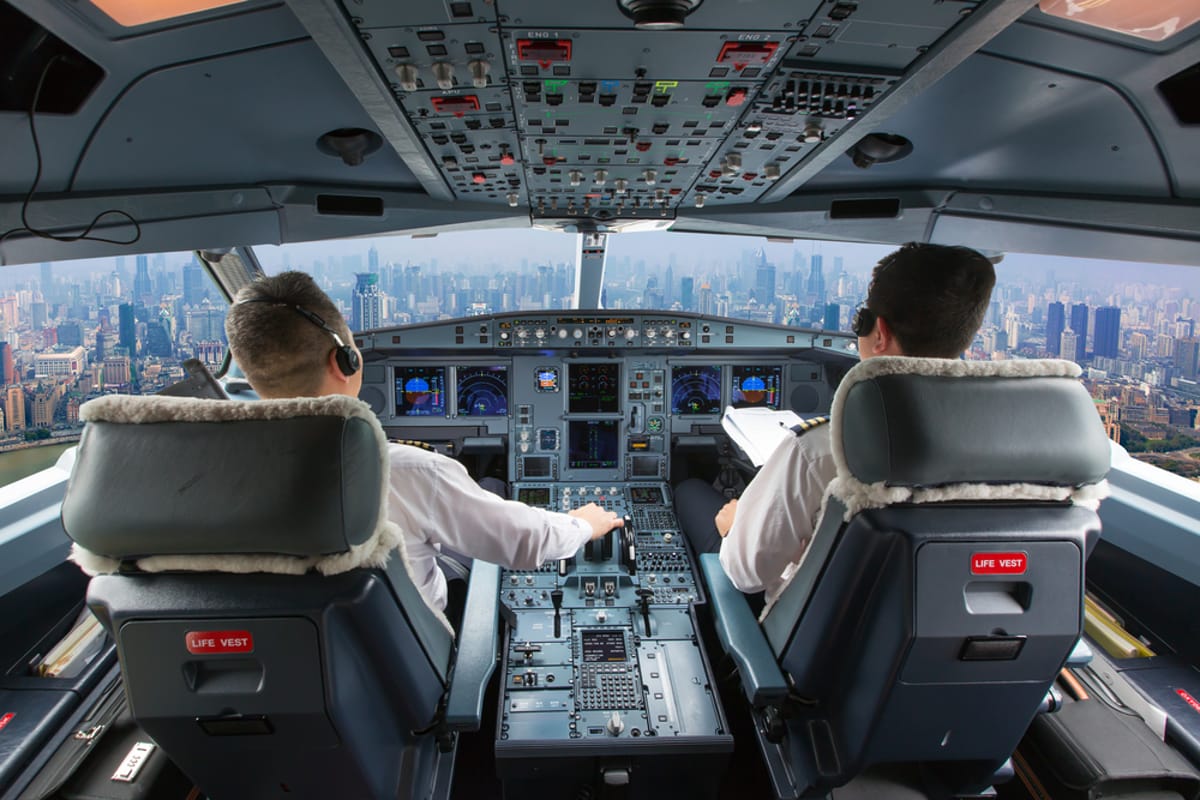
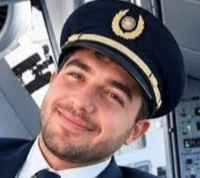
One detail stands out among the terrorist's particulars: his unusually young age. The pilots we encounter on flights are typically 50 and older, and it's striking to see the age of the terrorist first officer.
In addition, the Wall Street Journal reported over the weekend that al-Hamami had worked for seven years as a first officer at Oman's national carrier, Oman Air, but after being identified as having undergone Islamist radicalisation, he was grounded and left the company. That means al-Hamami was serving as a first officer from the age of 22. Too young? We checked.
Surprisingly, in Israel, the minimum age required to serve as captain (chief pilot) on a commercial airline passenger aircraft is 23. To fly a large passenger aircraft (such as those operated by El Al, Arkia or Israir), airlines require the highest civilian licence, called an Airline Transport Pilot Licence (ATPL), as opposed to a regular Commercial Pilot Licence (CPL), which can be obtained at 18.
On the other end: if you wondered about the maximum age, the accepted international standard for multi-crew international commercial flights sets the age limit at 65. The International Civil Aviation Organization, ICAO, currently sets a limit of 60 for commercial flights operated by a single pilot and 65 for multi-crew flights.
Last June, the Knesset approved an amendment allowing pilots to continue flying domestic routes (such as Ben Gurion–Eilat) until age 67 under certain restrictions, replacing the previous limit of 65.
Here is the precise age breakdown according to training stages and licence types under the Civil Aviation Authority (CAA) regulations:
Age 16: The minimum age at which a "student pilot licence" may be issued and practical flight training with an instructor may begin.
Age 17: The minimum age for a Private Pilot Licence (PPL), which allows flying solo or with passengers (who are not paying).
Age 18: The minimum age for a Commercial Pilot Licence (CPL), which allows working as a pilot and flying passengers or cargo for hire.
However, if flying a glider (rather than a powered aircraft), a student licence can be obtained at 15 and a private licence at 16.
In Europe, the minimum age for flying passenger aircraft is earlier, with the European aviation authority being more lenient on age and allowing a full ATPL to be issued at 21.
According to the European Union Aviation Safety Agency (EASA), pilots in Europe can begin working as first officers at commercial airlines (for example at low-cost carriers like Ryanair or easyJet) at 18 with a Commercial Pilot Licence (CPL) with instrument and multi-crew ratings, under what is called a "Frozen ATPL" (a frozen licence that becomes full at 21 with accumulated hours).