The intricate web of secret diplomacy shielding global energy corridors has been brought to light following high-level disclosures at the White House. Recent statements from senior executive leadership indicate that multiple global superpowers were on the verge of direct military intervention during the recent regional war. These foreign policies continue to redefine boundaries within international military alliances.
President Donald Trump delivered a striking announcement on Wednesday during a joint press briefing in the Oval Office alongside the Secretary General of NATO. Trump asserted that Turkish President Recep Tayyip Erdogan was heavily considering entering the active hostilities against regional forces. The American president linked this potential mobilization directly to Turkey's adversarial stance toward Jerusalem.
The administration detailed the exact regional alignment that nearly manifested during the height of the fighting. Trump explained that Erdogan was a leading candidate to enter the war against Iran, or perhaps even on the side of Iran, because he is not exactly a big fan of Israel, as you know. The president further noted that he personally intervened to alter Ankara's calculus, stating that he requested the Turkish leader not to join the fighting, and indeed Erdogan acted accordingly.
The White House maintained a supportive stance toward the Turkish state despite the near-miss deployment, highlighting the nation's critical role within Western defense structures. Trump described the Turkish president as a great leader, a very strong man, with an excellent army. Addressing his upcoming diplomatic mission to Ankara, Trump emphasized that Turkey remains a strong member of NATO, adding that he will likely do something that will make Erdogan and Turkey very happy.
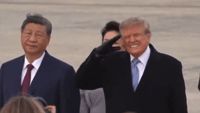
The scope of secret American intervention extended beyond the Mediterranean, reaching major economic centers in East Asia during the peak of the regional war. Trump disclosed that Chinese President Xi Jinping was also uniquely positioned to interfere in the active hostilities to protect vital commercial supply chains. The president noted that China receives half of its oil from that region, making Beijing's potential entry entirely understandable before Washington requested that they remain neutral.
The dynamic with foreign governments has created significant friction between the White House and traditional Western defense partners over operational contributions. Trump expressed that he is very disappointed with NATO countries, accusing major European states of failing to provide timely military assistance during the war with Iran. The president pointed fingers directly at the leadership of Britain, France, Italy, and Germany, though he boasted that the United States did not need their help and suppressed Iran within the very first week.
This harsh criticism prompted an immediate data defense from the visiting NATO Secretary General, who presented specific metrics detailing European logistical support. The chief revealed that during the war with Iran, the Bucharest airport was entirely closed to civilian traffic to allow American refueling planes to take off. The tracking records show that roughly 5,000 American aircraft successfully departed from various European military airports during the active campaign.
The Oval Office discussion concluded with sharp commentary regarding the impending leadership changes in the United Kingdom and the future of Western energy independence. Trump criticized the political platform of the incoming British Prime Minister, stating that he hears the leader is very liberal, which likely means he will keep vital energy reserves locked away. Trump revealed that he provided Keir Starmer with good advice, telling him to open the North Sea and revive Aberdeen, which used to be the oil city of Europe before local regulations shut everything down.