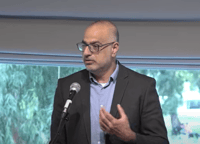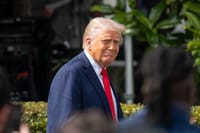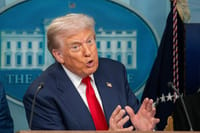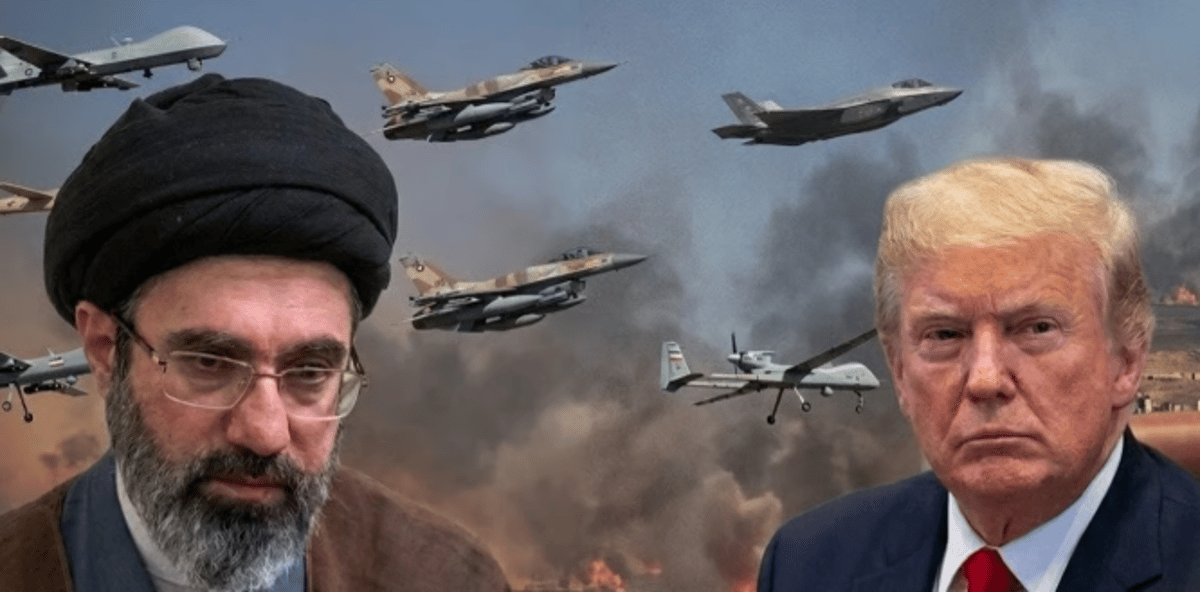
An Israeli Iran researcher sharply criticized President Donald Trump's public remarks on the war with Tehran on Thursday, arguing that the American president is needlessly revealing his strategy at a moment when the region can least afford it. Beni Sabti of the INSS told Radio 103FM that Trump has said he does not want a total war and only wants to reopen the Strait of Hormuz, and asked why the president would state that intention so openly. Sabti argued that doing so ties the region's fate to Tehran's decisions and effectively turns Israel and its allies into hostages of what he called Trump's careless statements.
The criticism came at the end of a tense 48 hours in which the US and Iran traded their heaviest exchange of fire since the ceasefire took hold in June. The US military struck around 90 targets along Iran's coastline overnight into Thursday, following roughly 80 targets hit the night before, bringing the two day total to close to 170 sites. Iran's Islamic Revolutionary Guard Corps responded by striking American installations in Kuwait and Bahrain, while Iran's army said it also targeted a US site in Qatar. Iran's Health Ministry said 14 people have been killed and 78 wounded over the two nights of strikes.
The escalation began after Iranian forces struck three commercial tankers transiting the strait, prompting the initial American retaliation and a Treasury Department decision to revoke the oil sale waiver granted to Tehran under the ceasefire terms. Speaking from the NATO summit in Ankara, Trump said he considers the ceasefire, formalized in the Islamabad memorandum signed last month, to be over, calling Iran's leaders "cuckoo" and "scum" and dismissing further talks as a waste of time. Iranian officials countered that Washington had itself broken the agreement, citing the revoked oil waiver, interference with Iranian activity in the strait, and Israeli strikes on Hezbollah in Lebanon.
By Thursday, Trump appeared to soften some of his own rhetoric, telling reporters at the close of the summit that he does not believe the war will restart in full, though he warned that any renewed fighting would end quickly and that the US is not seeking a long term conflict. A senior American official told CNN that the ceasefire "has at least temporarily ceased" and that the military is now in a wait and see posture, leaving open whether the strikes reflect pressure tactics ahead of talks or the start of a fuller return to war.
Adding to the tension, Iranian state media reported that a US strike hit a railway bridge near Aqqala, disrupting train service to Mashhad, where the funeral of slain Supreme Leader Ayatollah Ali Khamenei is set to conclude on Thursday. Oil prices jumped sharply on the news, with Brent crude rising more than five percent to above eighty dollars a barrel for the first time since mid June.
Sabti's warning points to a broader unease taking hold in Jerusalem and among regional security analysts, that even seemingly offhand remarks by an American president can shape how Tehran calculates its next move, at a moment when the ceasefire's survival appears to hinge on decisions made hour to hour rather than any fixed timeline.