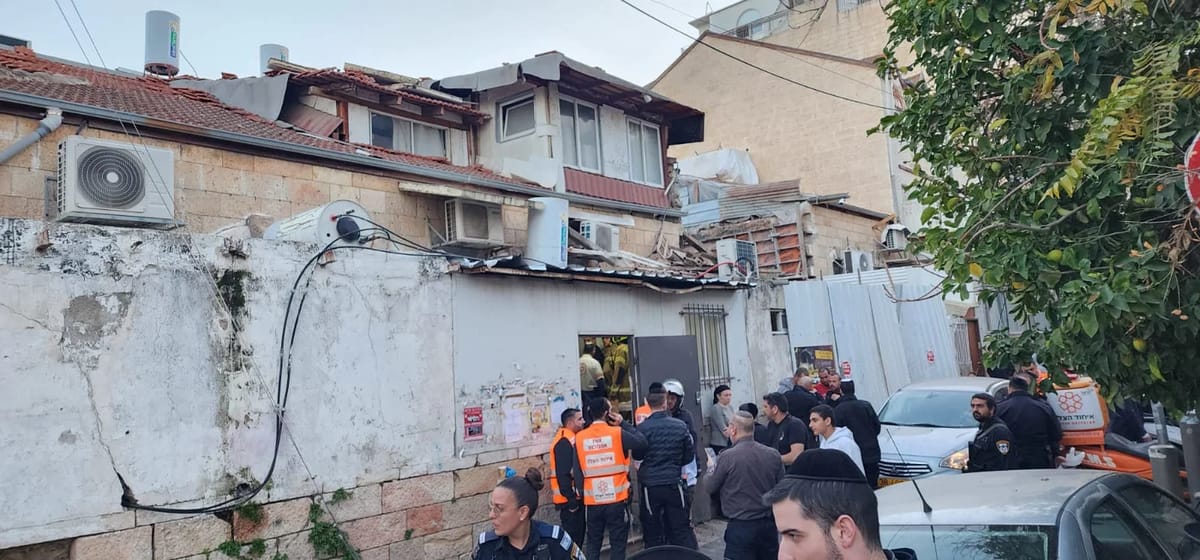
Contractor Charged After Concrete Wall Crushes Yeshiva Student to Death in Jerusalem
Iman Hamad faces criminal charges for fatal construction collapse • Prosecutors allege reckless concrete pouring caused wall to crush sleeping student | Two and a half years after the tragedy (Israel News)

Two and a half years after a concrete wall collapsed onto a sleeping yeshiva student in Jerusalem's Meah Shearim neighborhood, killing him instantly, prosecutors have filed criminal charges against the contractor they say was responsible for the fatal construction failure.
The Jerusalem District Prosecutor's Office announced Tuesday that it has indicted Iman Hamad, a 49-year-old contractor from East Jerusalem, on charges of causing death through negligence in the death of Yitzchak Steinberger, a 25-year-old student at Mir Yeshiva who was crushed beneath tons of wet concrete as he slept in his bed on a winter night in January 2024.
According to the indictment filed by prosecutor Ronit Shantzer Yacobi, Hamad's construction methods violated basic safety protocols and directly caused the structural collapse that killed Steinberger. The charges represent the culmination of a lengthy investigation that initially examined multiple suspects, including the property owner, who has now been cleared of all criminal liability.

The Fatal Engineering Failure
The indictment details a series of catastrophic construction errors that prosecutors say demonstrated gross negligence. According to the charging documents, Hamad was overseeing renovation and expansion work at an aging residential building on Baal Shem Tov Street when he made the decision to pour a new concrete wall using formwork on only one side.
Instead of constructing proper support structures on both sides of the planned wall — standard practice in concrete construction — Hamad allegedly allowed the wet concrete to rest directly against the building's existing old wall. The aging structure, prosecutors charge, could not withstand the massive weight and pressure of the freshly poured concrete.
The indictment further alleges that Hamad failed to conduct any structural assessment of the old wall's load-bearing capacity before beginning the pour. Most critically, prosecutors say he poured the entire volume of concrete in a single rapid operation rather than in stages, which would have allowed the material to cure gradually and reduced stress on the supporting structure.
The result was catastrophic. On that January night during the Hebrew month of Tevet 5784, the old wall gave way under the enormous pressure, collapsing directly into the adjacent bedroom where Steinberger lay sleeping. The young man was buried beneath tons of wet concrete and building debris.
Desperate Rescue Attempt
Emergency responders from Magen David Adom and United Hatzalah who arrived at the scene described a horrific situation. Steinberger's body was almost entirely covered by the concrete and rubble, with only his legs visible. Medics and firefighters were forced to plunge their hands into the still-wet concrete in a frantic attempt to reach him.
Despite their efforts to extract him while he remained unconscious, Steinberger sustained catastrophic head injuries and crushing trauma. He was pronounced dead at the hospital shortly after the rescue. According to witnesses familiar with emergency response protocols, the volume of construction materials that poured into the room made survival virtually impossible.
The tragedy sent shockwaves through Jerusalem's haredi community. Steinberger was the son of Simcha Steinberger, a veteran volunteer with Tel Aviv's Zaka emergency response organization, and the grandson of Moshe Steinberger, a well-known figure in Jerusalem's charitable circles. Friends and family remembered Yitzchak as a young man of exceptional kindness, always ready with a smile and eager to help others.
Warnings Ignored
According to reports that emerged in the immediate aftermath of the collapse, residents of the building had raised safety concerns with Jerusalem's dangerous structures department months before the fatal incident. Neighbors allegedly warned municipal authorities about hazardous conditions at the construction site, but work continued unabated until the night of the collapse.
The indictment emphasizes that the construction project had received proper municipal building permits, making the contractor's alleged safety violations all the more egregious. Prosecutors argue that Hamad possessed legal authorization to perform the work but chose to cut corners in ways that proved deadly.
The decision to charge only the contractor while clearing the property owner marks a significant development in the case. For more than two years, investigators examined whether the building's owner bore any criminal responsibility for the conditions that led to Steinberger's death. The prosecutor's office has now determined that the owner had no knowledge of the dangerous construction methods and cannot be held criminally liable.
Pattern of Risk in Old Jerusalem Neighborhoods
The case highlights ongoing safety challenges in Jerusalem's historic neighborhoods, where aging buildings undergo constant renovation and expansion to accommodate growing haredi families. The dense, centuries-old construction in areas like Meah Shearim and Beit Yisrael requires extreme caution during any structural work, as buildings often share walls and foundations.
Construction experts note that work on such structures demands meticulous engineering assessments and careful execution, precisely the safeguards prosecutors say were absent in this case. The indictment portrays Hamad's approach as reckless disregard for basic safety principles that any experienced contractor should understand.
The trial is expected to begin in the coming months. Hamad faces significant prison time if convicted of causing death through negligence.