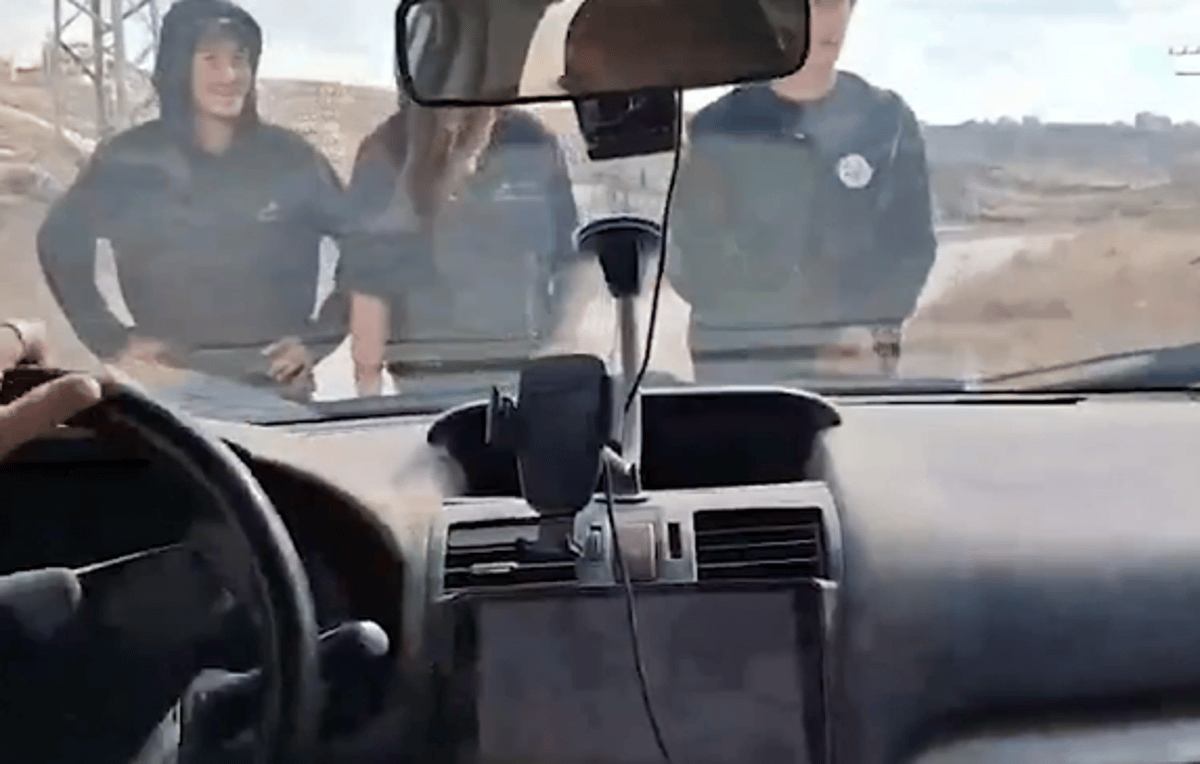
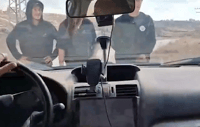
About seven masked men carrying clubs and stones allegedly took part in the assault. Belgian Deputy Prime Minister and Foreign Minister Maxime Prévot confirmed that a French mayor had been assaulted.
Ynet identified the mayor as Bernard Baudoux of Aulnoye-Aymeries in France. Baudoux told AFP that the attackers kicked him, beat him with iron bars and threw him to the ground. "It's the gratuitous nature of the violence that stuns me," he said. "They arrived completely enraged." He told the agency that the attack showed a tolerance for settler violence on the part of Israel's right-wing government.
The masked group also confronted two Israeli activists, Amit Orpeli of the Torat Tzedek organization and Roni Federman. "We notified the army in real time, but they didn't come or respond," Orpeli said. "They threatened to kill us." The two said the attackers were not people they knew from the nearby settlement.
The IDF called the assault a "severe act of violence." Police and forensic investigators from the Judea and Samaria District, the Israel Police district covering the area, entered the scene under military escort to collect evidence and take testimony. A preliminary army inquiry found that no soldiers were present when the attack took place. The IDF said the alert had gone to a brigade operations room that handles reports only from security personnel, not from civilians. It added that civilians have other channels for complaints.
Sa'ar wrote that the Foreign Ministry was in contact with the ambassadors of the countries involved, to help law enforcement identify the attackers. "Without detracting from the severity of the incident, it is unfortunate that the visit was not coordinated with the IDF in advance. Such coordination could have helped safeguard the visitors' security," he added.
The Binyamin police station opened its investigation after footage of the attack spread online. Police also sent a report to the Foreign Ministry so investigators could locate the victims and take their statements. Arutz Sheva reported that no suspects had yet been identified or arrested.
Netanyahu's office said. "Any violence against diplomats is unacceptable. The more serious the accusation, the greater the demand for compelling evidence," it said. The office pointed to "concerns about a coordinated campaign to smear Israel and the Jewish residents of Judea and Samaria during the annual olive harvest." It urged the public to reject hearsay and not to turn unproven allegations into "a collective indictment" of the region's Jewish residents.
Prévot said Belgium's consul general was among those targeted and that his team was safe. "As the occupying power, Israeli authorities must protect Palestinians, ensure the safety of diplomats and journalists, and bring those responsible to justice. Impunity for violent settlers must end," he said. He also called Israel's settlement policy illegal.
Democrats Party chairman Yair Golan called the attack a serious and dangerous development. He urged that Jewish terrorism be fought with the same determination as Palestinian terrorism, including the use of administrative detention against dangerous Jewish extremists.
President Isaac Herzog also referred to the Taybeh incident on Saturday. He did so during a phone call with Washington Post photographer Heidi Levine, who was injured on Friday near Abu Falah. As JFeed reported, Netanyahu's office said on Friday that it was still unclear who had assaulted her.