
The Historic Moment

Gafni Delivers Emotional Knesset Speech on Torah Study as Basic Law Passes Preliminary Vote

United Torah Judaism chairman invokes Warsaw Ghetto and Shanghai yeshivas in defense of Torah study • Lapid provokes with 'they didn't get stipends' jab | 56-43 vote marks historic step (Israel News)

MK Gafni
MK Gafni (Photo: Yonatan Sindel / Flash90)

In a charged session that laid bare Israel's deepest cultural fault lines, the Knesset plenary voted 56-43 Wednesday to advance Basic Law: Torah Study in a preliminary reading, following an emotional address by United Torah Judaism chairman MK Moshe Gafni that traced the history of Torah learning through centuries of Jewish persecution.

The vote marks a significant victory for the haredi parties, who had issued an ultimatum to Prime Minister Benjamin Netanyahu: advance the Torah law or face a legislative freeze on all coalition business. Netanyahu spent the previous 24 hours working to secure the necessary votes, ultimately delivering the majority his ultra-Orthodox partners demanded.

Gafni's speech, delivered with visible emotion, invoked the Warsaw Ghetto, the yeshivas of Shanghai during the Holocaust, and the Jewish communities of Morocco to argue that Torah study has been the anchor of Jewish survival across millennia. "After the destruction of Europe, the State of Israel took upon itself to raise Torah study from the dust," Gafni declared. "We propose to properly enshrine in a Basic Law the great value of Torah study."
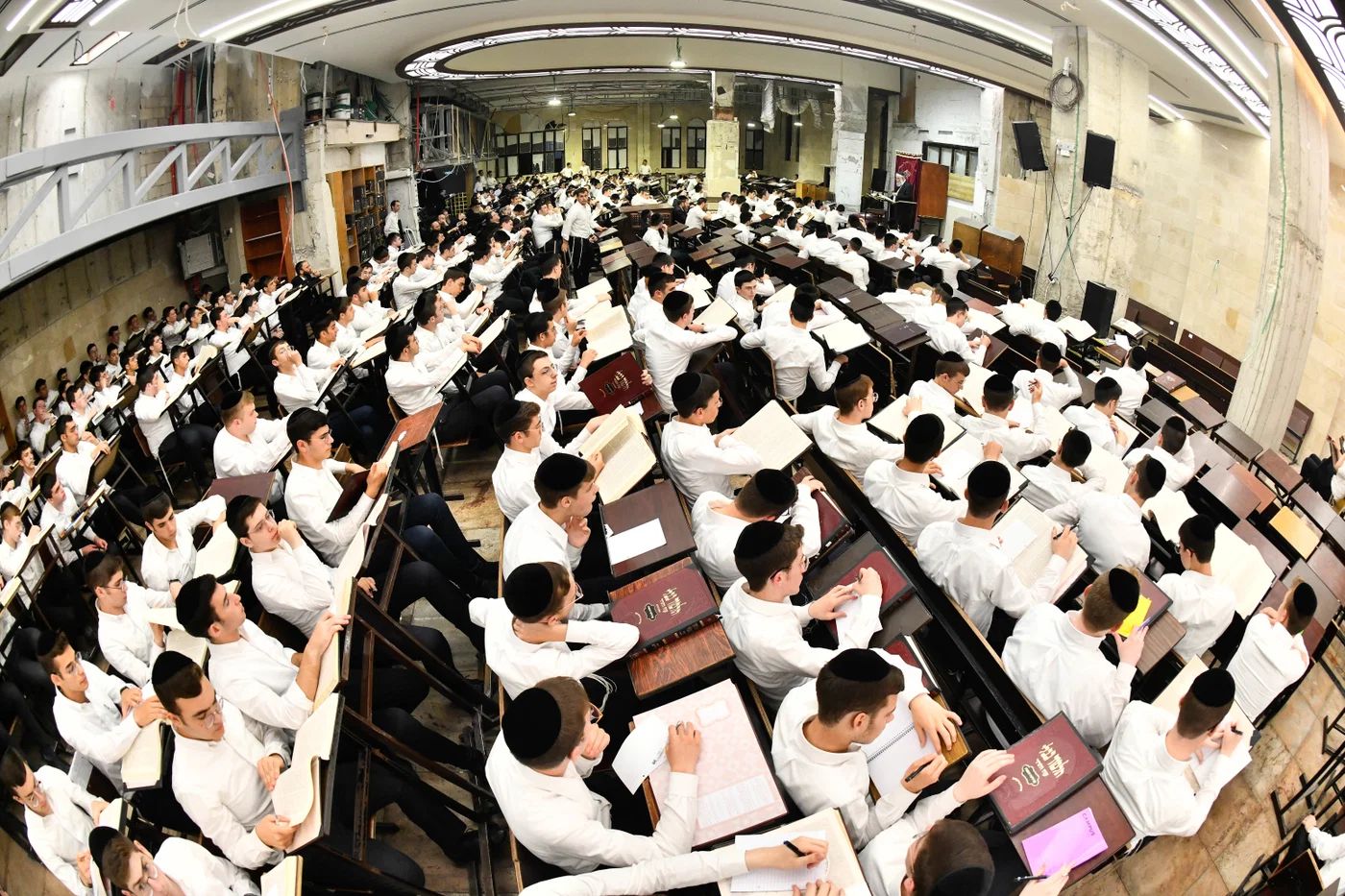

Yeshiva Bais Matisyahu
Yeshiva Bais Matisyahu (Photo: Shuki Lerrer)

The Degel HaTorah chairman painted a sweeping historical narrative, describing how Jewish communities maintained Torah study even under Roman persecution and Nazi occupation. "We grew up on what happened in the history of the Jewish people. We saw the boys and children in Warsaw locked up and studying Torah amid the terrible troubles in Europe," he stated. "In the greatest troubles, they sat and studied Torah. When the Romans conquered the Land of Israel, they pursued Torah scholars, slaughtered and killed them."

Gafni emphasized that Torah study was not merely a religious practice but the existential foundation of Jewish continuity. "Torah study was what held the Jewish people together for thousands of years. The refuge of the people in all periods," he declared. He cited the yeshivas that relocated to Shanghai during World War II and the Torah centers of Casablanca as evidence of this unbroken tradition.

The speech reached its crescendo when Gafni invoked the words of the late Rabbi Avraham Ravitz, who addressed the Knesset on the same issue 25 years earlier. "We are not coming with a new law or new behavior, but to establish within the framework of law the social arrangement that has existed since the founding of the state," Gafni quoted. "I add to this: this is the social arrangement since the Jewish people became a nation."

Netanyahu removes controversial section from the Law
Netanyahu removes controversial section from the Law (Photo: Yonatan Sindel / Flash90)

The session took a confrontational turn when opposition leader Yair Lapid rose to respond. In a sharp rebuke, Lapid challenged Gafni's invocation of the Warsaw Ghetto: "Member of Knesset Gafni, you mentioned the Warsaw Ghetto. In the Warsaw Ghetto they didn't receive stipends --- they took weapons in hand and staged an uprising," Lapid stated. "After the destruction of European Jewry, we understood that we need a strong people and a strong army."

The exchange triggered an eruption in the chamber, with UTJ MK Meir Porush shouting at Lapid to be quiet. Lapid pressed forward ith his attack, questioning the connection between the proposed law and actual Torah study: "What is the connection between this law and Torah study? This is a draft-dodging law," he declared.

Despite the heated opposition, the coalition held together to deliver the votes. Shas chairman Aryeh Deri hailed the outcome as a watershed moment. "Approval in the preliminary reading of Basic Law: Torah Study, which the Shas movement demanded, is a historic step toward recognition by the State of Israel of the supreme value of the holy Torah and the enormous contribution of Torah scholars to the people of Israel," Deri stated. "The Torah is the secret of our existence as the Jewish people, and it is what has preserved the Jewish people throughout all generations."

The vote was not without internal coalition drama. Likud MK Dan Ilouz broke ranks to vote against the bill, triggering a near-physical confrontation with Shas MK Uriel Tayeb on the Knesset floor. Fellow Likud members Yuli Edelstein and Moshe Solomon also opposed the measure, underscoring the tensions the legislation has created even within Netanyahu's own party.

Rabbis Hirsch and Landau, Benjamin Netanyahu, and Yuli Edelstein
Rabbis Hirsch and Landau, Benjamin Netanyahu, and Yuli Edelstein (Chaim Goldberg, Olivier Fitoussi, Shlomi Cohen / Flash 90, and Moti Milrod)

The legislation had already undergone significant revision before reaching the floor. Following pressure from Religious Zionism and senior Likud ministers, the government removed a controversial clause that critics argued equated yeshiva students with IDF combat soldiers in terms of state recognition and benefits. That provision had threatened to sink the bill entirely before it could reach a vote.

Coalition sources emphasized that the revised version does not create equivalence between Torah scholars and military service, addressing one of the most inflammatory criticisms leveled at the original draft. The removal of that language was essential to securing the votes needed to get it passed.

The preliminary vote sets the stage for a protracted legislative battle. The bill must now pass three full readings in the Knesset before becoming law, a process that will likely take weeks or months and generate fierce debate at each stage. Opposition parties have vowed to fight the measure at every turn, arguing it undermines the principle of shared national service during wartime.

For the haredi parties, however, Wednesday's vote represents vindication of their political strategy and a reaffirmation of their core values. Deri's statement captured the significance his community attaches to the legislation: "The Shas faction will continue to act with determination until the completion of the law's enactment and granting the proper honor to the Torah and its students."

The vote comes amid escalating tensions over haredi military service, with military courts handing down increasingly harsh sentences to yeshiva students who refuse conscription orders. Just this week, a military tribunal sentenced a Maalot HaTorah student to 40 days imprisonment after five years as a classified deserter, while 19 protesters arrested at a Supreme Court justice's home were found to be draft dodgers and transferred to military police custody.

The legislation now moves to committee for detailed review before returning to the plenary for its first formal reading. Further updates to follow as the bill advances through the legislative process.

Ready for more?

Join our newsletter to receive updates on new articles and exclusive content.

We respect your privacy and will never share your information.