
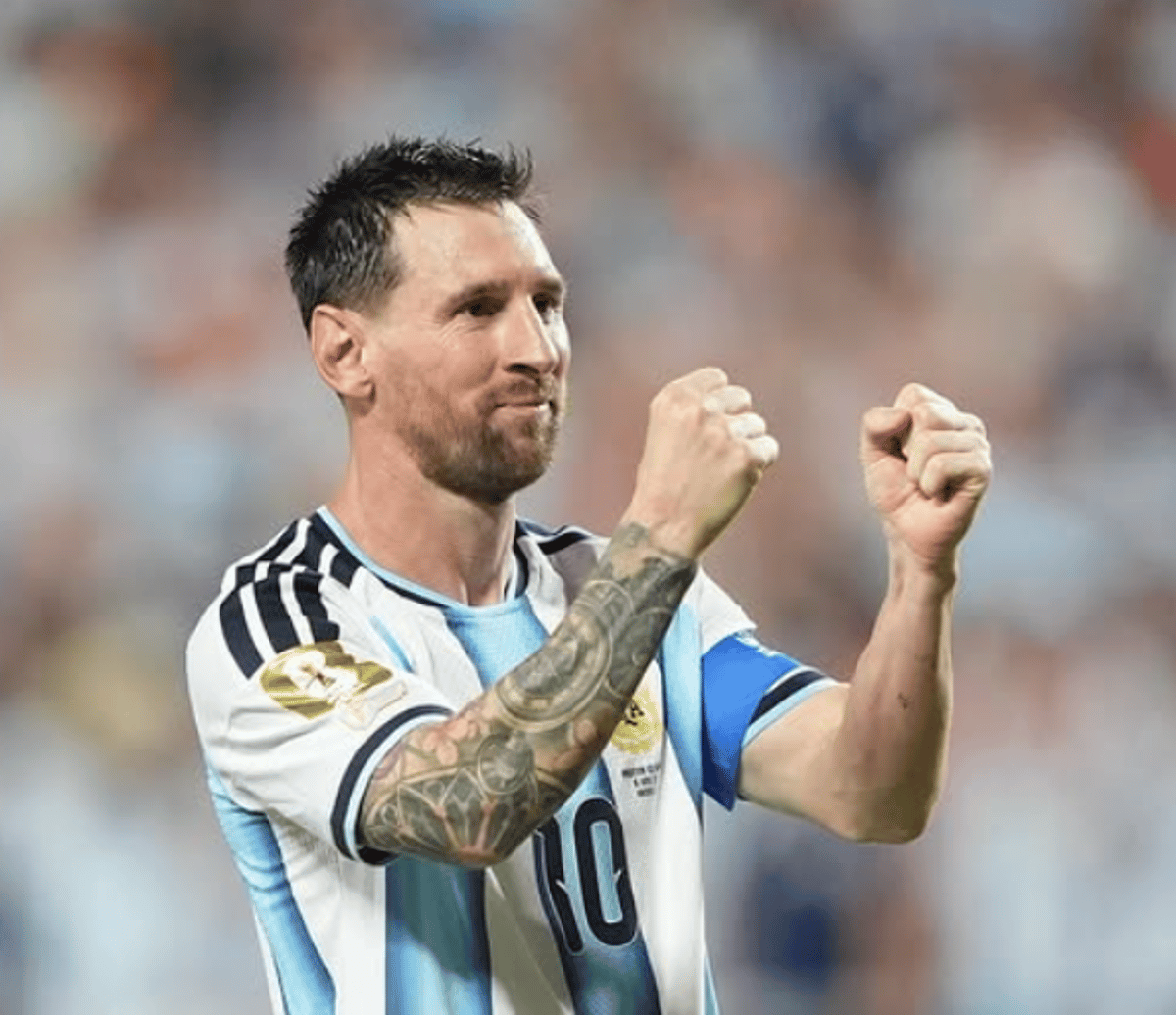
One of the main arguments for why Lionel Messi is the greatest player in football history has always been the extraordinary things he can do with the ball. The kinds of moves that seem to defy logic and imagination.
For many years, there was only one player who inspired that comparison: Diego Maradona.
Maradona retired at 37, but his elite football career effectively ended much earlier. Yet he remained a magician, a player whose style was perfectly suited to Italian football. He painted with the ball. He performed actions that, until then, many people did not believe were possible on a football pitch.
Before Messi won the World Cup, many argued that because Maradona and Pelé had lifted the trophy, Messi could not be considered the greatest until he did the same. Yet as early as 2011 and 2012, there were observers who watched Messi's performances and staggering statistics and concluded that, from a purely technical standpoint, he was already every bit as gifted as Maradona.
Pelé won three World Cups and scored roughly 900 career goals. Messi has now surpassed that goal tally, though he will almost certainly never match Pelé's three World Cup titles.
By now, however, there is a broad understanding that no single trophy determines greatness. A World Cup alone cannot settle the debate.
Ronaldo Nazário won two World Cups but never lifted the UEFA Champions League trophy. Zlatan Ibrahimović never won the Champions League either. Johan Cruyff never won a major international tournament with the Netherlands. Nor did the great Roberto Baggio.
The question of who is the greatest of all time therefore rests on several factors: technical ability, longevity, the capacity to produce moments never seen before, statistical achievement, and success on the international stage.
Among those factors, the most important is the ability to do magical and unprecedented things with the ball.
And here, there is simply no debate.
What Messi has done in the modern era is without comparison.
There have been phenomenal players. Kylian Mbappé is extraordinary. Cristiano Ronaldo would likely have been considered the most complete if not best ever player in history had Messi never existed. In many ways, Mbappé's style resembles the Cristiano Ronaldo of seven or eight years ago.
But Messi's case has become overwhelming.
At 39 years old, he is still leading the World Cup scoring charts and remains, from a technical standpoint, among the very best players in the world. That fact alone demonstrates that he sustained excellence far longer than Maradona. Compared to Pelé, Cruyff, or Cristiano Ronaldo, his technical repertoire is richer and more complete.
His résumé leaves little room for criticism. He has won the Champions League. He has won the World Cup. He has scored more goals than almost anyone in football history. He holds the record for the most individual awards as the world's best player.
He has also achieved something almost unprecedented: leading a national team deep into a World Cup while playing club football in a league that is not generally considered among the world's elite.
And in this tournament, he continues to display every aspect of his genius. Long-range goals. Close-range finishes. Dribbles through crowded defenses. Delicate chips. One-on-one brilliance.
At 39, he remains one of the two best players in the World Cup.
That is why the debate is effectively over.
The combination of technical mastery, longevity, statistical dominance, individual awards, club success, international success, and unmatched creativity has produced a résumé that no other player can fully match.
There is no longer any room for doubt.
Lionel Messi is the GOAT.