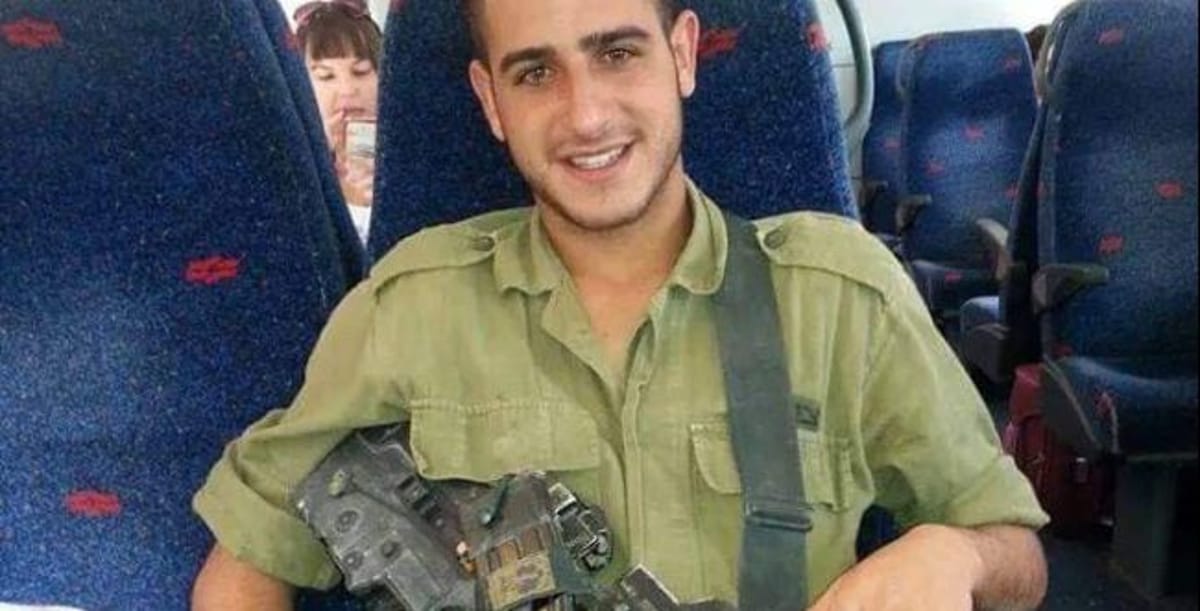
The death of Bar Kalef and Or Donio has brought the issue of combat veterans' treatment back into the headlines, but for the combat survivors who fight day in and day out to survive, the post-combat struggle is not new at all. We spoke with Omer Amsalem, a combat veteran, about the challenging process of coping with post-traumatic stress, the feelings he's experiencing these days, and the expectations he has from both the government and society.
Amsalem is married with a three-and-a-half-year-old child and another one on the way, residing in Kiryat Ata. He is 30 years old. However, Operation Protective Edge is something he hasn't recovered from. "I was discharged in 2016. Two months after Operation Protective Edge, I experienced seizures during routine guard duty. I was demoted to a soldier-standard job. That's where it all began in the military service."
"With the allowance I receive today I can not survive"
They recognized me quickly because there were all the opinions. They recognized me after eight months. I received the contracts 5 minutes after my mother died." As part of the recognition process, there were testimonies and confirmations, and committees that he had to go through. "Both commanders and friends testify, you have to go to a psychiatrist, disability committee, percentages." He was on the fast track, known as the "green track", The difficulty was mainly the uncertainty. While I'm waiting for recognition I have nowhere to live. With the allowance I receive today I do not survive. I am with a thousand shekels in my hand. I'm waiting for the first fay of the month. We have to pay back apartment owners."