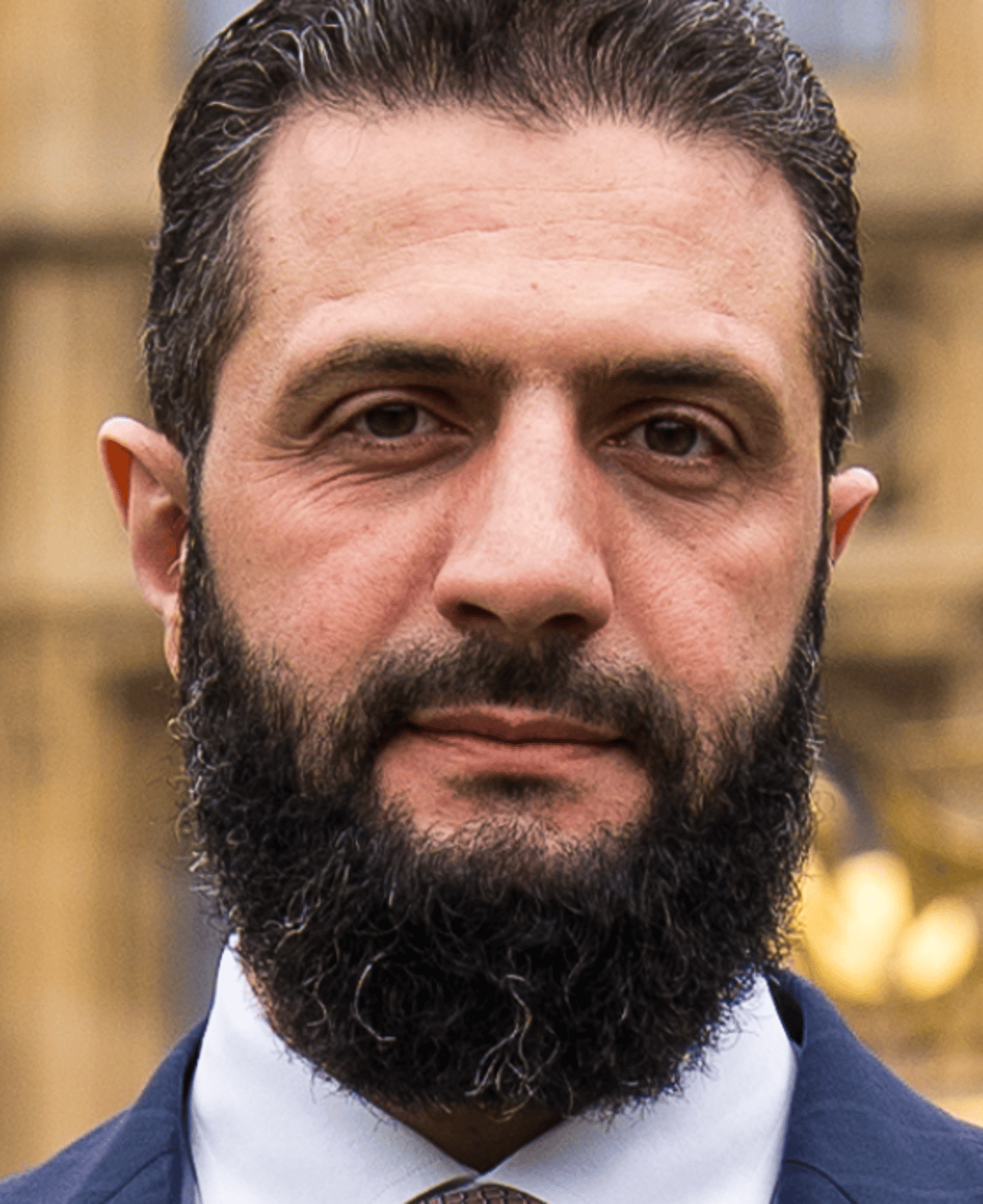
There is a version of the Trump doctrine on the Middle East that has genuinely reshaped the region for the better. And then there is this: the idea, floated by the president himself on more than one occasion now, that the answer to Hezbollah is to hand the problem to Ahmed al-Sharaa, who has bought a suit and re-made himself as Al-Julani.
Let's be clear about who we're talking about. Al-Sharaa is not a blank slate. He built his career as a jihadist commander under the al-Qaeda banner before rebranding under Hay'at Tahrir al-Sham and eventually inheriting Damascus after Assad's fall. Trump has called him a "tough guy" and praised the "amazing job" he's done consolidating Syria. Maybe so. But consolidating power and being trustworthy with a multi-sectarian neighbor's security are not the same achievement, and the record on the former should give any serious observer real pause about the latter.
I don't need to remind readers what forces drawn from that background have done to religious minorities inside Syria's own borders. The reports out of Alawite and Druze communities over the past year and a half haven't been ambiguous. Say what you want about the intentions of the man at the top, and I have real doubts about those too, but intentions matter less than what fighters raised on jihadist doctrine actually do once they're given a green light and a border to cross.
Lebanon is not a monolith. It has one of the largest Christian populations left in the region, a fractured Sunni community, Druze villages, and a Shiite population that Hezbollah, for all its sins, actually represents to a meaningful degree. Sending Sunni Islamist forces across that border in the name of fighting Hezbollah is not a surgical strike. It's an invitation to exactly the kind of sectarian bloodletting the region has spent the last two years trying to put behind it.
To his credit, al-Sharaa himself seems to understand this better than Washington does. He has said no, repeatedly and in plain language, to any military role in Lebanon, favoring economic and political channels instead. That should tell us something. When the man being handed the assignment keeps declining it because even he can see the sectarian tinderbox it would light, perhaps the idea deserves more scrutiny than it's gotten from the Oval Office.
And Israel's own defense establishment has said as much, more bluntly than any diplomat usually would. "This is like tossing a match into a powder keg," one official told N12. "We will get al-Qaeda and Erdogan on our northern border." That is not the language of people who see this as a clever outsourcing arrangement. That is the language of people staring at a scenario where a jihadist-rooted army and an emboldened Turkey end up standing where Hezbollah used to stand, on Israel's actual border, with far less predictability than even Hezbollah offered.
I understand the frustration driving this idea. Israel has hit Hezbollah hard, but hitting hard and finishing the job are different things, and the temptation to find someone else to finish it is real. But Jewish history has taught us, more than once, to be suspicious of solutions that outsource our security to actors with their own agendas and their own scores to settle. We do not get to choose our neighbors. We do get to insist that whoever holds power on our border isn't rewarded with new territory in exchange for promises about intentions we have no way of verifying.
If the goal is a stable, disarmed Hezbollah and a Lebanon that can finally govern itself, the answer is not a Syrian army marching into the Bekaa Valley. It's a Lebanese state actually asserting sovereignty over its own territory, something both the Lebanese government and, ironically, the Israelis want, and something no amount of outsourcing to Damascus will substitute for.
Sharaa said no for a reason. Washington should listen to him