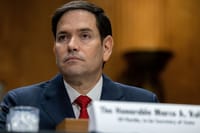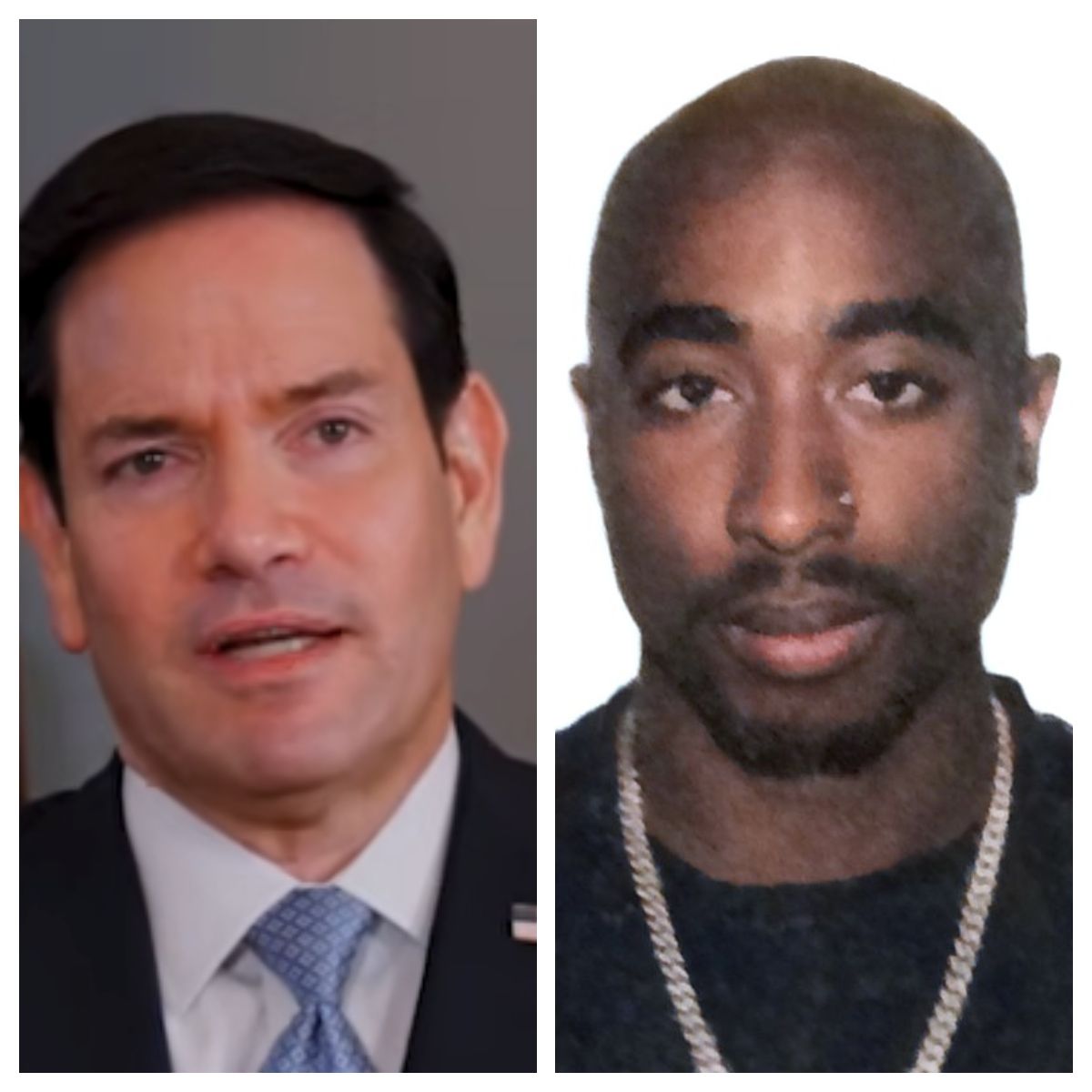
A few days ago, Marco Rubio was asked to name his favorite rapper. He said Tupac.
On its surface, it's a harmless question, a politician trying to sound like a regular person, the kind of softening interview that's become standard political theater. But in that moment, Rubio revealed something much more troubling than a tone-deaf musical choice. He revealed a fundamental failure in how contemporary leaders understand authenticity, and what it means to actually connect with the people they claim to represent.
The problem isn't that he chose Tupac. It's that he chose the most obvious answer possible while sitting on a gold mine of a real one.
The Missed Layup
Popular and beloved Rabbi and influencer, Rabbi Shais Taub, explains: Here's what should have happened: Rubio, whose family fled Cuba in the 1950s as anti-communist dissidents, should have named Sen Dog of Cypress Hill.
Think about it. Sen Dog was born in Cuba to a family with the exact same story, anti-communist roots, Miami diaspora, the full arc of that particular American immigrant experience. Cypress Hill is actually musically excellent in a way that casual name-dropping doesn't require. And naming them would have been a bridge, not a performative one, but a real one, between his authentic biography and contemporary culture. It would have signaled that he knows something, that there's a real reason he chose this artist beyond "he's famous."
Instead, Rubio picked Tupac. And in doing so, he revealed the entire failure mode of performative relatability.
The Theater of Authenticity
Let's be direct: Tupac's genius was partly in his theater. He was, by most accounts, the child of an actress and playwright, a kid from Baltimore who understood performance. He played the role of "Thug Life" with such conviction that the performance became the reality. There's a famous interview where he himself jokes about this duality, about being the sensitive artist and the street persona simultaneously. Rubio even nodded to this in his answer—acknowledging that Tupac was more complex than the caricature.
So a potential future president of the United States, in a moment meant to demonstrate cultural literacy, chose to name an artist whose entire legacy is about the gap between performance and authenticity. And did so in the most performative way possible.
It's the equivalent of wearing a Nirvana t-shirt to prove you have good taste in music. It works on people who don't actually listen to Nirvana. But everyone who does knows you probably bought it at Urban Outfitters.
What This Tells Us About Leadership
The real failure here isn't musical. It's deeper. It's about the quality of thinking that goes into how we present ourselves to the public. Did Rubio's team not prepare him? Or worse --- did they prepare him, and this is what they came up with?
A genuinely confident leader wouldn't need to pick the safest, most obvious cultural reference. A leader who actually understood his own story wouldn't have needed a focus group to find a rapper. He would have known.
And that matters. Because if a politician can't be bothered to actually think through a softball question, why should we trust him to think through anything harder?
This is generational, too. Young people, the demographic Rubio was presumably trying to connect with, can smell this kind of inauthenticity instantly. They've grown up in a culture saturated with performative identity. They know the difference between someone who actually knows something and someone who Googled it five minutes before the interview.
The interview should have ended differently. The interviewer should have asked the follow-up: "Name three songs." And we all would have learned something real about whether this was knowledge or theater.
The Cost of Trying Too Hard
There's a lesson here about leadership that goes beyond music criticism. When you're trying to connect with people, authenticity isn't about picking the right brand name. It's about demonstrating that you actually think about things. That you have real reasons for your choices. That you know your own story well enough to tell it.
Rubio's family story is genuinely compelling. Anti-communist dissidents who fled to Miami, built a life, raised a son who became a senator. That's not a marketing problem. That's not something that needs a rapper to make it relatable.
But somewhere in the apparatus of modern politics, the instinct became: add culture to the story. And add it in the most generic way possible.
The irony is that Sen Dog, an actual Cuban-American artist with roots in the exact tradition Rubio comes from, would have been the authentic choice. It would have signaled real knowledge. It would have been cooler, more interesting, and more true.
Instead, we got Tupac. And what we learned isn't that Rubio likes rap. It's that somewhere in how he prepares, in how he thinks about connecting with people, there's a gap between the person and the performance.
For a politician, that gap is everything.