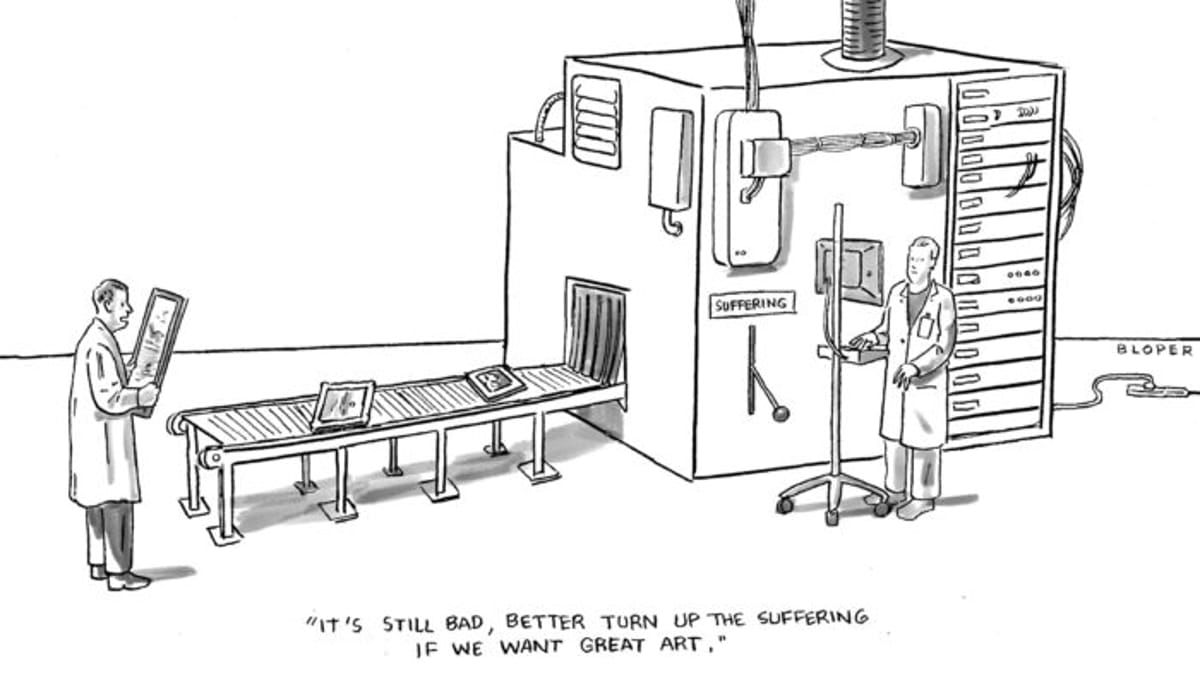
ChatGPT, it turns out, doesn't stop at creating cartoons in the recognizable style of a certain magazine --- in some cases, it adds the signatures of real artists who never drew them. According to an investigation published by Nieman Lab on October 5, the names or pen names of more than 15 New Yorker illustrators appeared on works generated by artificial intelligence, without their permission or payment.
The result isn't just imitation of an artistic style. A signature from a known creator can lead viewers to believe they're looking at his original work, and to attribute to him a joke, message or position he never chose to publish.
Real Signature, Fake Cartoon
One of the affected artists is Brendan Loper, who signs his work with the pen name BLOPER. The signature appeared on a cartoon created by a Facebook user after asking ChatGPT for an illustration "in the style of The New Yorker." The image circulated online, and some viewers believed Loper had drawn it.
Loper said he first encountered the phenomenon in May, following a message he received from a stranger on Instagram. He later found additional examples on a Reddit forum devoted to ChatGPT. "I'm not a territorial person, but my name is my name," he said, as quoted by The Verge.
The investigation also found the names of Emily Flake, Harry Bliss, Joe Dator, Pat Byrnes, George Booth and Liza Donnelly. Flake described the feeling as recognizing traces of her work in a creation that isn't hers: "It's a bit like seeing a distant cousin."
Licensing Deal Didn't Include Cartoons
In 2024, OpenAI signed a licensing agreement with Condé Nast, the publisher of The New Yorker. But according to a magazine spokesperson, the agreement did not permit training the models on the cartoons or using the magazine's logo and artwork to create images. He emphasized that copyright on the cartoons remains with the illustrators.
A review Nieman Lab conducted of the magazine's standard contracts with its illustrators also found they don't allow granting licenses to use cartoons for AI training purposes. OpenAI did not explain to the investigation how its models learned to reproduce the signatures.
A Warning That Doesn't Stop Creation
After Nieman Lab's inquiry, OpenAI added a warning that appears on some requests to create cartoons in the magazine's style. The message states that the request may violate the system's limitations regarding similarity to third-party content. However, according to the investigation, as of publication the system still created images and sometimes added signatures of real artists to them.
In response, OpenAI said it believes "the future of creativity is fundamentally human," and that it values reports of bugs and unintended behavior by its models.
The legal question is more complex than just the appearance of the signature. Professor James Grimmelmann of Cornell Law School told Nieman Lab that a copyright lawsuit would likely focus on whether the system copied protected elements from the works. For the artists, however, the harm is already clear: their name appears on work they didn't do, and the public doesn't always know how to tell the difference.