Get our mobile app
Download on the App StoreGet it on Google Play

Three years since the massacre

ZAKA: "We saw the second Holocaust in color"

Three years after the Simchas Torah massacre, ZAKA volunteers Yitzhak Eitach and Nachman Shai Revivo share firsthand testimony from the Gaza envelope: retrieving bodies under fire, charred remains of children, and a race against time at the Re'im festival site

Yitzhak Eitach in the field | Photo: ZAKA
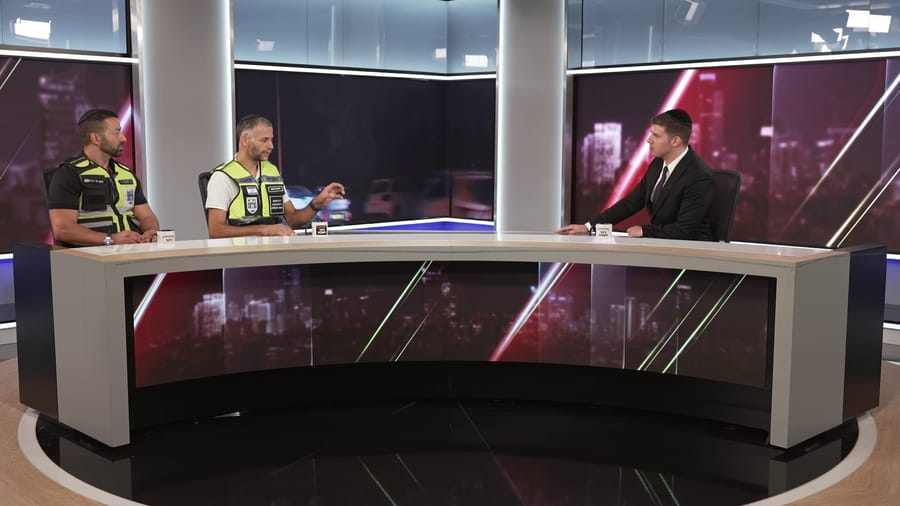
ZAKA volunteers Yitzhak Eitach and Nachman Shai Revivo | Photo: Kikar HaShabbat

Three years have passed since that bitter, hurried morning of Simchas Torah, the day the Jewish people experienced the heaviest disaster since the founding of the state. While tens of thousands of Israelis woke to the sound of sirens and a flood of rumors, there were those who put on fluorescent vests and raced straight into the jaws of hell.

Two of those men of true chessed who saw it all up close on the day of the massacre itself spoke this week: Yitzhak Eitach, a resident of Beitar Illit and commander in ZAKA and Hatzalah Without Borders, and Nachman Shai Revivo, a Jerusalem resident, Magen David Adom medic and ZAKA volunteer. In a conversation heavy with pain, they break their silence and deliver historic, chilling testimony, to memorialize, to document, and to prevent anyone in the world from denying the atrocities.
"Pack a bag and head south immediately - there's a war"

For both men, the morning began as an ordinary Yom Tov of tefillah and simcha, far from the southern sector. But the quiet was shattered in an instant.

"Around six in the morning I got a call from MDA dispatch to get to a vehicle," Revivo recalls. "I'm a medic with an emergency vehicle in Jerusalem. I put on a bulletproof vest and helmet and started driving around the city. The skies were full of interceptions, but we still didn't grasp anything. Only around eight o'clock I got a call from a friend in the south who said one sentence that shook me: 'Nachman, pack a bag and head south immediately. A war has broken out, hundreds of terrorists have entered the envelope, they're slaughtering people, you really need to be here.'"

Nachman didn't hesitate for a moment. He linked up with his colleague, Natan Sabag, and they began a rapid drive south. "I said to myself, if something happens to me, tell my family I love them. We understood we were entering the unknown, without knowing if we'd even come back."

The first destination they were sent to was Barzilai Medical Center in Ashkelon, where the pathology center had been set up. The sight that unfolded before them was a scene of horror: "As soon as we entered the hospital grounds, we saw a carpet of hundreds of bodies that had already been gathered from the field. Before we could even breathe or drink a cup of water, a naval commando fighter comes up to us, fully armed from head to toe, and grabs me: 'Are you ZAKA? I need you with me right now in Netiv HaAsara.'"

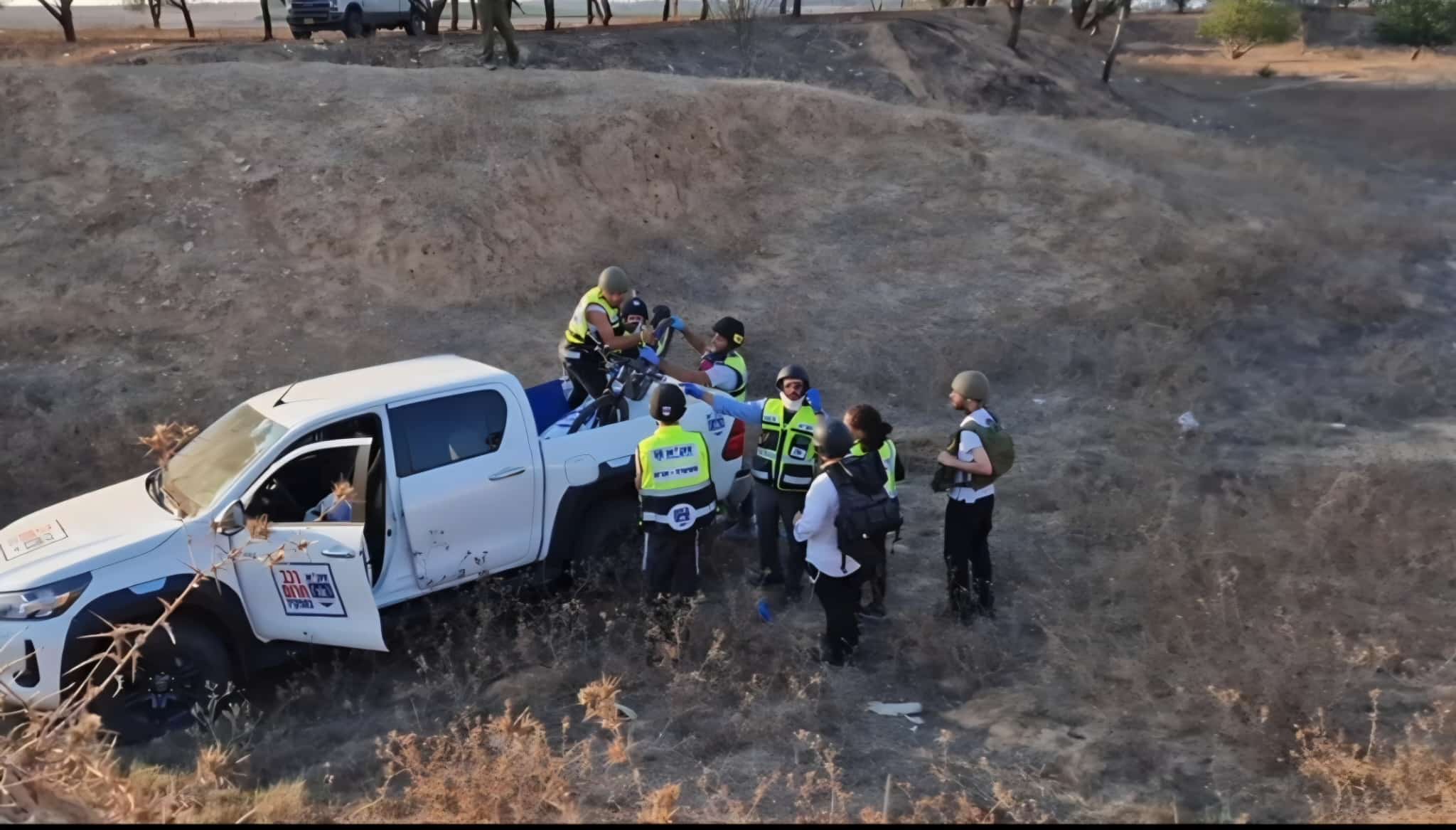
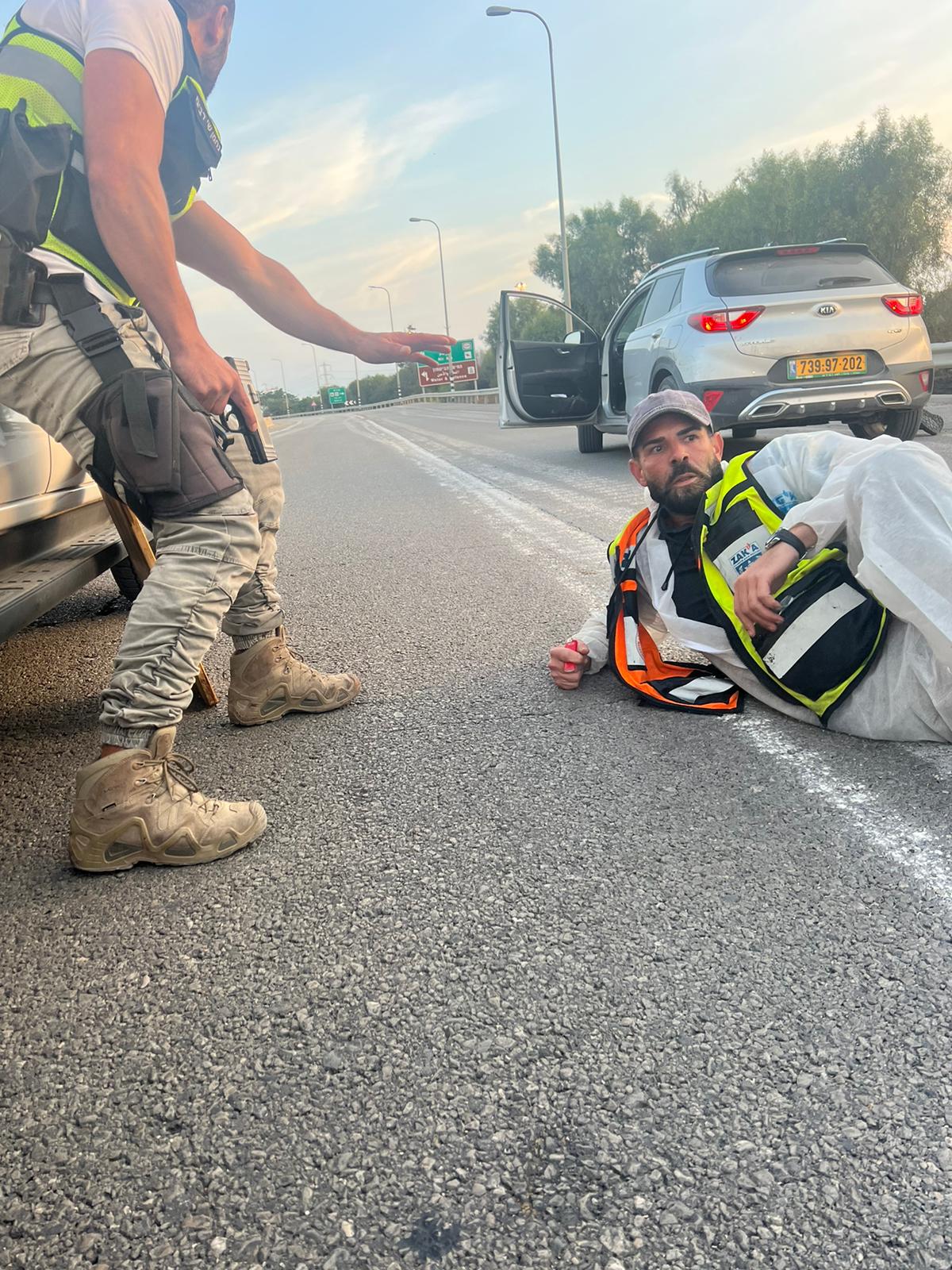
Nachman Shai Revivo under fire | Photo: ZAKA

Netiv HaAsara: retrieval under fire and a race against Nukhba terrorists

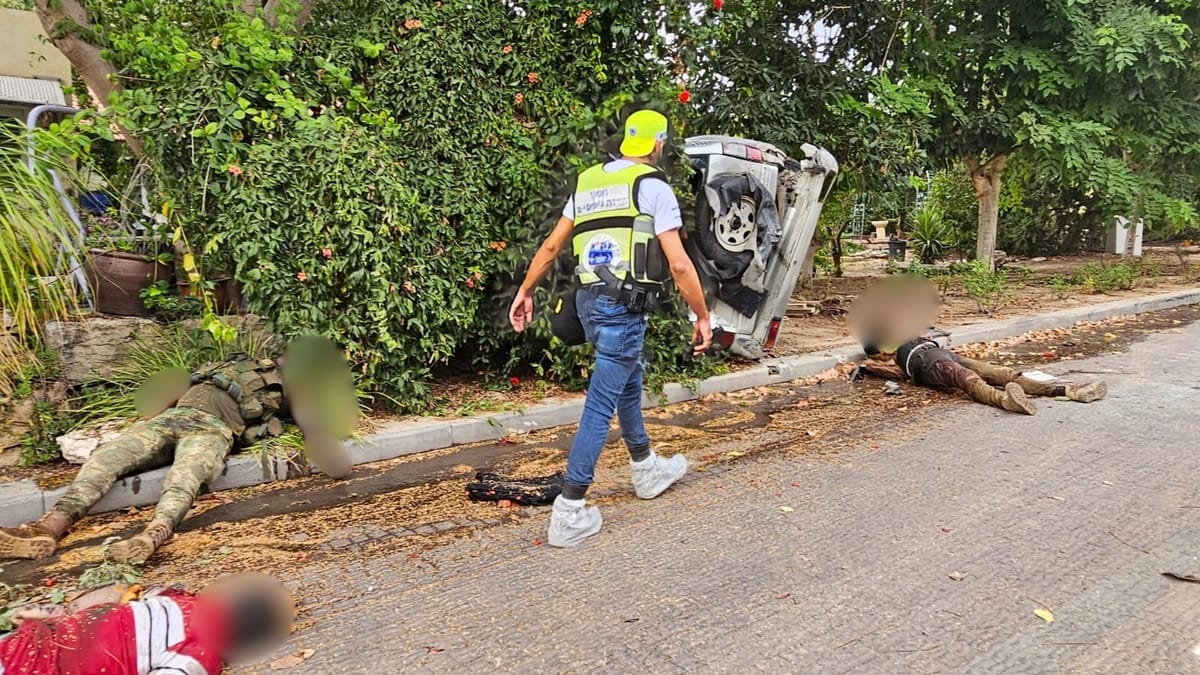
On the drive into Netiv HaAsara, reality hit with full force. "I didn't know the envelope communities at all," Revivo says. "The closer we got, the gunfire around us only intensified. Along the sides of the roads, overturned vehicles appeared before our eyes, IDF weapons thrown aside, bodies scattered on the asphalt, and even live terrorists tied to poles because the soldiers didn't have time to deal with them."

In Netiv HaAsara, the volunteers operated under mortal danger, to prevent additional terrorists from abducting murdered bodies to the Gaza Strip: "We hooked a trailer to our jeep and started scanning house by house. We loaded bodies, tied them with ratchet straps so they wouldn't fall during the fast drive, and raced back toward Ashkelon. Toward dark they announced to us on the radio: 'The Nukhba are returning on motorcycles, leave the area immediately.' We worked inside a thick cloud of smoke, with IDF tanks still burning in the background."

They were also called to evacuate with nine heroic naval commando fighters who fell in the battles.

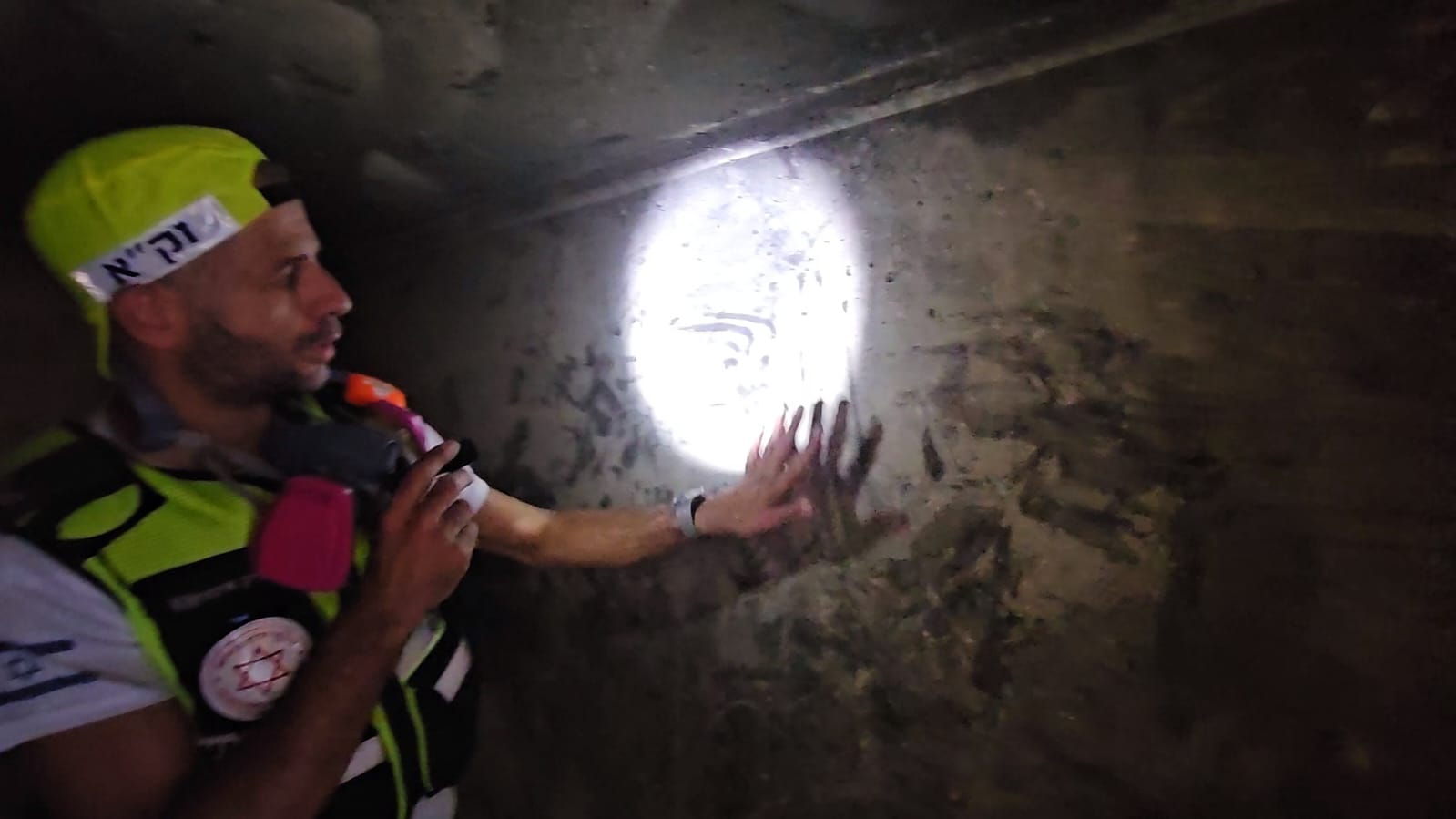
Volunteer Yitzhak Eitach at the death shelter | Photo: ZAKA

"It doesn't belong to rational explanation - it's chessed shel emes"

While Nachman Revivo was operating in Netiv HaAsara, Yitzhak Eitach was in Beitar Illit. As a veteran rescue worker, army officer and commander, the phones didn't stop ringing.

"It's Yom Tov, Simchas Torah, Shabbos kodesh, you're davening and trying to be besimcha, but the phone vibrates without stopping," Eitach recalls. "They told me: 'Yitzhak, we need you, take an ambulance and drive south.' Around 1:00 PM in the afternoon I headed toward Route 25. I got there and the place was simply burning, total chaos."

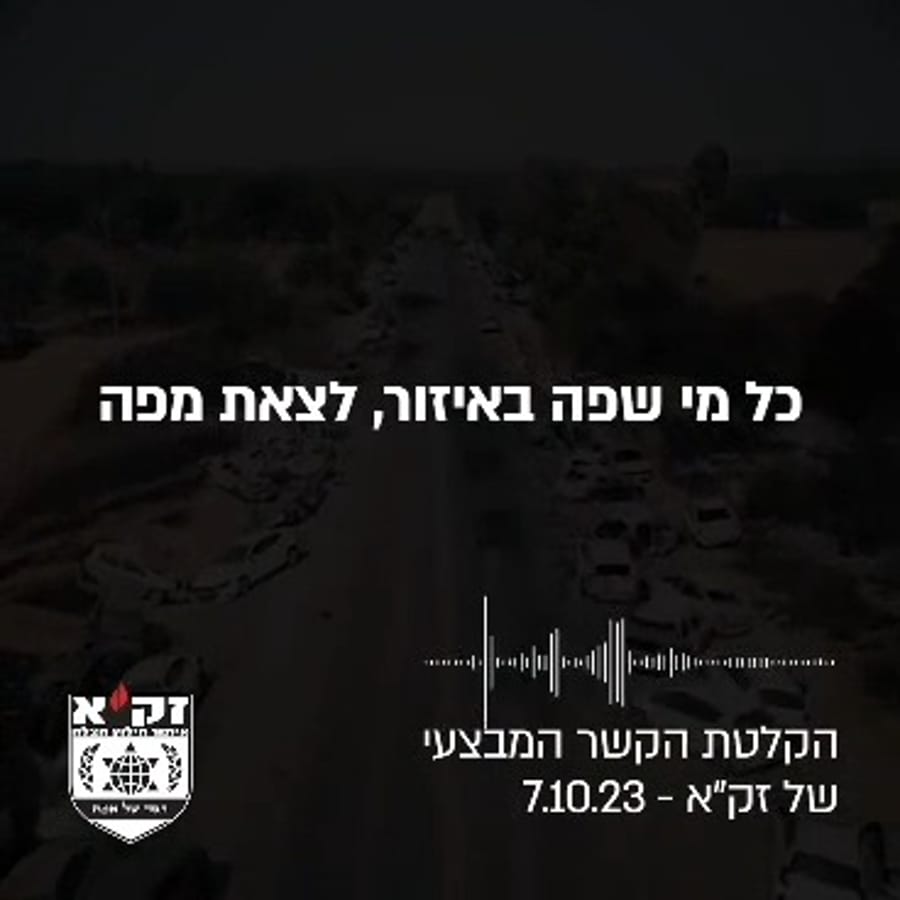
ZAKA's operational communications on October 7 | Photo: ZAKA

Eitach found himself inside a battle zone where the normal rules of medical triage completely collapsed: "A Yasur helicopter landed next to us in an open field, and we started treating the wounded one after another. Gunshot wounds from point-blank range, horrific stab wounds. Vehicles of civilians and security forces arrived riddled with bullets, the drivers shot and dying and bodies lying in the back. There wasn't even time to touch the dead, only to apply tourniquets, open IVs, give fluids and load onto helicopters.

"What we did there cannot be explained logically. There's no fear in those moments, the adrenaline simply paralyzes you and you become a robot programmed only to save lives and do chessed shel emes. To this day I say: if I had crossed the road a second earlier or later, I probably wouldn't be sitting here today."

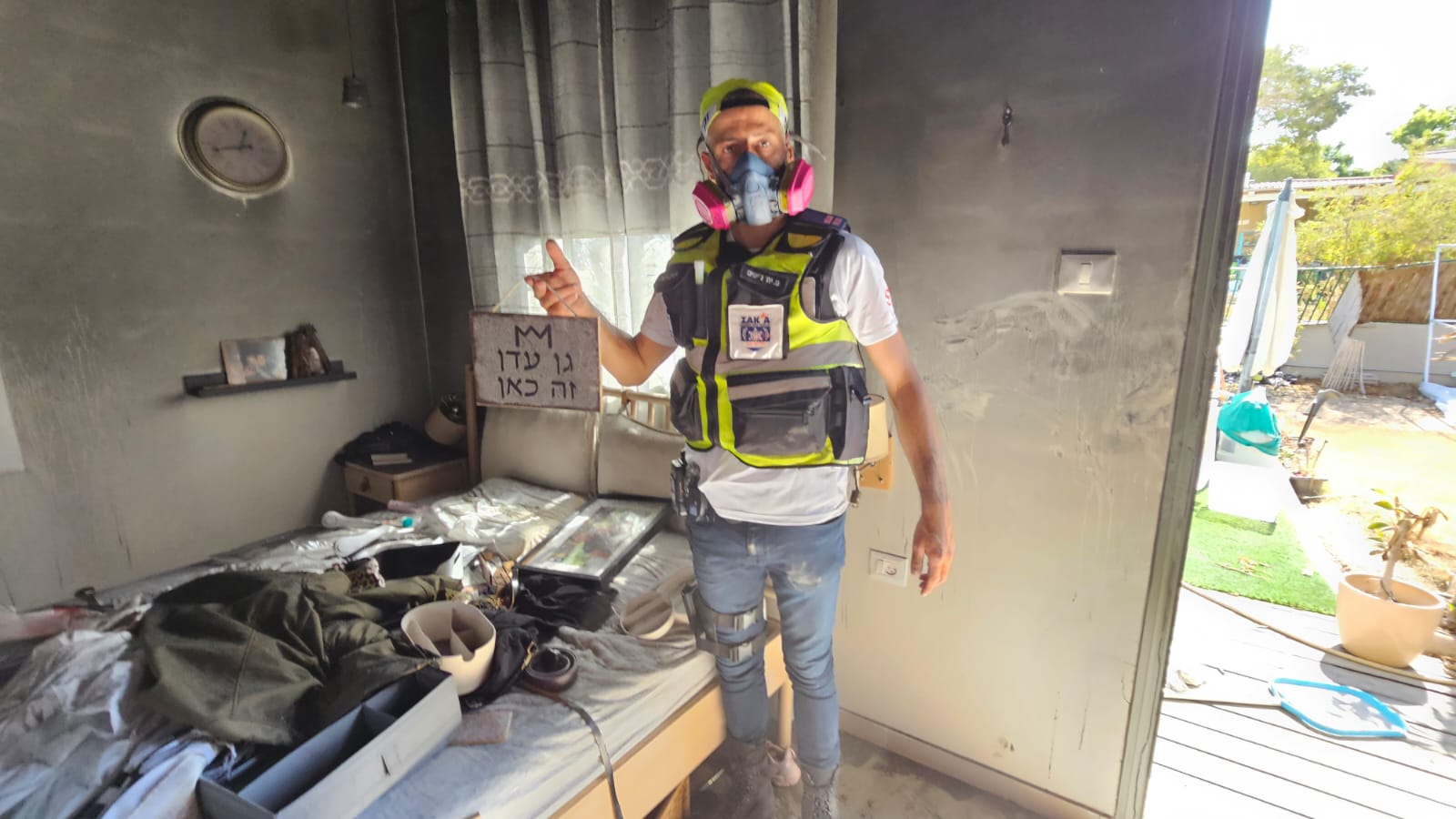
Yitzhak Eitach at one of the damaged homes | Photo: ZAKA

The inferno at Re'im: "An entire field of murdered people"

The night hours of motzei Simchas Torah brought Eitach and Revivo together at a place that became the symbol of the inferno, the Nova festival site near Kibbutz Re'im.

"We arrived at the site around midnight, and I blacked out," Eitach says in a choked voice. "Everything you heard in the media reports - multiply it by two and three. They said 100 dead? We found 200. They said 200? There are 400. An entire field of bodies. Total darkness, only flashing lights from vehicles, and you understand that every vehicle standing on the side of the road contains murdered people inside."

The work was done under impossible time pressure. The army gave the volunteers a clear ultimatum: by 4:00 AM, the area must be cleared of all people, due to heavy concern about suicide drones and the danger that any figure moving in the space would be considered a terrorist.

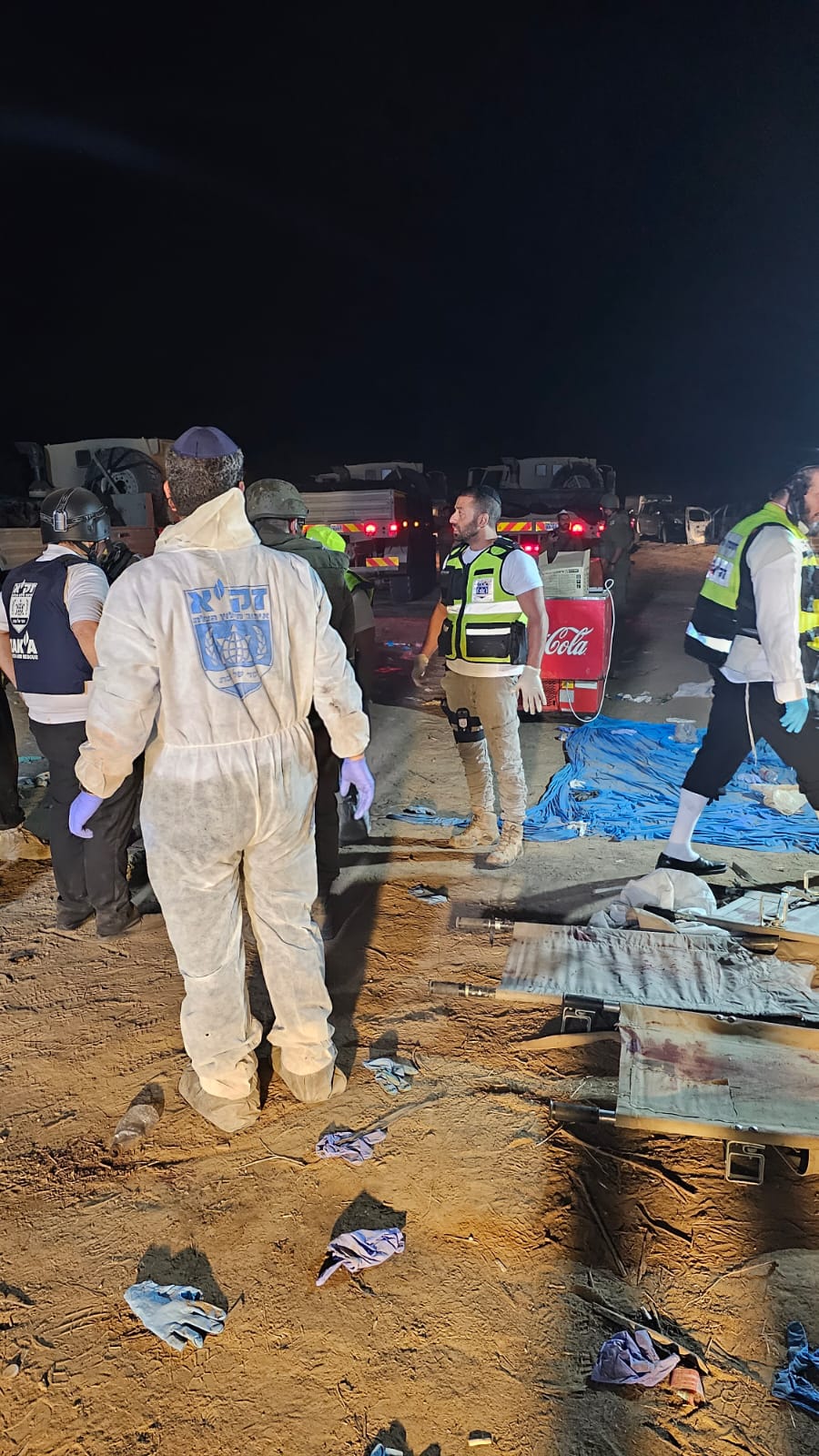
"We became a giant evacuation chain," Revivo says. "A military or civilian truck enters, we load it with dozens of bodies, it leaves, and another truck enters. Volunteers arrived with trailers, pickups, even delivery trucks from food companies that were mobilized to the field in order to evacuate as many as possible in time."

Nachman Shai Revivo in the field | Photo: ZAKA
Loading bodies onto the vehicle | Photo: ZAKA

"The barbarism is beyond description": horrific testimony of abuse and burning

Beyond the incomprehensible number of victims, the volunteers were exposed to sights that revealed the satanic cruelty of the murderers: "In every single body we saw confirmation killing," Eitach says. "A precise bullet to the head. We saw people who were shot while tied up, and bodies that were set on fire with special combustible materials. This wasn't a regular fire from a burning vehicle, they used chemical materials that caused the giants of the wheels to melt and turn into flat ash on the road. Imagine what such material does to a human body."

Eitach also shatters denial theories: "They asked me more than once if they burned children. I say in the clearest way possible: they burned bodies of children, of women, of elderly people, deliberately and intentionally. I held in my own hands remains from inside houses and cars where almost nothing remained. A lion in the jungle doesn't behave this way. The terrorists stayed for long hours inside the kibbutzim and abused everyone who crossed their path."

Nachman reconstructs one of the most difficult moments, at the Yad Mordechai junction: "We received a mission to locate remains of a murdered person inside a completely burned and charred vehicle. Ten volunteers lay down on the floor, and we scraped every finding that could lead to a proper Jewish burial. The brother of the murdered person stood a meter away from us, looking at us in silence. In the end we managed to fill only a small bag of findings, I approached him and handed it over: 'This is what remains of your brother, take it for a Jewish burial.'"

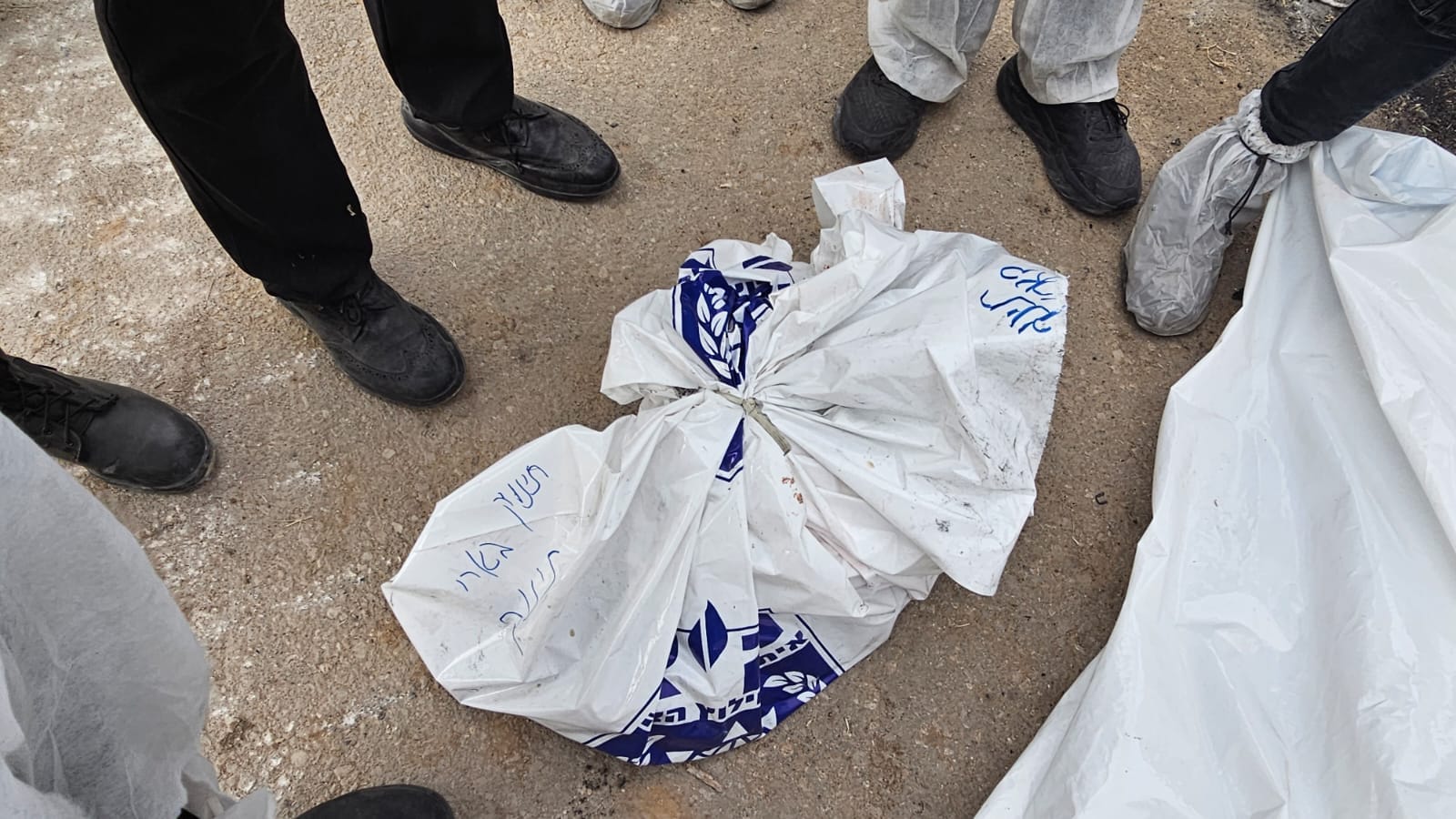
Body of an infant retrieved from the inferno | Photo: ZAKA

"We are the eyewitnesses - we went through a Holocaust in color"

As someone who previously commanded difficult disaster centers, including the Meron disaster, Nachman Shai Revivo makes clear that nothing compares to the events of October 7: "I was at Meron, I identified and treated the dead. I was on relief missions at natural disasters around the world. I thought I had seen the edge of human capacity to absorb difficult sights. But here we encountered pure evil, monstrosity. We didn't even have one minute to sit and cry. We simply operated in complete emotional blindness, like an automatic mechanism."

At the end of the interview, the two issued a firm call against the waves of denial and lies being spread around the world: "People ask us how we continue to live with these memories. The answer is that we carry the testament of the kedoshim. The Jewish people went through two Holocausts, the first was in black and white, and we merited, or it was decreed upon us, to see the second Holocaust in color. We smelled the smell, we heard the screams, we touched the ash. Our moral and historical obligation is to tell, to cry out and not to let go, so that no person in the world can claim it didn't happen."

To remember and not forget: watch the full interview

Ready for more?

Join our newsletter to receive updates on new articles and exclusive content.

We respect your privacy and will never share your information.

Enjoyed this article?

Yes
No
Follow Us:

Unmissable content


Loading comments...

Also of Interest