Get our mobile app
Download on the App StoreGet it on Google Play

Starship Caught by Tower

SpaceX Catches Starship in Midair

After more than 22 hours in orbit, the Starship spacecraft flew back to Starbase in Texas and was caught by the launch tower's giant "chopsticks" arms, a key step toward fully reusable rockets.

SpaceX Catches Starship Spacecraft in Midair for the First Time After Orbital Flight

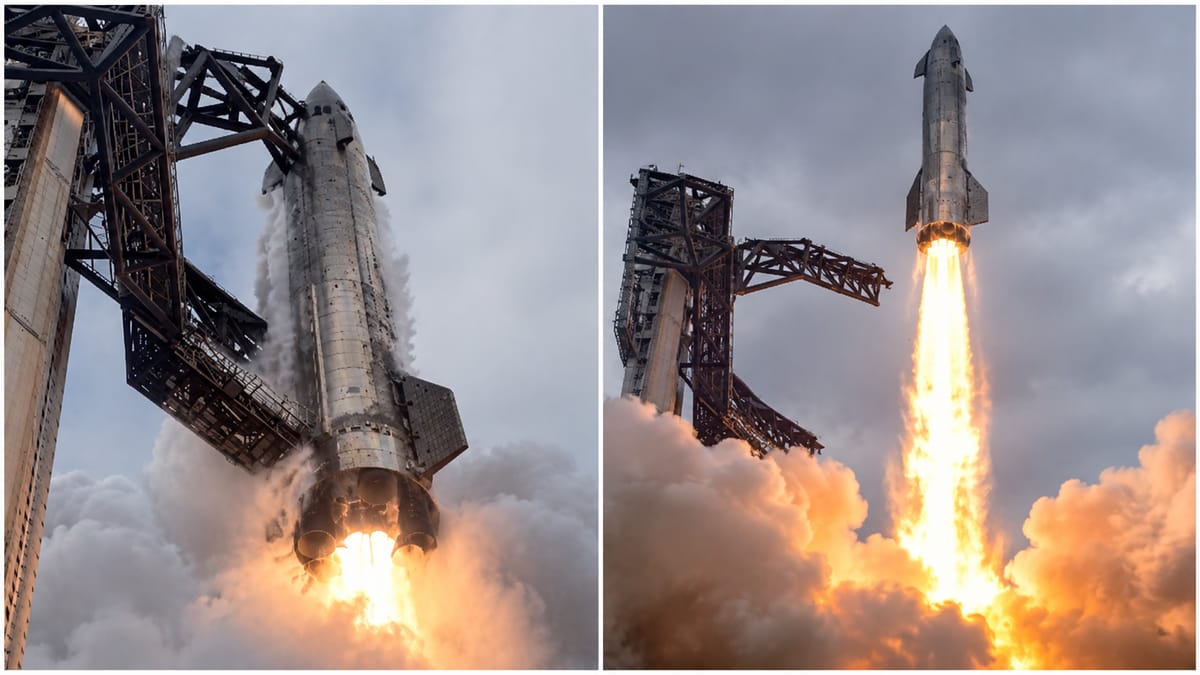
Elon Musk's SpaceX caught its Starship spacecraft in midair for the first time on Saturday, November 14. The company used two giant mechanical arms on the launch tower at its Starbase site in South Texas to grab the vehicle as it returned from more than 22 hours in orbit.

The catch took place during the 15th test flight of the Starship system, according to Kikar HaShabbat. The spacecraft lifted off the day before, on Friday, atop the powerful Super Heavy booster. It separated from the booster and continued on to space.

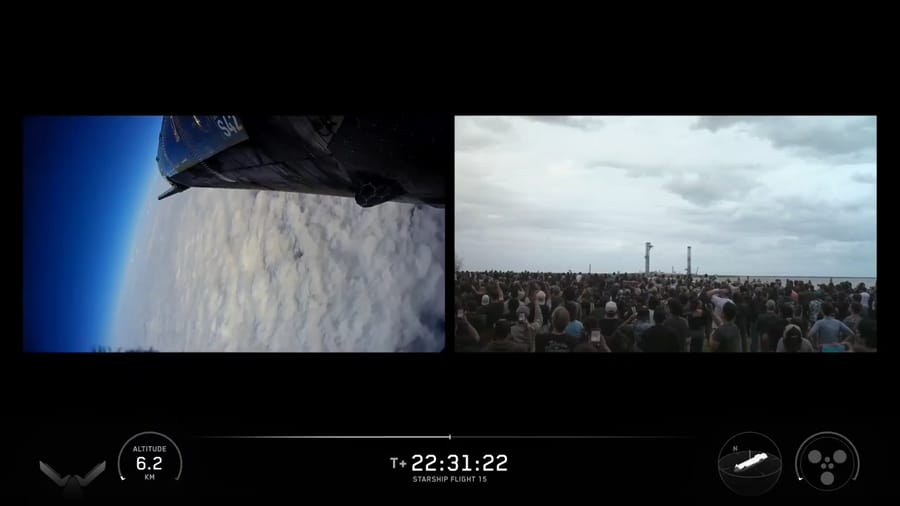
During the mission, Starship completed 14 orbits of the Earth at a speed of about 28,000 kilometers per hour and deployed 26 Starlink satellites. After more than 22 hours in space, it began its journey home.

Reentry was the most demanding phase of the flight. The spacecraft had to withstand the extreme temperatures generated as it plunged back into the atmosphere. Its heat shield, made up of thousands of specialized ceramic tiles, protected it from the intense heat.
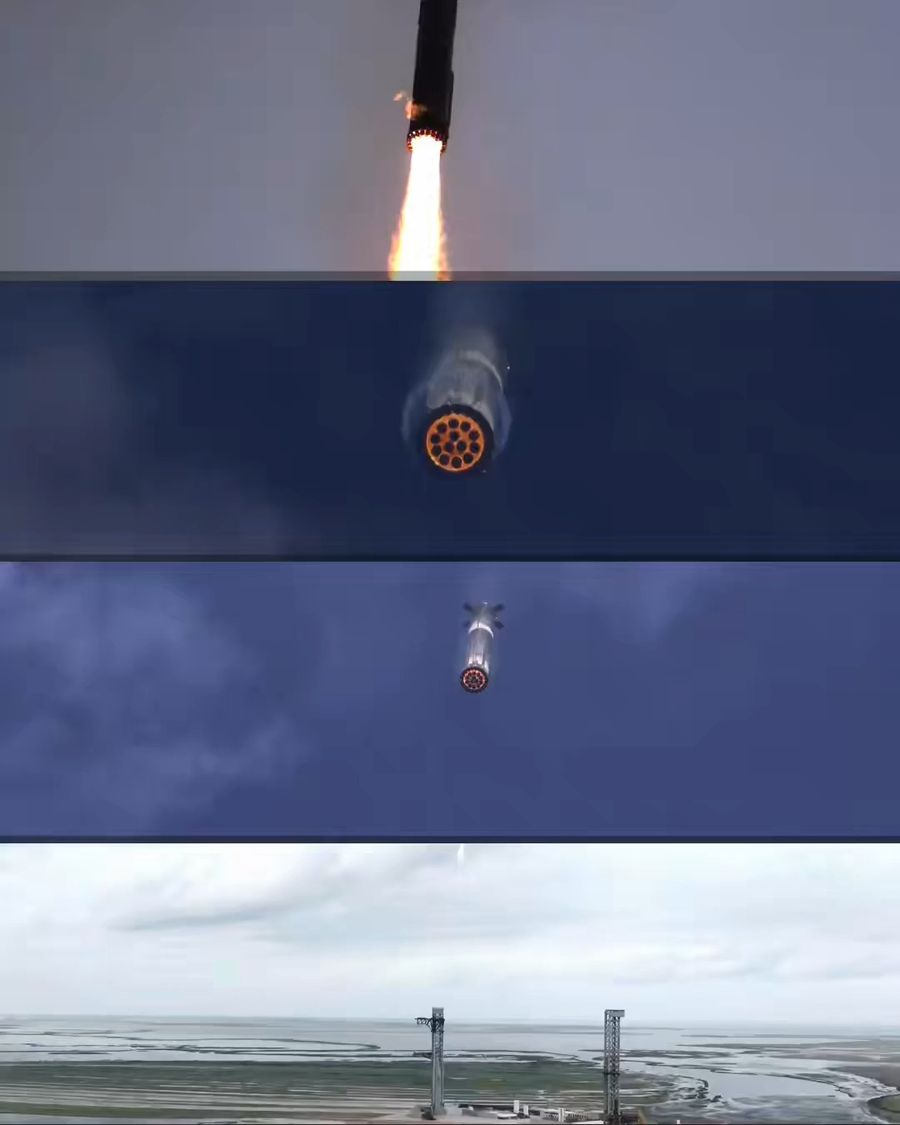
SpaceX's Starship spacecraft returned from orbit and was caught in midair
SpaceX's Starship spacecraft returned from orbit and was caught in midair (Photo: SpaceX)

As Starship neared the launch site, it carried out a complex maneuver. It changed its flight attitude, relit its engines and swung into a vertical position for its approach to the launch tower. Two huge steel arms, known at the company as "chopsticks," were waiting there. They are designed to grab the spacecraft at dedicated catch points on its body.

The maneuver was completed at about 4:20 p.m. Eastern Time. Starship settled between the arms, its engines shut down, and it hung above the ground, held in place by the tower. It was the first time SpaceX had caught Starship's upper stage after a return from orbit.

Until now, the company had used the arms only to catch the lower stage, the Super Heavy booster. The booster has been caught successfully three times in earlier tests. The spacecraft is harder to catch because it flies higher, returns at much greater speed and must perform far more complex maneuvers before capture.

SpaceX had already caught its returning booster three times with the giant tower arms, and has now caught the Starship spacecraft itself in midair for the first time after a flight to space.
SpaceX had already caught its returning booster three times with the giant tower arms, and has now caught the Starship spacecraft itself in midair for the first time after a flight to space. (Photo: SpaceX)

The achievement is considered one of the company's most significant breakthroughs. Musk's goal is a launch system in which both the booster and the spacecraft return to Earth and can be readied for another launch within a short time, much like an airliner that lands and takes off again.

The implications for the space industry could be dramatic. Instead of building a costly new rocket for every mission, operators could fly the same vehicles again and again. That would cut launch costs and make far more spaceflights possible.

NASA is also following the program closely. According to Kikar HaShabbat, the US space agency has contracted SpaceX to develop a version of Starship that will land astronauts on the moon under the Artemis program and later help build permanent infrastructure on the lunar surface.

Kikar HaShabbat reported that Musk congratulated SpaceX employees after the success, and that the event drew enormous attention across the space world. For SpaceX, the catch is another step toward an ambitious vision of spacecraft that leave Earth, reach space, return intact and lift off again for the next mission.

Ready for more?

Join our newsletter to receive updates on new articles and exclusive content.

We respect your privacy and will never share your information.

Enjoyed this article?

Yes
No
Follow Us:

Unmissable content


Loading comments...

Also of Interest