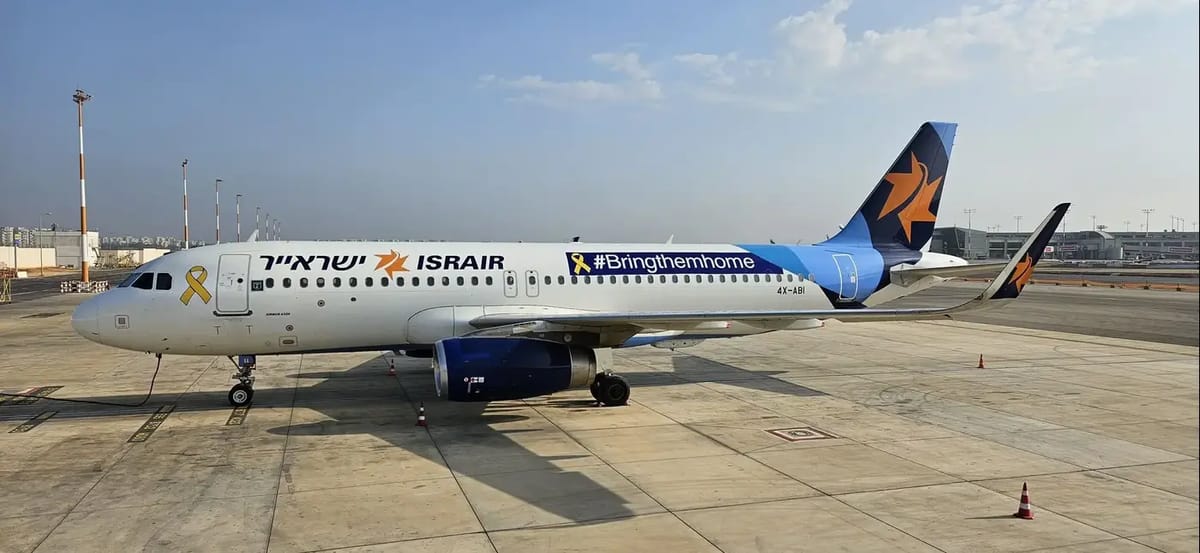
An international transit dispute has erupted in Central Europe after aviation regulators in Slovenia unexpectedly refused to grant landing clearance to an Israir commercial flight. The passenger aircraft, which was scheduled to touch down in the capital city of Ljubljana, was forced to abruptly alter its flight path and divert to Zagreb, Croatia. The airline's leadership immediately condemned the move, attributing the refusal entirely to hostile political motivations within the host nation.
Corporate executives stated that the sudden airspace ban represents a flagrant violation of long-standing bilateral aviation treaties and established European Union transport laws. Management confirmed that the Slovenian authorities explicitly cited their opposition to current Middle Eastern defense policies as the core reason for blocking the scheduled commercial arrival. The unexpected diversion left hundreds of holiday travelers stranded in a neighboring jurisdiction.
The aviation incident reflects a broader, systemic diplomatic campaign orchestrated by Slovenia's outgoing administration, which has consistently ranked among the most vocal critics of Israel within the European continent. The outgoing political leadership had previously taken aggressive diplomatic steps, including the formal recognition of a Palestinian state and the implementation of direct economic sanctions against conservative cabinet ministers in Jerusalem.
However, regional analysts note that the hostile airspace policy was executed during a sensitive political transition period. A recent national election has returned conservative leader Janez Jansa to power, marking his fourth term as Prime Minister. Jansa, who commands a right-wing platform, maintains a highly supportive stance toward Israel, leading industry experts to believe that the current aviation bans will be swiftly reversed once the new cabinet assumes full operational control.
While corporate legal teams are preparing formal complaints to European transport boards, official government offices in Ljubljana have remained completely silent regarding the landing refusal. The incident mirrors a wider cultural and economic boycott trend across certain European nations, several of which recently pulled out of major continental entertainment events to protest the state's participation.
The sudden airspace confrontation highlights the growing vulnerability of commercial transport lines to localized political shifts. As airlines navigate increasingly hostile regulatory environments, corporate planners are being forced to develop extensive contingency matrices to protect standard holiday travel routes. The upcoming transition of power in the European capital will serve as a critical test of whether diplomatic realignments can successfully restore freedom of navigation in the skies.