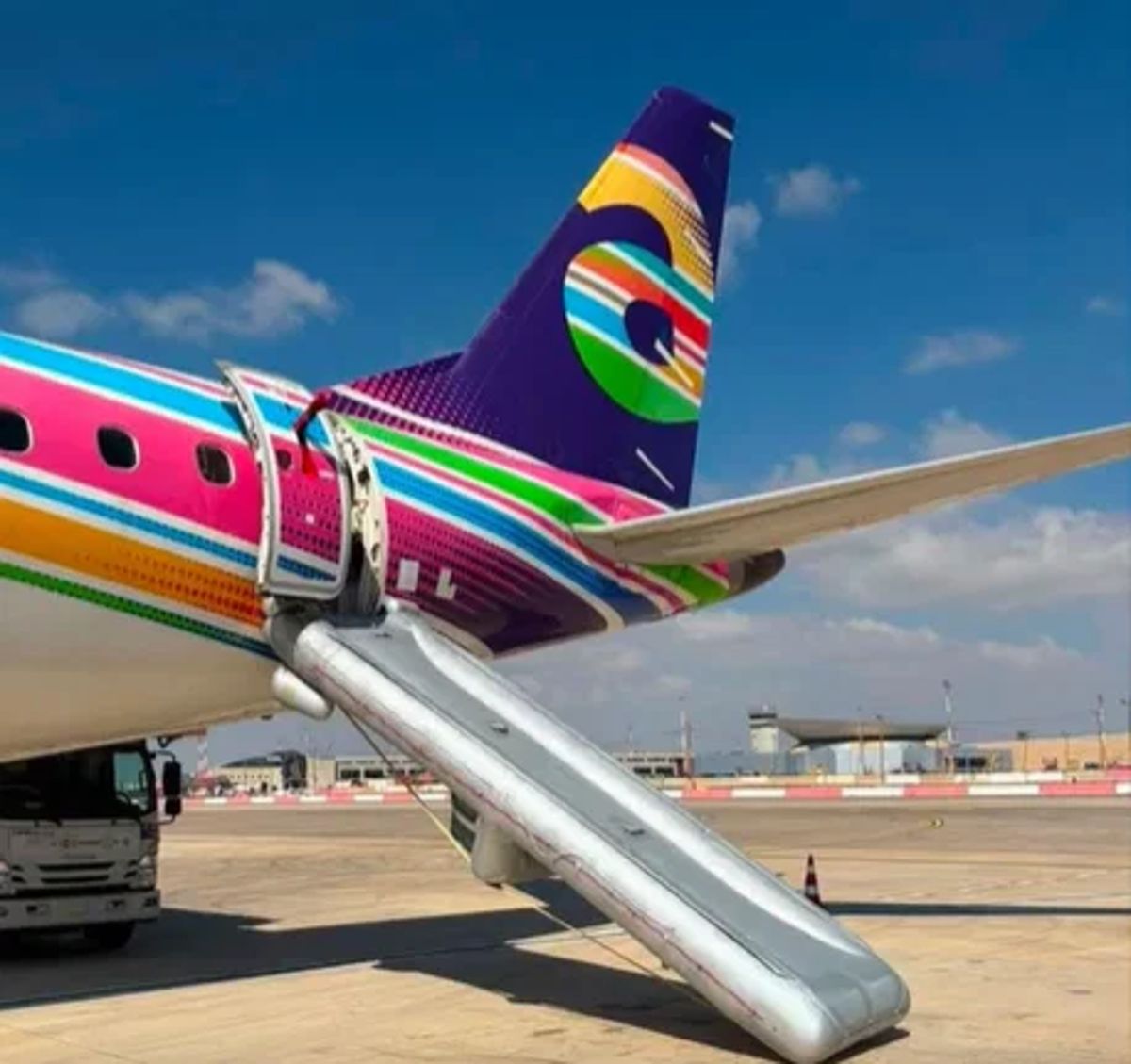
An unusual operational mishap occurred at Ben Gurion Airport when an emergency slide accidentally deployed on an Arkia Airlines aircraft following its landing. This incident marks the second time in a week and a half that an emergency slide has been unintentionally deployed on an Arkia fleet vehicle, raising questions about ground safety procedures.
The latest incident involved an Airbus A320, 214 registered as 4X, AGV, which was undergoing a standard operational inspection after completing its flight. According to reports from the terminal ground operations, the inflating emergency slide expanded directly into a nearby catering truck that was servicing the aircraft.
This repeat occurrence follows a similar malfunction just last week involving an Arkia Embraer E195AR, registered as 4X, EMF, which was scheduled to depart from Tel Aviv to Eilat. That prior incident forced the airline to ground the Embraer aircraft entirely so it could be placed into an extended maintenance program to repair the door mechanics.
Arkia Airlines released an official statement confirming the details of the latest runway disruption. "After the plane landed at Ben Gurion Airport, during ground operational activity and when a catering truck was connecting to the plane, the emergency slide opened," the airline stated.
Company officials are trying to determine whether the double deployment points to a systemic maintenance issue or a string of operational mistakes by ground crews. "The incident is under investigation, during which it will be examined whether it was a technical failure or human error," the Arkia corporate statement added.
The airline emphasized that there were no injuries during the tarmac collision, and the mechanical error did not cascade into wider flight delays. "The plane was tested and returned to full qualification, and there was no recorded impact on the company's flight schedule," Arkia stated.
Despite the lack of flight cancellations, the financial toll of accidental slide deployments remains exceptionally high for commercial carriers. The cost of resetting an emergency slide ranges between fifty thousand dollars and one hundred thousand dollars in standard cases, but complex incidents can cause costs to climb significantly.
The cumulative financial burden includes the specialized labor required for repacking and repairing the slide, which requires precision inflation tests and professional folding. If the fabric tears during deployment or impact, replacing the unit alone can cost up to seventy thousand dollars, alongside potential structural damage to the aircraft door.
Airlines also frequently face severe operational expenses from flight cancellations, delays, and the necessity of flying in specialized mechanics or replacement parts. When passenger schedules are disrupted, carriers must also absorb the costs of hotel accommodations, rebooking fees, and statutory compensation payments.