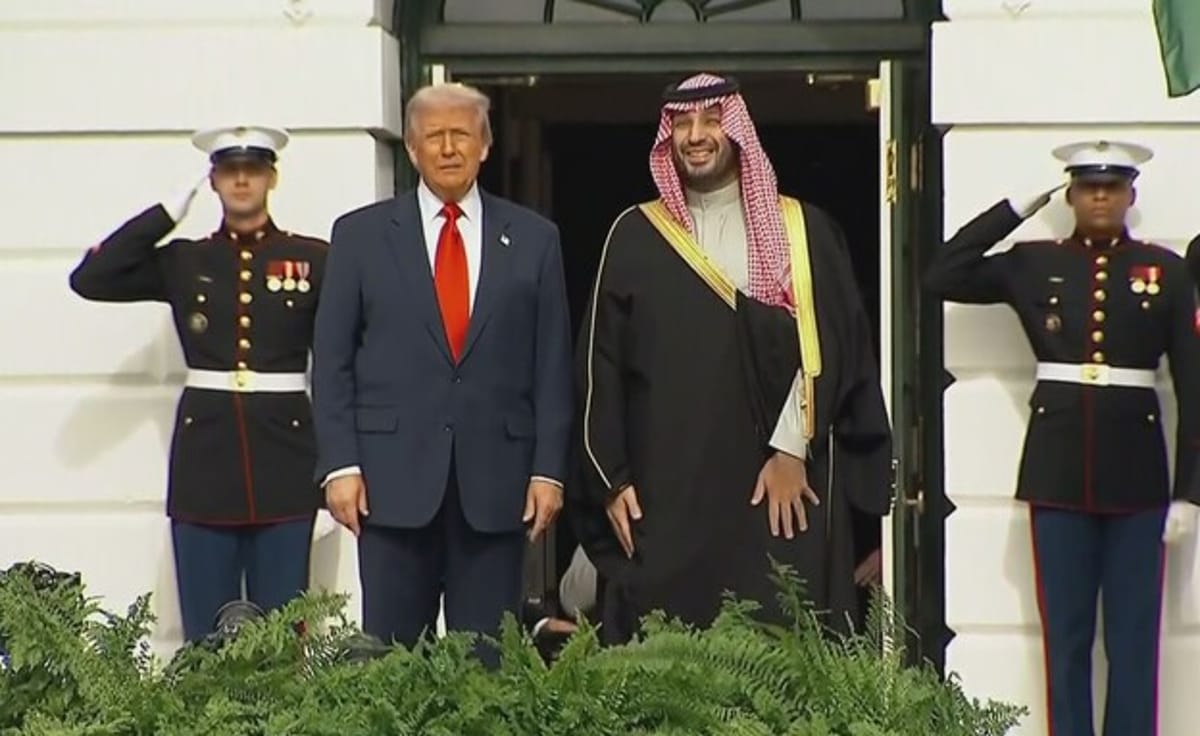
A severe crisis has erupted between Saudi Arabia and the United States, driving the kingdom to pursue independent, direct negotiations with Iran to protect itself from intense regional warfare. New details published by the New York Times reveal that Riyadh is actively seeking understandings with Tehran over ballistic missiles, drone forces, and proxy networks. This independent diplomatic track represents a profound shift in Middle East geopolitics, exposing deep strategic divides between the historical allies.
The growing rift follows a related disclosure by the Wall Street Journal, which uncovered the extent of the disagreements and the specific Saudi decision to obstruct an American military operation. Washington had planned a massive campaign to forcefully open the Strait of Hormuz, which was recently restricted by Iranian forces. Fearing that the American operation would reignite a full-scale regional war, Crown Prince Mohammed bin Salman firmly stood his ground, ultimately forcing the United States to cancel the entire naval operation just two days after it commenced.
This refusal triggered an intense diplomatic pressure campaign from the highest levels of the United States government. President Donald Trump spoke directly with the Crown Prince at least twice within a forty-eight hour window, while Middle East Special Envoy Steve Witkoff and Trump's son-in-law Jared Kushner engaged in direct discussions with the Saudi leader. Concurrently, Secretary of State Marco Rubio held urgent talks with his Saudi counterpart, yet the kingdom refused to alter its position.
Experts point out that the ongoing war with Iran has fundamentally eroded the trust that previously underpinned the Washington, Riyadh alliance. "They lost faith in the administration, and believed that if they allowed the United States to use their airspace, Iran would strike them even harder," stated Hussein Ibish, a senior resident scholar at the Arab Gulf States Institute in Washington. Saudi leadership has increasingly come to view United States regional policy as erratic and potentially dangerous to the security of the Gulf states.
In response to this perceived unreliability, Saudi Arabia is aggressively expanding its independent foreign policy, deepening strategic ties with alternative global powers like Pakistan and China. In its direct talks with Tehran, Riyadh is prioritizing concrete security guarantees over abstract regional frameworks. Saudi officials view Iran's ballistic missile arsenal and its control over regional waterways like the Strait of Hormuz as far more pressing, immediate dangers than the long-term nuclear issue.
The ongoing friction was highlighted further when Secretary of State Rubio conducted a diplomatic tour of the region, stopping in Bahrain, Kuwait, and the United Arab Emirates, while deliberately skipping Riyadh. Saudi officials interpreted the omission as a calculated political insult. In response to the diplomatic impasse, Washington has begun drafting early plans to reduce its long standing military presence within Saudi Arabia, looking instead to shift American assets to more compliant regional partners, including Israel and Jordan.