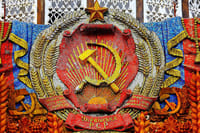
American Jews are now experiencing a political pattern that has repeated itself for more than a century: Jews help build the intellectual and institutional foundations of the Left, only to discover that the Left they created no longer has room for them.
Yet this is not simply a story of betrayal.
Many of the Jews who entered socialist, communist and revolutionary movements did so after abandoning, or substantially weakening, their own religious and national identity. They exchanged Judaism for a universal political faith. They believed that class, equality and revolution would overcome inherited loyalties.
Now their descendants face an ideology that increasingly denies their right to recover the identity their predecessors surrendered.
The modern Left may accept the Jew as an individual, a minority or a victim. It becomes less comfortable with the Jew as a sovereign national actor.
This is the central Zionist conflict within the global Left.
Before the establishment of Israel, Jewish revolutionaries did not have to confront the full contradiction between socialist universalism and Jewish sovereignty. There was no Jewish state with borders, an army and national interests.
Once Israel was created, the contradiction became unavoidable.
As the Soviet Union became hostile to Israel, loyalty to the communist world increasingly required hostility toward Zionism. The Jewish communist was forced to choose between the universal ideology he had adopted and the national legitimacy of his own people.
A similar process is now occurring in the United States. As parts of the American Left adopt a radical postcolonial worldview, Israel is no longer treated merely as a state whose policies may be criticized. It is increasingly presented as an embodiment of colonialism, nationalism and Western power.
Jewish sovereignty itself becomes suspect.
The Jew who believed that universalism would liberate him discovers that universalism may condemn him precisely when he acts collectively as a Jew.
The Cycle of Abandonment:
This raises a deeper question: is the history of the Left a cycle in which people abandon one identity in the name of another, only to be abandoned in turn by the ideology they embraced?
The religious Jew leaves theology for class politics. Class politics gives way to revolutionary universalism. Universalism gives way to national liberation. National liberation is celebrated until the liberated nation acquires territory, institutions, borders and power.
At that moment, the former victim becomes an oppressor.
The postcolonial subject is morally legitimate only while he remains powerless. Once he gains independence, he becomes a national force. Once he becomes a national force, he exercises authority. Once he exercises authority, he can be accused of reproducing oppression.
The oppressed is permitted to seek liberation.
He is not permitted to succeed.
This is the central contradiction of radical postcolonialism. Every successful liberation movement creates a political order, but every political order must govern, defend borders, enforce laws and sometimes use force.
Victory itself therefore becomes evidence of guilt.
The ideological wheel must continue turning.
The Worker Was the Justification:
The worker was once the central subject of the revolutionary imagination. Later it was the colonized nation. Today it may be the migrant, the racial minority, the religious minority or another marginalized identity.
But the underlying structure remains unchanged: history is divided between oppressors and oppressed, and redemption is promised through the destruction of the existing order.
The worker was never the final destination.
The worker was the justification.
Marxism presented labor as the material basis of revolution. But improving the condition of workers could never satisfy a movement whose true object was not labor but revolution itself.
Once one contradiction was resolved, another had to replace it. The revolution required a permanent enemy, because without an enemy the revolutionary movement would lose its purpose.
Every society contains labor, authority, obligation, hierarchy and power. Therefore, every society can be condemned as oppressive, and every political settlement can become the starting point for another revolution.
This is the desperation at the heart of communist thought: it promises final liberation but depends on permanent conflict.
Many Jews embraced this promise because they hoped that dissolving religion, nation and inherited identity would also dissolve antisemitism.
Instead, they discovered that the universal system demanded one final sacrifice: Jewish particularity itself.
From Religion to Labor, From Labor to Nation:
The Jewish experience is especially revealing because Jews have passed through nearly every stage of this ideological journey.
They moved from religion toward labor politics, from labor toward universal revolution, from universalism toward nationalism, and from nationalism back toward the question of religion and historical identity.
At each stage, the Left offered redemption from the previous identity.
The religious Jew would be redeemed by becoming a worker.
The worker would be redeemed by the revolution.
The minority would be redeemed through universal equality.
The stateless Jew would be redeemed through national liberation.
Yet once the Jews achieved sovereignty, the same ideological world that celebrated other liberation movements began treating Jewish liberation as illegitimate.
The Jew was acceptable as a victim.
He became problematic as a sovereign.
What Political Islam Offers:
Political Islam enters this crisis with an offer that communism cannot make.
Communism attempted to unite humanity through economic equality. Postcolonialism attempts to unite the oppressed through opposition to Western power. But both remain fragmented, moving endlessly among class, nation, race, religion, identity and colonialism.
Political Islam offers a more complete vision.
It presents not merely an economic theory or an anticolonial movement, but an ordered conception of existence in which religion, law, community, nation, hierarchy and identity can all be placed within one sacred structure.
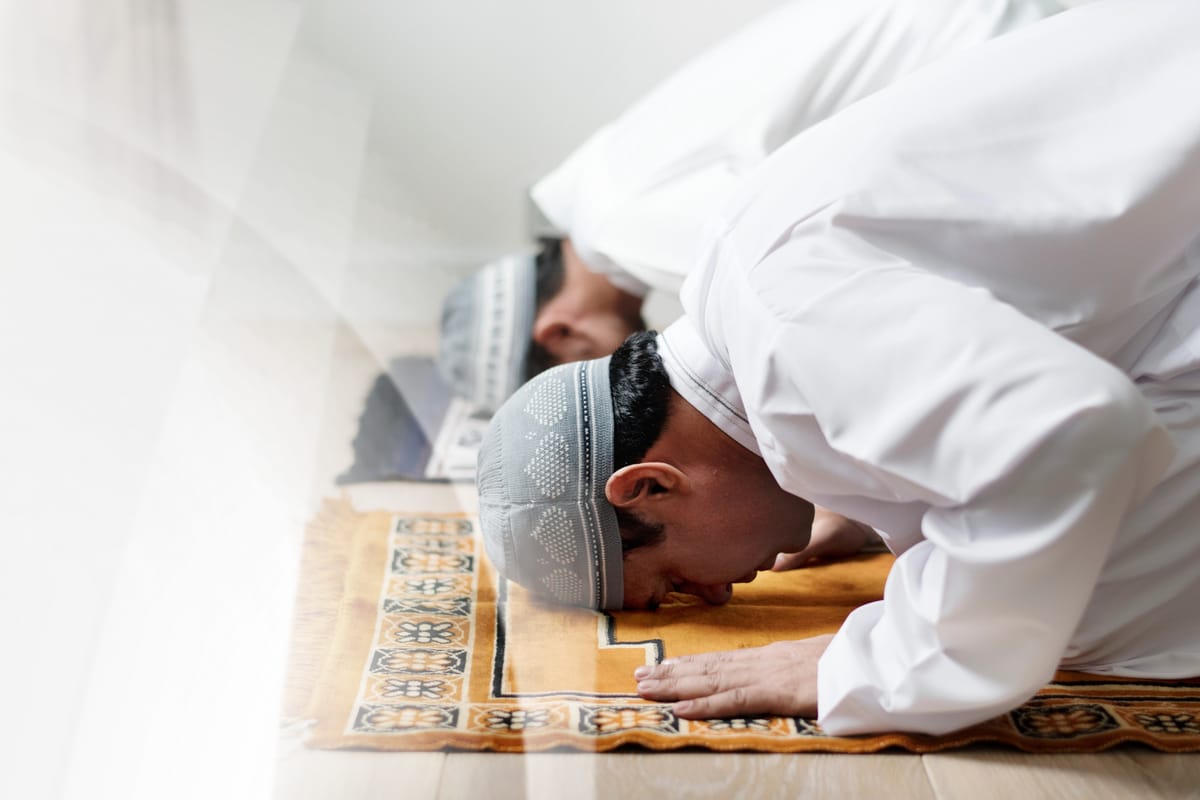
Human equality is achieved not through the abolition of every distinction, but through common submission before God.
There is no need to move endlessly from the worker to the nation, from the nation to identity, from identity to religion and from religion back to power.
Everything can be gathered into one.
The worker, the believer, the nation, the formerly colonized subject and the political community can all be incorporated into a single universal order.
This is why parts of the radical Left may be attracted to political Islam despite the obvious contradictions between them on sexuality, family, theology and law.
Political Islam offers what Marxism promised but could never produce: a complete system of meaning.
The secular revolutionary says: surrender your inherited attachments, and history will redeem you.
The Islamist says: history is not enough. Submit to faith, and law, community, religion, identity and political belonging can become one.
That is a more powerful proposition.
The Feudal Destination:
The radical Left and political Islam are not identical, but they can share a political grammar.
Both may distrust liberal individualism. Both may view personal freedom as a mask for domination. Both may subordinate the individual to a collective moral project. Both may treat independent thought as an obstacle to unity.
This is the feudal temptation.
Every political ideology that seeks not merely justice but total order—not merely equality but complete moral unity—may eventually find its destination in political Islam.
The movement begins by dismantling authority in the name of freedom.
It ends by demanding submission in the name of unity.
It begins by attacking religion, nation, hierarchy and inherited identity.
It ends by searching for a single structure capable of reuniting them all.
Once every intermediate loyalty has been destroyed, the vacuum does not remain empty.
It waits to be filled.
The Paradise They Were Searching For
This is the final irony of the Jewish encounter with the revolutionary Left.
The secular Jews who helped construct the modern Left believed they were escaping religion, nation and inherited obligation. But perhaps they were not searching for freedom from faith.
Perhaps they were searching for a new faith powerful enough to replace everything they had abandoned.
Marxism promised universal unity but could not achieve it. Postcolonialism expanded the revolutionary struggle but fragmented it further. Every liberation created a new power. Every victory created a new oppressor. Every revolution required another revolution.
Political Islam offers the image of completion:
One faith.
One community.
One law.
One universal order.
In that sense, Islam is the remedy they had been seeking.
It is the paradise that the secular Jews who helped build the modern Left were searching for without understanding it.
They believed they were escaping theology. In reality, they spent generations searching for a theology comprehensive enough to replace Judaism.
The Left offered an endless journey from one liberation to the next.
Political Islam offers an end to the journey.
No more movement from religion to labor, from labor to nation, from nation to identity, and from identity back to power.
Everything becomes one.
Only believe.
Only submit.
They thought they were building the future.
Without realizing it, they were searching for Islam.