
There is a fundamental problem in historical writing: it is never opaque. Every historical account is, by its very nature, permeable, it breathes through the present. This lack of opacity is both its weakness and its virtue.
Start with home.
One of Israel’s great pathologies is that it requires too much sociology to be understood. That is not a sign of sophistication, but of a society trapped in non-reflective observation. When a society is primarily in a historical state of reflection, it indicates a degree of continuous and conscious development, an ability to see patterns of whole as banal and childish as it may seem. But when it becomes almost only sociological, and when history is nothing but a footnote meant to give context to inner-tribal clashes, it basically means that we hace entered a static mode of development of the nation. One where exchange as to the origin/meaning of what makes us what we are, has been replaced by the rigidity of group structures in the context of our opposition or of the position we hold within an inner group setting.
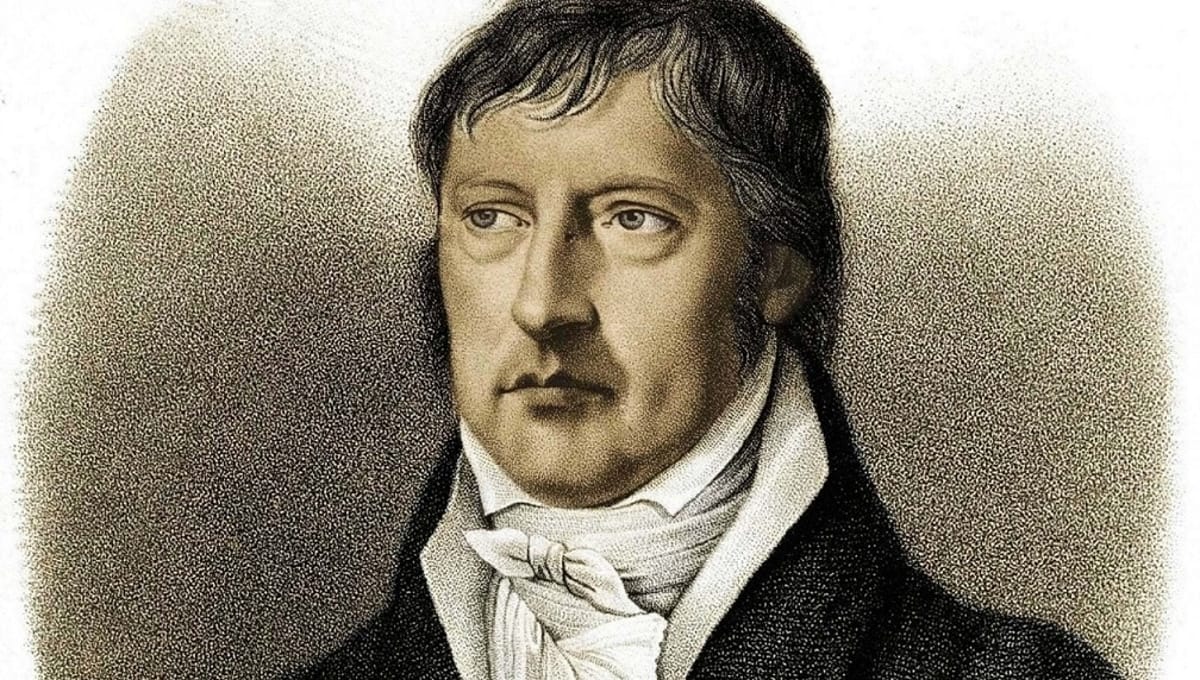
Hegel and Burckhardt understood this well: a society in a historical state is healthier than one in a purely sociological condition. History thinks; sociology observes at most. In the historical mode, there is a unifying motion conceptually; in the sociological mode, there are tribes that perhaps come together in the act of building. Sure both are needed.
Some might say that unification of motion or thought resembles fascism. I am not convinced. It should rather be seen as continuity and reflection versus static fragmentation, the capacity of a people to narrate itself coherently, rather than to divide and position themselves into social abstractions.
Conservatism, not by accident, seeks history. Progressivism, meanwhile, seeks sociology — perhaps precisely because of this difference.
The sociologist seeks the tension between groups; the historian, in contrast, looks from above, perhaps romantically, for the transcendental story that binds together across the prison of time.
The historian focused on time tells the story of the whole space; the sociologist focuses much on space tells the story of its parts without perhaps a complete understanding of time as it is experienced by the whole.
In logic, if you miss a premise, the whole argument collapses. In history, however, you can always return to the axiom, to the root, even if you’ve lost the thread. That's the weakness. Not everything is Euclidean or formal. This is why mathematics, philosophy, and physics seem “cleaner”: their systems depend on internal coherence. But a good historian, ultimately, also discovers logic within research, a hidden architecture beneath time and language and even space - it will just perhaps, never be airtight.
Academia often insists that there is “logic” even in fields where logic was never native, Afro-Latin or Hispanic studies, for instance, as if rationality can be grafted onto them externally. Only later are those inside told that they have always possessed it. This, too, is part of sociology’s illusion: the belief that structure can be retroactively imposed on experience.
Does history does the same? Perhaps, i'd hate to think so.. or at least only with enough evidence..
So What Are History and Sociology?
At their core, both are attempts to map patterns and the logic of words and actions among people across time and space, their influences, their evolutions, and their roots. That’s all. And yet, it’s also everything.
Hegel, despite the unhealthy political offsshots, remains one of the greats, precisely because he offered a meta-method for all of this. Impressive, though not necessarily true.
Personally, I lean toward a pragmatist mode of writing, one that draws upon literature, culture, and even music, to approach truth through resonance rather than abstraction. Because sometimes, what logic cannot hold, art can still reveal.