For years, the State of Israel has been trapped in an unprecedented political vertigo. The cycle is exhausting and familiar: frequent elections, fragile governments that collapse upon formation, narrow coalitions resting on a single vote, and a continuous paralysis of public systems.
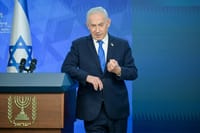
Public discourse and media analysis tend to pin the blame on a single man: Benjamin Netanyahu. The love for him or the hatred of him is presented as the beginning and end of the crisis.
However, focusing exclusively on Netanyahu’s persona misses the deeper, structural tragedy. Israel’s political deadlock is not merely the result of charisma or indictments, but of a parliamentary anomaly with no parallel in Western democracies. It is a fatal combination of the personal split surrounding Netanyahu and the structural deficit of the Arab mandates.
To understand the depth of the crisis, one must return to simple arithmetic. The Knesset has 120 seats. To form a stable, functioning government, a majority of 61 members is required. In the past, the battle for this majority was fought on a relatively wide playing field. Ultra-Orthodox parties acted as kingmakers, and while Arab parties were technically present, the critical mass of Zionist mandates allowed for flexibility in coalition building.
The current reality is fundamentally different. In every election campaign over the last decade, there has been a consistent bloc of approximately ten to twelve seats belonging to the Arab parties, specifically Ra’am, Hadash, and Ta’al. The mathematical implication of this is dramatic. The political playing field upon which a traditional coalition can be built has effectively shrunk from 120 seats to only 108. Within this reduced pool, any candidate for Prime Minister must still achieve the magic number of 61. This is a threshold that has become nearly impossible to cross over time without a decisive victory.
This is where the second factor, Benjamin Netanyahu, transforms the math into a deadlock. If Israeli politics were divided along classic Left and Right ideological lines, the Right, which enjoys a demographic majority among the Jewish public, would likely be able to assemble a government of 61 out of the available 108 seats with relative ease. But Netanyahu has converted the division from ideological to personal. He has split the Right and Center into two hostile camps: the Pro-Netanyahu bloc and the Anyone But Netanyahu bloc.
When one takes those 108 effective mandates and splits them between these two entrenched camps that refuse to cooperate, the result is an eternal tie. The Netanyahu bloc usually hovers around 50 to 55 seats, and the opposing bloc fluctuates around similar numbers. Neither side can reach 61 from within this pool. Netanyahu cannot do it because liberal right-wing parties or statist right-wing figures refuse to sit with him. The opposing camp cannot do it because without the Ultra-Orthodox, who remain loyal to Netanyahu, and without the Arab parties, they lack a Zionist majority.
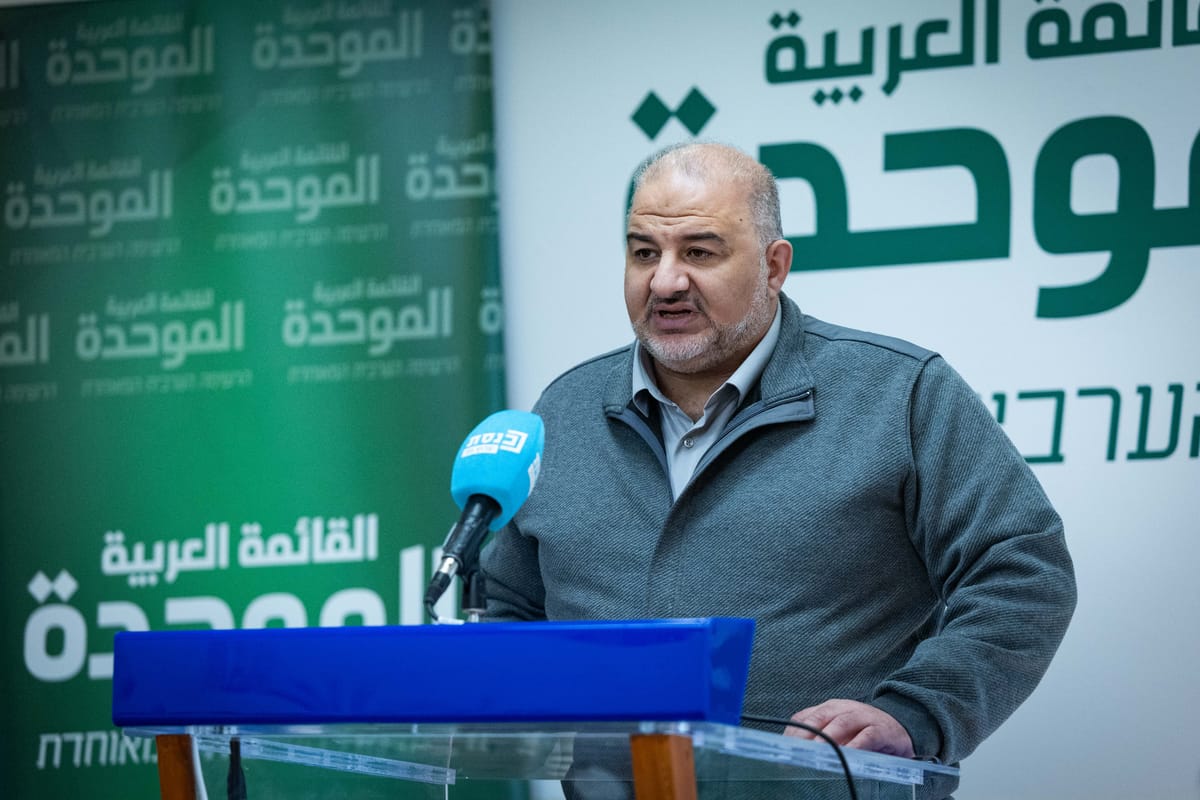
This entanglement turns the twelve Arab mandates from a theoretical balance of power into a practical stumbling block for coalition stability. For the Israeli Right, and even large portions of the Center, relying on the Arab parties is viewed as crossing an ideological and security red line. The Bennett-Lapid government attempted to break this taboo with Mansour Abbas, but the experiment proved just how fragile such a construction is when subjected to immense internal and external pressure.
The result is an absurd situation where roughly ten percent of the parliament is effectively outside the coalition game for half the nation, yet acts as a problematic silent partner for the other half. In such a environment, the probability of stability approaches zero.
The political freeze in Israel is therefore not accidental. It is the result of a collision between demographics and identity politics. As long as the Knesset remains divided into three rigid blocs of the Pro-Netanyahu Right, the Anti-Netanyahu Center, and the Arab parties, and as long as there is no movement between them, the deadlock will persist. The Right will not reach 61 without the Arab parties or defectors, and the Left cannot reach 61 without total reliance on the Arab parties, which alienates soft-right voters.
The solution to this impasse will only arrive in one of two ways. Either there will be a dramatic shift in the Jewish public's willingness to fully partner with Arab parties, a long and complex process, or the personal barrier of Netanyahu will be removed, allowing the 108 Zionist mandates to reorganize. Until then, Israel will continue trying to square the circle, conducting its politics with 120 members while acting as if there are only 108 chairs to go around.