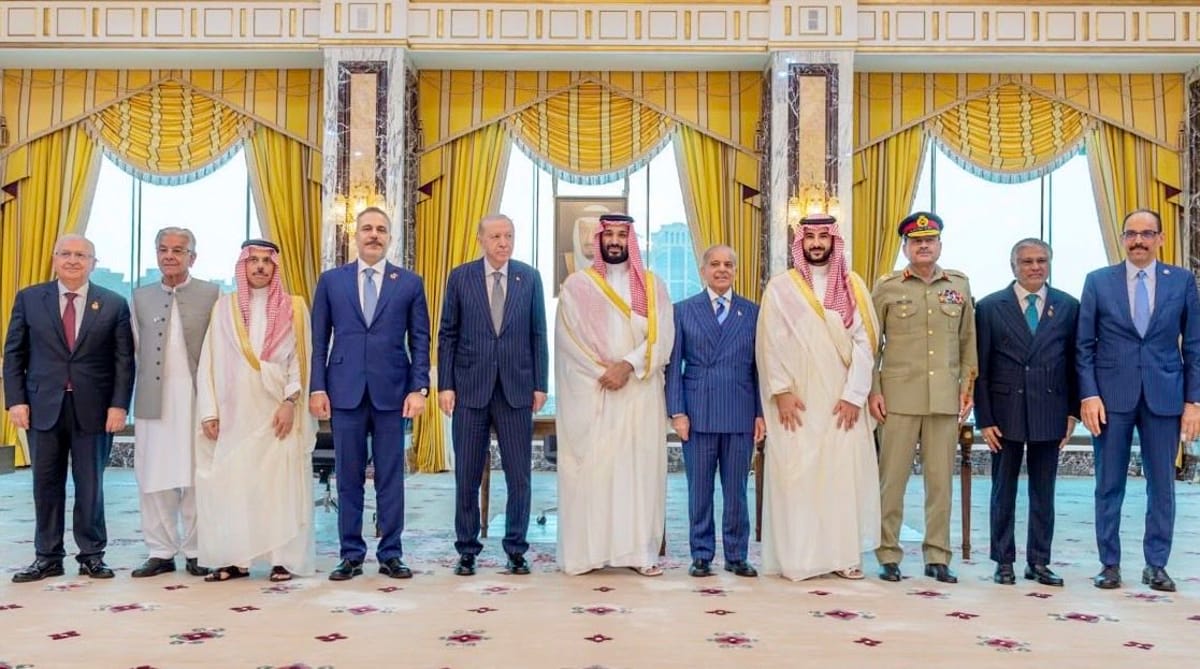
A strategic puzzle is emerging in the Middle East. Saudi Arabia, Turkey, and Pakistan—possibly joined by Egypt—are constructing a new regional security framework. These are nations intimately familiar with the Iranian threat, having lived for years under the shadow of Tehran's missiles, drones, and proxy forces. Yet rather than embracing Israel, which has demonstrably proven its ability to confront Iran, they are attempting to build an Islamic regional alternative. This is where the real paradox begins.
Israel acted without waiting for America
In June 2025, Israel did not wait for American permission before launching operations against Iran's strategic infrastructure. Washington was informed from the outset that Israel was acting unilaterally and that the United States would not participate in the initial phase. Within a short timeframe, Israeli forces struck Natanz, missile arrays, air defense systems, and other critical nodes throughout Iran's strategic network. Senior military commanders, including Chief of Staff Mohammad Bagheri and Revolutionary Guards commander Hossein Salami, were killed alongside nuclear scientists and other high-ranking officials.
American involvement came later, adding unique capabilities against deep underground facilities, particularly at Fordow. But by then, Israel had already achieved the central strategic and psychological shift: it proved that Iran's heartland, its command structure, and its most vital infrastructure could be struck directly. The taboo was broken.
Enter the Mecca Pact.
The Mecca Pact represents not the triumph of Islamic solidarity, but its failure—a tacit admission that existing regional structures cannot contain the strategic reality Israel has just demonstrated. Saudi Arabia, Turkey, and Pakistan are not rallying around Islamic identity because it offers superior strategic protection. They are doing so because the June 2025 strikes proved that conventional guarantees—whether from the United States or from alliances with Western powers—are insufficient to prevent catastrophic strikes on national territory.
Israel's unilateral action accomplished something more significant than the physical destruction it inflicted. It established that no amount of Russian air defense, Iranian dispersal, or American diplomatic coverage could prevent a determined strike on Iran's heartland. For regional powers watching, the lesson was unambiguous: protection from the West is neither automatic nor sufficient. Deterrence requires independent capability, not alliance with stronger patrons.
Yet the Mecca Pact will face a fundamental test that neither Saudi nor Turkish nor Pakistani planners can avoid: can an Islamic alliance actually deter threats that Israel has just proven can penetrate the most sophisticated defenses? The June 2025 strikes did not eliminate Iran's capacity to retaliate against regional neighbors. They eliminated the assumption that retaliation would be costless. Turkey, Pakistan, and Saudi Arabia know this. They are building their pact not in confidence that it will deter Iran, but in fear that Iran—weakened, angry, and feeling abandoned by regional partners—will lash out against them specifically.
The emerging Middle East is not one of regional powers uniting against Tehran. It is a region where three major Islamic states are hedging their bets: maintaining enough distance from the United States and Israel to preserve strategic autonomy; building enough collective capability to offer some deterrent effect; and hoping that their military alliance will prove sufficient when Iranian retaliation comes.
For Washington and Jerusalem, this is the paradox: Israel's demonstrated capability to strike deep into Iran has not consolidated a pro-Israel regional order. It has destroyed the assumption that smaller powers needed American or Israeli protection at all. The very dominance that made Israel safer has pushed major regional actors toward independence, and away from any security architecture that includes Israel.
The resulting order will be less stable, less predictable, and less amenable to American or Israeli influence than what preceded it. That is what victory looks like when it is purchased without allies.