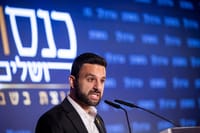
When Mosab Hassan Yousef writes an open letter to the President of the United States, it is worth reading carefully. Not because he is a pundit with a platform, but because he is something rarer: a man who grew up inside the machinery of Palestinian terror, dismantled it from within at enormous personal cost, and has spent years telling the West things it did not want to hear.
His letter to President Trump this week is one of the most striking documents of this entire conflict, and it deserves to be treated as more than a viral post.
Yousef wrote that Israel executed a brilliant 12-day operation against Iran that left the regime in shock, its top generals assassinated, and the Ayatollahs held by the throat. Yet every time Israel had momentum, whether in Gaza, Lebanon, or against Iran, Trump personally intervened and stopped them at the worst possible moment. Yousef stated that Trump was personally briefed by Mossad that defeating Iran would take at least a year of consistent pressure, yet pushed for quick results, changed the original plan, and turned what could have been a strategic victory into a strategic defeat.
The results are now visible to anyone watching Saturday night's news. Iran has declared the Strait of Hormuz closed. Iranian military sources are threatening to launch missiles at Israel tonight. Six Israeli soldiers lie dead after a single weekend of fighting in southern Lebanon, a front that was supposed to be winding down. And the MOU signed with great fanfare in Switzerland on June 17 is already showing signs of collapse before the ink has dried.
Yousef is not a newcomer to this warning. His entire worldview, forged through years embedded in Hamas and then the Shin Bet, rests on a single brutal insight: the Middle East does not reward half-measures. Regimes like Iran's are not neutralized by a spectacular opening campaign and a negotiated off-ramp. Iran's government is, as analysts noted at the outset of the conflict, a hard target. Despite its unpopularity, the Islamic Republic survived economic devastation from sanctions, the Green Movement, further protests in 2019 and 2020, the 2022 Woman Life Freedom uprising, and further protests in 2025, largely through state violence. This is not a regime that bends under pressure. It adapts, absorbs, and waits.
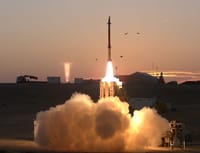
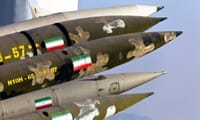
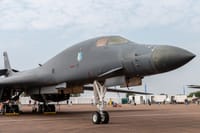
Operation Epic Fury was, by any military measure, staggering in its scope. Iran's air force was functionally neutered, its navy obliterated, 150 warships destroyed, every submarine sunk, and 97 percent of its naval mine inventory eliminated. The White House declared victory. Trump called it Peace Through Strength.
But Yousef saw what the victory lap obscured: the Islamic Republic was wounded, not finished, and the window to finish the job was being traded away for a deal. He accused Trump of signing a humiliating deal that buried the Iranian nuclear threat instead of eliminating it, and then coming out blaming Israel for taking too long and for how it fights.
That is precisely where we are tonight. Iran is not behaving like a defeated power. It is behaving like a regime that survived a near-death experience, signed a piece of paper to buy time, and is now using the Lebanon front to reassert leverage it was supposed to have lost. The threat to close Hormuz and launch missiles at Israel is not bluster from a broken enemy. It is a recalibration from a government that has decided the MOU gives it more room to maneuver than Washington anticipated.
The deepest irony is that Israel, which fought for that room, was excluded from the negotiations that defined it. Netanyahu has refused to withdraw from southern Lebanon. IDF soldiers continue dying there. And Iran is using that continued presence as the legal and rhetorical basis for every escalation it is now threatening.
Yousef's warning was not complicated. It did not require secret intelligence or geopolitical sophistication. It required only an honest reckoning with what kind of enemy Iran is and what kind of war this was going to be. He offered that reckoning before the bombs fell, and again this week when the consequences became undeniable.
The question now is not whether he was right. The question is whether anyone in a position of power is listening yet.