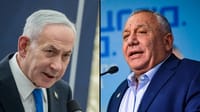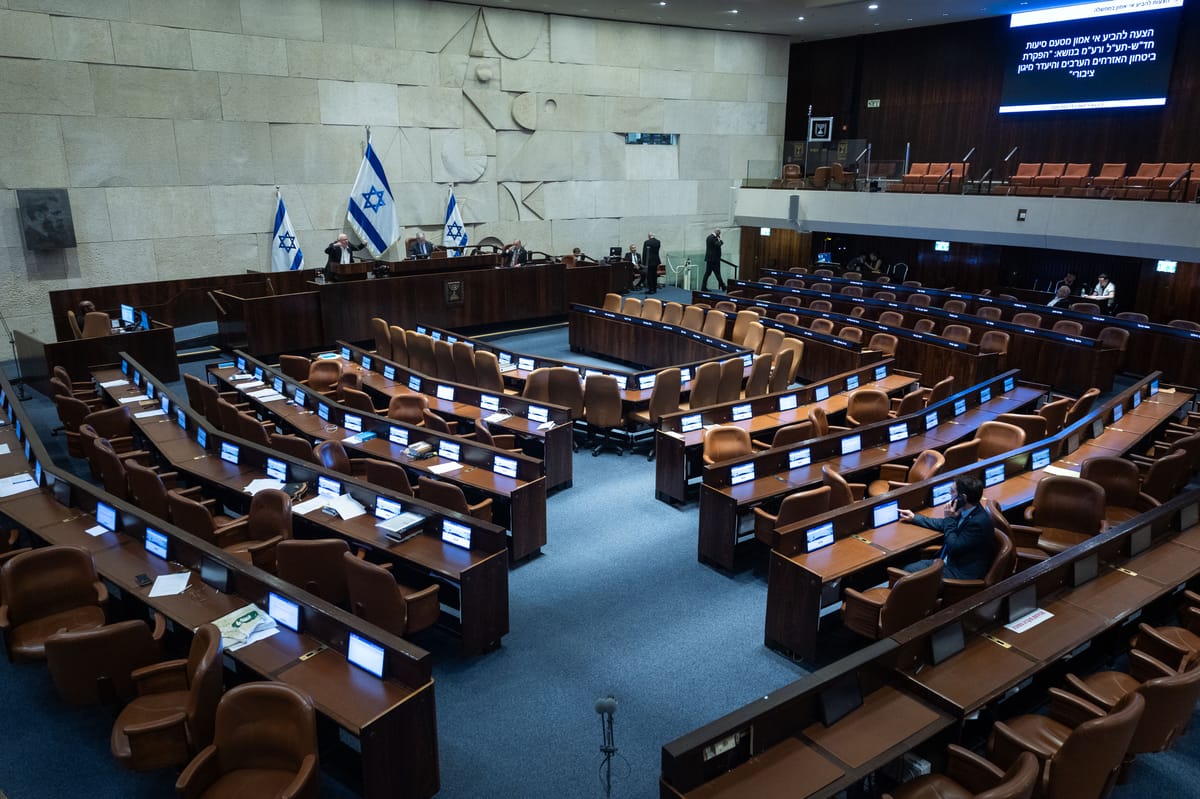
No one knows what next week will bring, but with polls showing a tie between the blocs and politicians declaring who they will and will not sit with, the path to a stable coalition after Israel's election is anything but clear. JFeed maps six possible outcomes and what each would mean for the chareidi parties and the country.
Scenario 1: Netanyahu's bloc wins 64 seats - the right returns to power
The optimistic scenario for Netanyahu and the right: Likud, the haredi parties, Ben-Gvir, Smotrich and Winter together bring 64 mandates, no significant votes are wasted, and Netanyahu heads straight into another four-year term.
Is this the best outcome for the haredim? The last term proved that even a "full right-wing government" does not necessarily deliver gains for the chareidi public and may have done the opposite.
Scenario 2: The left wins 64 seats - the "change" bloc ousts Netanyahu
The hope scenario for the "change" and "correction" camp: the four parties of the bloc, Eisenkot, Bennett-Lapid, Liberman and Yair Golan, reach 64 mandates, either because left-wing voters who flew in to vote turn out in force or because Smotrich or Winter fail to cross the threshold, handing significant power to the left.
A situation in which there is no need to rely on the Arab parties or defectors from the right sounds like a dream for the left, but it could quickly turn into a battle over who leads the government and how portfolios are divided. Besides Eisenkot, both Bennett and Liberman see themselves as candidates for prime minister, and it will be interesting to see if and how the division is worked out among these rivals.
Scenario 3: A left-wing minority government backed by the Arab parties
In a scenario with no clear decision and a tie between the camps, Netanyahu's bloc with 55 seats and the left with 50, figures on the left, including Yair Golan, have not hesitated to declare they would work with the Arab parties to remove Netanyahu. The Arab parties, for their part, have confirmed they are open to the courtship.
It is unclear whether and how such a government would come together, as Liberman has repeatedly stated he would oppose a minority government because of the leverage any single vote would have and out of concern that the move could trigger a backlash and a surge for the right in the next election.
In any case, the left hopes at minimum for such a result in order to pass the "Defendant Law," which would bar Netanyahu from running in future elections and who knows what other dramatic laws affecting Judaism and the chareidim could be passed in such a government.
That said, there have been voices within the haredi parties that favored such a scenario, reasoning that their standing would rise and they could extract more than they achieved as coalition members in the last right-wing government.
Scenario 4: Netanyahu and Eisenkot join forces in a centrist government
It may be a scenario already quietly agreed behind the scenes between Netanyahu and Eisenkot, or it may come through the mediation of the president after it becomes clear that neither side can form a government and in order to avoid repeat elections.
Netanyahu and Eisenkot would bring together around 40 mandates and add Bennett-Lapid and Liberman to a government of 64, with Yair Golan remaining in opposition on one side and the haredim and right-wing parties also moving to the back benches.
It is hard to see how the great enemies, Liberman and Bennett, would be willing to sit together with Netanyahu or even under him in the event of a rotation between Eisenkot and Netanyahu (and who goes first?), but it is possible that the desire to escape the tedium of opposition and hatred of the right and the haredim would outweigh their hatred of Netanyahu.
Either way, this is a bad scenario for the chareidim, who would be thrown (again) under the bus by Netanyahu and sacrificed on the altar of unity. In addition, their voice would be worth nothing, as the government would hold even without their votes.
Scenario 5: Eisenkot forms a centrist-haredi government
An entirely possible scenario, in which Eisenkot forms a government with the haredi parties together with the centrist parties, Liberman and Bennett-Lapid. This could happen only if Eisenkot and his partners decide that the goal of removing Netanyahu and the right justifies all means, including sitting with the chareidim.
In exchange for meeting their demands, the chareidi parties could certainly join such a government, especially United Torah Judaism, which is in conflict with Netanyahu and his partners and angry over the last term. Shas would face a problem with its right-wing traditional base.
Scenario 6: No agreement, repeat elections
An exhausting and terrible scenario, but entirely possible, if there is no majority for either bloc but also no willingness for any agreement and each side entrenches in its positions. In such a case, Israel would go to elections for the 27th Knesset in the hope that next time there will be a shift in the map of the blocs.