
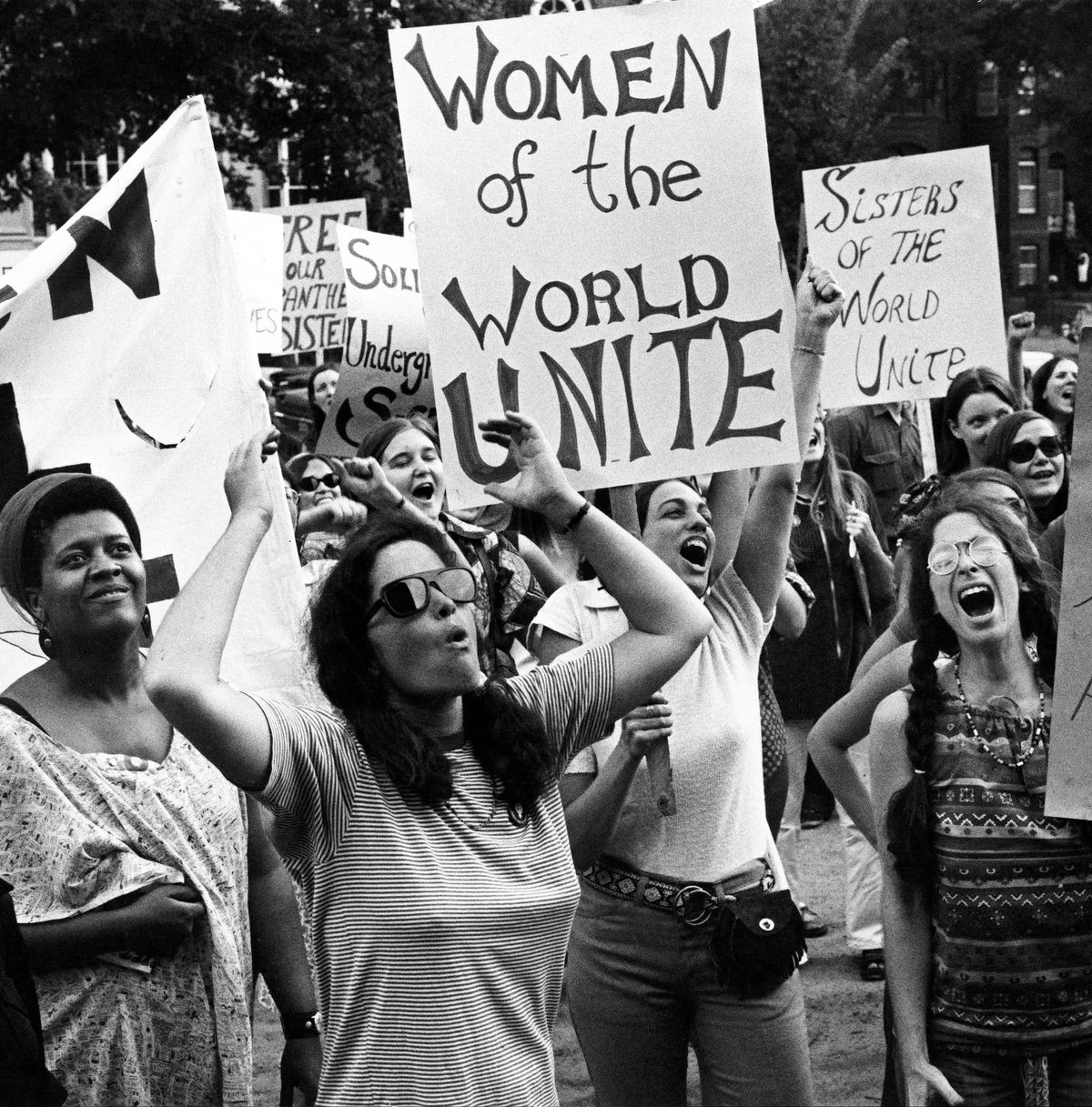
Modern feminism accomplished something historically extraordinary. It opened universities, professions, institutions, and positions of authority that had once been largely closed to women. Women were encouraged, and eventually expected, to imagine themselves as physicians, lawyers, professors, executives, judges, and political leaders.
That transformation revealed abilities that traditional society had often neglected. Yet it also created a new cultural assumption that has rarely been examined seriously: that a woman’s talents are being wasted unless they are converted into professional credentials, salaried employment, and institutional authority.
The central question is therefore not whether women are capable of succeeding outside the home. They plainly are. Nor is it whether the law should prevent women from pursuing professional careers. It should not.
The deeper question is whether directing ever more female talent into the professional and bureaucratic economy necessarily produces the greatest benefit for women, children, or civilization itself.
The Allocation of Human Talent
Liberalism tends to understand equality as equal access to public power. Because men traditionally occupied universities, professions, and government offices, equality came to mean that women should occupy those institutions in similar or greater numbers.
But representation alone does not tell us whether a society is allocating its human abilities wisely.
When women become the majority in significant parts of higher education, medicine, law, administration, and the cultural professions, this is usually presented as an uncomplicated triumph. Rarely do we ask what forms of work these women might otherwise have performed, or whether their contribution to civilization would necessarily have been smaller outside professional institutions.
Economic statistics recognize the work of a lawyer, administrator, or consultant because money changes hands. They frequently fail to recognize the value of raising emotionally stable children, maintaining a household, caring for relatives, transmitting language and tradition, organizing community life, and creating the conditions in which future citizens are formed.
The labor market therefore possesses a built-in ideological advantage: what is paid is counted, and what is counted is treated as productive.
A mother who supervises employees is described as a leader. A mother who organizes the lives of several children, manages a household, transmits moral expectations, and preserves the continuity of a family is often described as someone who “does not work.”
This is not a neutral description. It is a civilizational judgment.
The One-Way Definition of Liberation
The language of choice conceals the fact that choices are shaped by prestige, education, taxation, housing costs, professional expectations, and social pressure.
A young woman who says she wants to become a surgeon is usually treated as ambitious. A similarly gifted woman who says she wants to raise four children and devote most of her time to her family may be treated as if she lacks ambition altogether.
The first choice is interpreted as self-realization. The second is frequently interpreted as self-erasure.
That distinction reveals how thoroughly modern culture has adopted the values of the market. Freedom increasingly means the freedom to become an economically measurable individual: professionally mobile, institutionally credentialed, financially independent, and only partially constrained by obligations to family or place.
Feminism did not merely give women access to choices. In many environments, it established a hierarchy among those choices. Professional achievement stands at the top. Motherhood is respected rhetorically but structurally subordinated.
The woman who leaves the home is said to have fulfilled her potential. The woman who remains is asked to explain herself.
True freedom would reverse neither role by force. It would remove the assumption that only one of them represents progress.
The Technological Paradox
This question becomes more urgent in a technological age.
Industrial civilization once depended heavily on forms of physical labor disproportionately performed by men. Automation, artificial intelligence, and advanced machinery are gradually reducing the importance of physical strength in economic production. Many traditional male functions have become less central, while administrative, communicative, and credential-based work has expanded.
At precisely the same time, the formation of children may be becoming more—not less—important.
A technological society does not merely require workers capable of operating machines. It requires adults with judgment, discipline, emotional stability, moral limits, historical memory, and the ability to distinguish reality from manipulation. These qualities are not manufactured automatically by schools, screens, therapeutic institutions, or government programs.
They are cultivated through years of intimate human attention.
The more technically powerful a civilization becomes, the more dangerous it is for that civilization to neglect the formation of the people who will control its technology.
Yet modern society often treats the raising of children as an obstacle to economically productive life. Children are moved into institutions at increasingly young ages so that both parents can return to the labor market. The state then taxes the resulting income, subsidizes institutional childcare, and calls the entire process economic growth.
We should at least be willing to ask whether some of that growth merely reflects the transfer of functions once performed within families into systems that can be priced, taxed, and administered.
The Problem of the Elite
The question becomes especially significant among the professional elite.
When highly educated women devote their most energetic years to medicine, law, academia, government, or corporate management, their children are often raised within carefully organized systems of childcare, schooling, extracurricular programs, and professional supervision.
These children are not necessarily neglected. Many receive excellent material opportunities. But material provision is not identical to parental presence.
The future governing class is increasingly raised by parents whose institutional responsibilities consume much of their time and attention. The people expected to inherit positions of cultural, political, and economic authority may grow up surrounded by expertise while experiencing family life as something scheduled around professional obligations.
This creates a paradox. The very women considered most capable of shaping institutions may have less time to shape their own children.
A civilization must therefore ask not only who manages its institutions today, but who forms the people who will manage them tomorrow.
No bureaucracy can fully replace the transmission of judgment, identity, loyalty, restraint, and affection within a family. Schools can educate. Therapists can intervene. Childcare workers can care. But none can reproduce the complete moral relationship between parent and child.
Beyond Legal Rights
This is not primarily a legal argument.
Many of the most important civilizational questions cannot be resolved simply by invoking individual rights. The debate over abortion, for example, is not exhausted by determining what the Constitution permits. It also concerns how a culture understands life, responsibility, sex, dependence, and the obligations between generations.
The same is true here.
Women should possess the legal freedom to pursue professional lives. But a civilization must still consider what it encourages them to desire and what consequences follow from those desires.
The ability to refuse motherhood, postpone it indefinitely, limit it to a single child, or subordinate it to professional life gives women enormous power over the demographic and cultural future. That power cannot simply be condemned, nor should it be controlled through coercion. But it must be acknowledged.
For the first time on a mass scale, a civilization has made its own biological continuation dependent upon whether motherhood can compete successfully against professional prestige, consumer freedom, sexual autonomy, and economic insecurity.
At present, motherhood is often losing that competition.
Traditionalism Without Performance
The answer cannot be the theatrical traditionalism of social media.
The “tradwife” aesthetic frequently transforms domestic life into another form of online self-presentation: carefully arranged kitchens, idealized clothing, curated femininity, and romantic images of dependence. It may imitate the appearance of tradition without recovering its moral depth.
A genuine revival of family life would require something more demanding.
It would require men to accept long-term responsibility rather than merely demanding female submission. It would require employers to stop treating motherhood as a professional defect. It would require communities to honor domestic competence rather than mocking it. It would require families to support mothers materially and socially rather than leaving them isolated.
Most importantly, it would require society to recognize that raising children is not a private hobby pursued by individual women. It is the work through which civilization reproduces itself.
What Government Can Do
Government cannot manufacture cultural renewal, but it can stop penalizing it.
Public policy could make one-income and reduced-income households more economically realistic through family-based taxation, meaningful child allowances, pension credits for years devoted to caregiving, housing policies favorable to families, and professional pathways that allow women to leave and later reenter demanding careers.
Parents who care for young children at home should not be treated as economically inactive. Their work creates future citizens, workers, taxpayers, caregivers, and parents. A state willing to subsidize institutional childcare should also be willing to support families that provide care directly.
Policy should not order women back into the home. It should correct a system that has spent decades pushing children into institutions and parents into the labor market while presenting that arrangement as the only modern option.
The goal should be genuine pluralism: professional careers for women who deeply desire them, combined with economic dignity and cultural honor for women who choose to place motherhood at the center of their lives.
The Question Feminism Cannot Avoid
The strongest response to this argument is that women themselves have chosen professional life.
But preferences do not emerge in a vacuum. People learn what to desire from the cultures around them. When schools, media, universities, corporations, and governments repeat that independence means employment and achievement means professional status, it is unsurprising that domestic life appears limiting by comparison.
The question is not whether women should be deprived of choice. It is whether the choices offered to them have been described honestly.
Perhaps many women do not want to spend their lives competing inside institutions built around continuous employment, bureaucratic hierarchy, and professional status. Perhaps some discover too late that they exchanged irreplaceable years of family formation for credentials that brought less fulfillment than they had expected.
A society genuinely concerned with women’s freedom should be able to discuss that possibility without treating it as an attack on women.
The purpose of civilization is not to maximize labor-force participation. Nor is it to ensure that every profession reflects the demographic composition of the population. Its purpose is to sustain a human world worth inheriting.
Women should remain free to become doctors, lawyers, scholars, and leaders. But they should also be free from a culture that regards motherhood as an interruption, dependence as humiliation, and the home as a place from which intelligent women must escape.
The next stage of women’s liberation may therefore look very different from the last.
It may consist not of forcing women back into the home, but of restoring the home as a place that a talented woman can choose without apology, and of recognizing that, in doing so, she may be contributing more to the future than many of those who govern the institutions outside it.