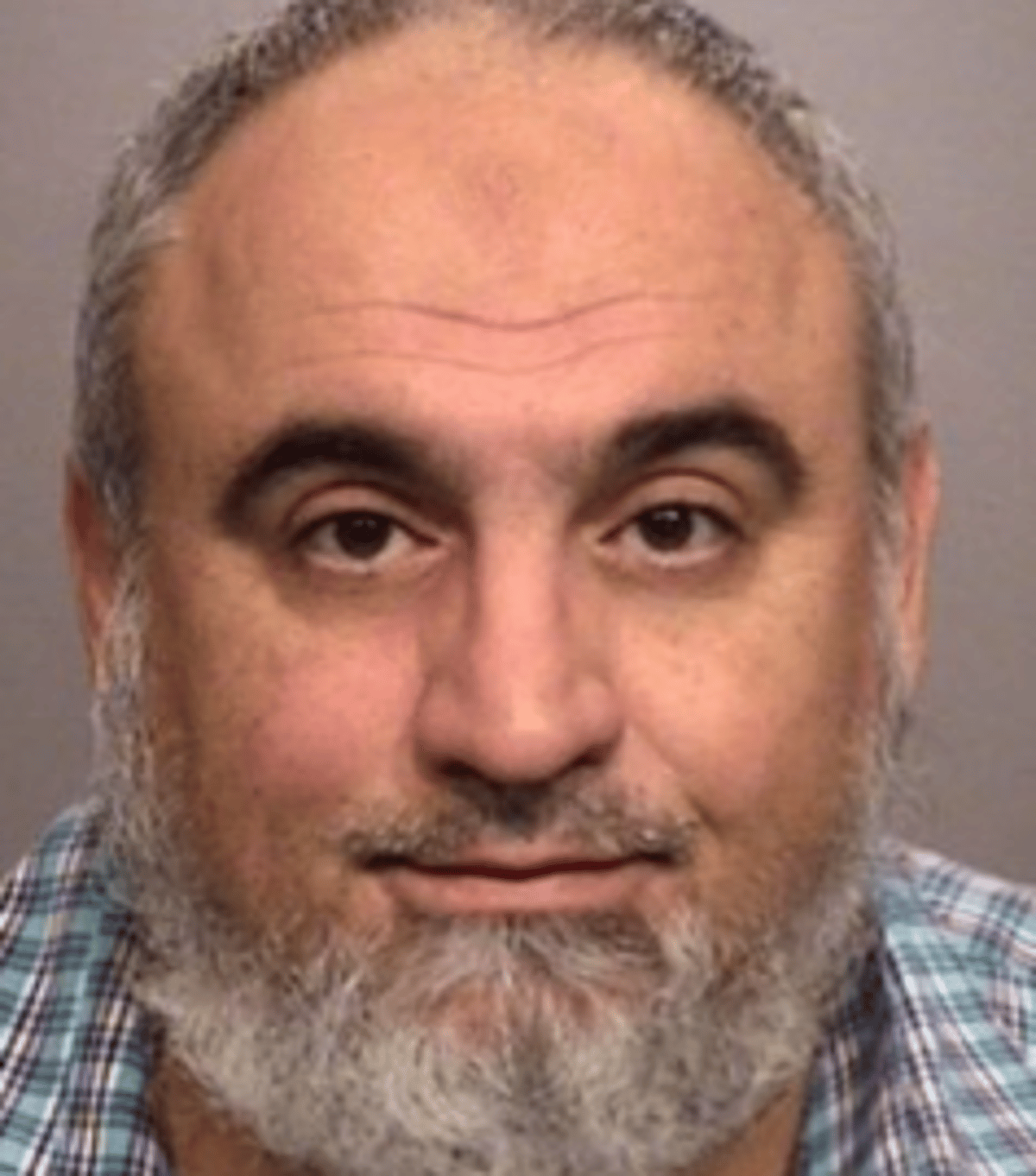
A Ventura County judge sentenced Loay Abdel Fattah Alnaji to just one year in county jail and two years of felony probation on Monday for killing Paul Kessler, a 69-year-old Jewish man who was struck in the head with a megaphone during dueling protests in Thousand Oaks, California, in November 2023, a sentence prosecutors had strongly opposed.
The killing took place on November 5, 2023, one month after the Hamas massacre of October 7, at the corner of Thousand Oaks Boulevard and Westlake Boulevard, a site that had become a regular gathering point for opposing pro-Israel and pro-Palestinian demonstrations. Kessler, a retired medical device salesman and amateur pilot married for 43 years, was standing on the corner carrying an Israeli flag when Alnaji, then 50, crossed the intersection to confront him. Alnaji struck Kessler in the head with a megaphone, causing him to fall backward and hit his head on the pavement. Kessler suffered a fractured skull and brain hemorrhage and died early the next morning.
Alnaji, a Moorpark resident and one of the organizers of the pro-Palestinian protest that day, stayed at the scene, called 911, and gave a statement to investigators before being taken into custody days later. In May, he pleaded guilty to felony involuntary manslaughter and felony battery causing serious bodily injury, and admitted aggravating factors that he used a weapon and that his victim was particularly vulnerable, exposing him to a maximum of four years in prison.
Ventura County District Attorney Erik Nasarenko's office pushed hard for a state prison sentence and formally objected when Judge Derek Malan indicated he would instead impose probation with up to a year in county jail. Nasarenko said Alnaji should be sentenced to prison for his violent behavior and that his office strongly objects to any lesser sentence, adding that while no punishment can fully account for the Kessler family's loss, a prison term underscores the severity of the crime and would deter similar violence.
Kessler's widow submitted a statement read at the sentencing describing the relentless grief of losing her husband in such a sudden and violent way and the silence that has filled their home since his death. Los Angeles defense attorney James Blatt, who was not involved in the case, said the facts warranted a two- to three-year prison sentence given that the megaphone made the attack an aggravated assault rather than a simple altercation, and argued that probation sends the message that a Jewish life is not valued and provides no real deterrent.
Alnaji's attorney, Ron Bamieh, maintained his client acted in self-defense and is not a violent man, describing the killing as a tragic chain of events that unfolded while Alnaji was exercising his right to protest. Nasarenko's office said it found no evidence that Alnaji personally uttered antisemitic remarks and that the case did not meet the legal elements of a hate crime, which is why he was charged with manslaughter rather than murder, though antisemitic chants were reportedly heard from members of his group at the rally that day.
The sentence has drawn sharp criticism from prosecutors, outside legal experts and Jewish community leaders, who argue that a killing carried out during a politically charged confrontation just weeks after October 7 warranted real prison time rather than a probationary outcome.
In practice, Alnaji is likely to serve far less than the full year. Because the jail term is a condition of probation rather than a state prison sentence, it comes with standard good-behavior and work credits, and his own attorney has said Alnaji is expected to serve roughly six months, about half the nominal term. He remains free on $50,000 bail, and a report date for him to begin serving the jail portion has not been publicly confirmed.
The sentence itself also faces a legal question: California law generally bars probation for a defendant who willfully inflicted great bodily injury, which Alnaji admitted to as part of his plea, meaning Judge Malan's decision to grant probation anyway required him to find this an "unusual case." Legal observers have raised the possibility that the Ventura County DA's office could challenge that finding as an improper judge-negotiated plea disposition, though it remains unclear whether prosecutors will pursue an appeal.