A complex federal investigation into the disappearance of a prominent laboratory employee has drastically shifted focus, with homicide detectives now openly treating the case as a potential murder. The victim, fifty-three-year-old Melissa Casillas, vanished without a trace exactly one year ago after leaving her suburban residence under highly unusual circumstances. Her sudden disappearance originally triggered a massive missing persons search that sent shockwaves through the tightly knit scientific community.
The case took a grim turn when a hiker discovered her skeletal remains deeply embedded within a heavily forested area located roughly ten to twenty-four kilometers from her home. Initial field reports from local police tentatively suggested that the laboratory worker had tragically taken her own life, pointing to a weapon found resting near the body. However, an exhaustive forensic analysis of the recovery site has completely undermined the initial suicide theory, prompting federal investigators to intervene.
Medical examiners confirmed that the skeletal remains were discovered sitting completely upright against a large tree with a handgun placed directly alongside the body. While New Mexico State Police confirmed the presence of a distinct fracture on the skull, a comprehensive radiological scan failed to locate any bullet fragments or metallic residue inside the bone structure. Private investigators hired by the victim's parents noted that the weapon showed no signs of heavy rusting despite supposedly sitting exposed to the elements for a full year, suggesting the scene was entirely staged.
The high-stakes investigation has caused a deep, bitter fracture within the immediate family, dividing them into two fiercely opposing camps regarding the true cause of death. The victim's husband, sixty-one-year-old Mark, alongside their nineteen-year-old daughter, Sierra, continue to maintain that she fled the household voluntarily due to intense personal distress. Conversely, the victim's biological parents and siblings completely reject the suicide narrative, claiming she was murdered and pointing out that the search area had already been thoroughly combed by rescue teams months prior.
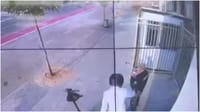
Behind closed doors, details of severe financial distress and intense domestic arguments have begun to emerge, painting a volatile picture of the weeks leading up to her disappearance. Neighbors reported hearing a loud, terrifying scream echoing from the residence on the exact afternoon she vanished, noting that the couple frequently engaged in shouting matches. Furthermore, sources revealed that the husband was spotted asking neighbors about the exact placement of their security cameras just days before his wife disappeared.
Digital forensics teams uncovered additional anomalies after analyzing two mobile phones left behind at the scene alongside her vehicle, wallet, and reading glasses. A deep data analysis revealed that both digital devices were completely reset to factory settings at entirely different times, one during the night before her disappearance and the second on the following morning. While the family insists her administrative role at the Los Alamos National Laboratory was completely unrelated to her death, federal agencies are continuing to investigate a broader wave of disappearances targeting defense scientists nationwide.