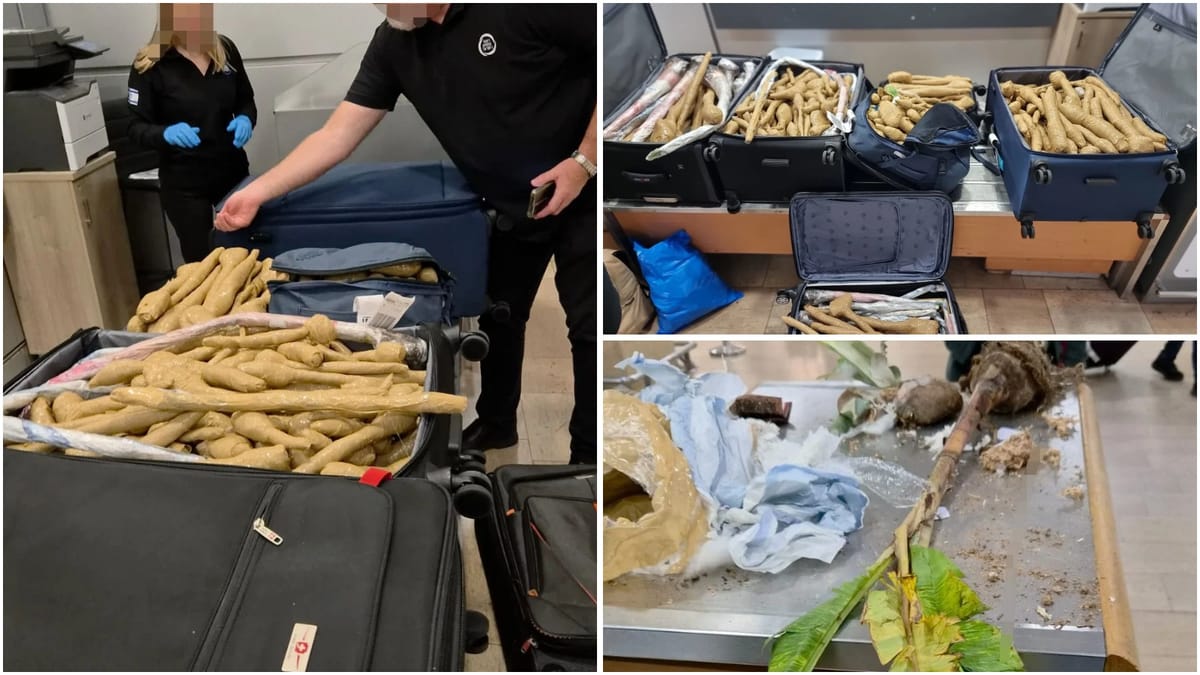
The Tax Authority clarified that bringing plants and plant products into Israel in an unregulated manner, even a single plant intended for personal use, can lead to the introduction of pests and plant diseases not present in Israel, causing significant and irreversible damage to local vegetation and entire agricultural sectors. Bringing plants into the country without the required permits is a violation of the Plant Protection Law.
In the case of bringing bananas from Thailand, the risk is particularly significant: Thailand has pests and disease agents not found in Israel, and their entry into the country could severely damage the local banana industry, even threatening its continued existence.
Shlomit Tziyoni, director of the Plant Protection and Inspection Services at the Ministry of Agriculture and Food Security, emphasized: "Even a small plant in a suitcase, a single fruit or vegetable, can cause enormous damage to agriculture and nature in Israel. Even plants that appear healthy may carry pests and diseases that do not exist in the country, and cause irreversible damage and even endanger entire agricultural sectors."
Tziyoni called on the public to show responsibility and not bring plants and plant products into Israel without the required permits. "Thanks to the vigilance of customs inspectors and cooperation with the Plant Protection and Inspection Services inspectors, the illegal entry of plants was prevented in this case," she added.
The Ministry of Agriculture and Food Security emphasizes that plants or plant products must not be brought into Israel without the required permits. Even an action done in good faith and for personal use can lead to serious consequences for Israeli agriculture.