Friend of Israel
Former Sen. Ben Sasse Announces Cancer Diagnosis: "I Know How This Ends"
In a candid social media post, Sasse, 53, said the cancer has metastasized and described advanced pancreatic cancer as “a death sentence.” He added that while the diagnosis was devastating, it had also sharpened his sense of purpose. “We’re all on the clock,” he wrote. “The question is how we use the time we’re given.”
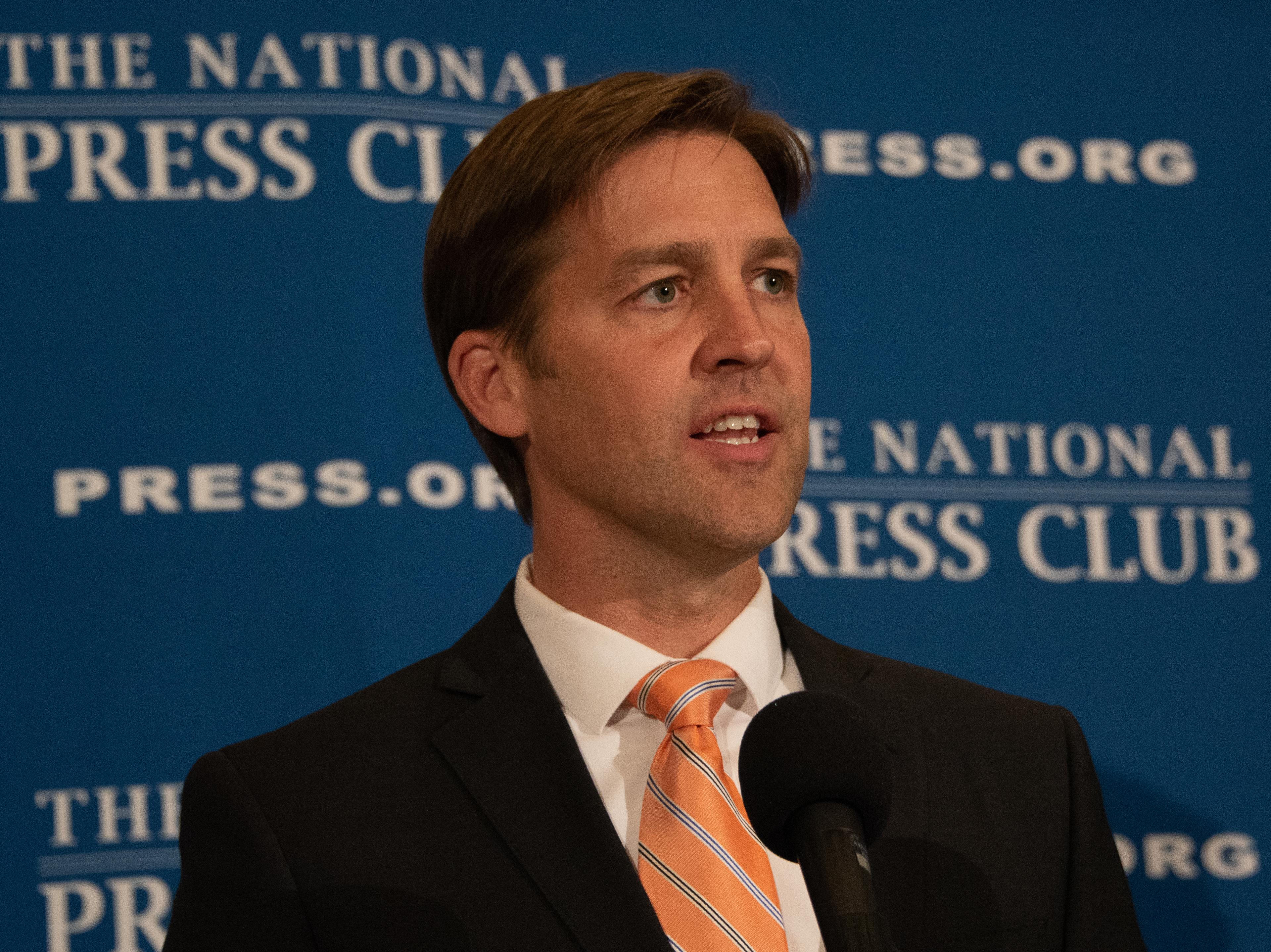
Former Nebraska Senator Ben Sasse announced Tuesday that he has been diagnosed with stage-four pancreatic cancer, saying the disease is terminal and that he does not expect to survive.
In a candid social media post, Sasse, 53, said the cancer has metastasized and described advanced pancreatic cancer as “a death sentence.” He added that while the diagnosis was devastating, it had also sharpened his sense of purpose. “We’re all on the clock,” he wrote. “The question is how we use the time we’re given.”
Sasse served in the U.S. Senate from 2015 until his resignation in 2023. During his time in office, he built a reputation as an intellectually inclined conservative willing to challenge his own party. That reputation was cemented in 2021, when he became one of seven Republican senators to vote to convict President Donald Trump for incitement of insurrection following the January 6 Capitol riot. Though the conviction failed, the vote defined Sasse’s public legacy and made him a polarizing figure within Republican politics.
Beyond impeachment, Sasse focused much of his legislative work on national security, the rise of China, Russian and Chinese disinformation campaigns, and the societal impact of artificial intelligence. He frequently argued that Congress had grown too passive and warned against the steady concentration of power in the executive branch.
In recent years, Sasse also became a prominent advocate against antisemitism and a consistent supporter of Israel. Following the October 7 Hamas attacks, he spoke forcefully about what he described as a moral failure on American college campuses, criticizing universities for tolerating intimidation of Jewish students under the banner of activism. Though not Jewish himself, he was widely viewed as a reliable ally of the Jewish community and was publicly recognized in 2024 for his leadership on these issues.
Sasse framed his cancer diagnosis through the lens of faith. Raised Lutheran and now Presbyterian, he wrote about the timing of the news during the Advent season, describing it as a period focused on hope and redemption rather than fear. He said his faith allowed him to confront the reality of death without surrendering to despair and that he intended to continue speaking publicly for as long as his health permits.
After leaving the Senate, Sasse became president of the University of Florida, a position he left in mid-2024 to care for his wife, Melissa, who had suffered a stroke. His tenure later drew scrutiny over spending practices, allegations he has denied. He subsequently joined the university as a professor at its Hamilton School for Classical and Civic Education.
Much of Sasse’s statement centered on family. He wrote about the pain of knowing he will miss milestones in his children’s lives and described his wife as his closest friend and partner. He acknowledged the burden his illness places on them but emphasized gratitude for the life they have shared.
Reaction to the announcement came from across the political spectrum, reflecting the respect Sasse commanded even among critics. While his career was often contentious, his final message was stripped of politics, focusing instead on responsibility, time, and meaning.
“I’m not going down without a fight,” he wrote. “But I know how this ends."