Sa-Nur Settlement Reestablished After 20 Years
Sixteen families moved into the site, including Samaria Regional Council head Yossi Dagan, who had been among those evacuated from Sa-Nur two decades ago. Prefabricated homes were set up in recent days to allow the immediate return of residents, with permanent construction plans still awaiting approval.
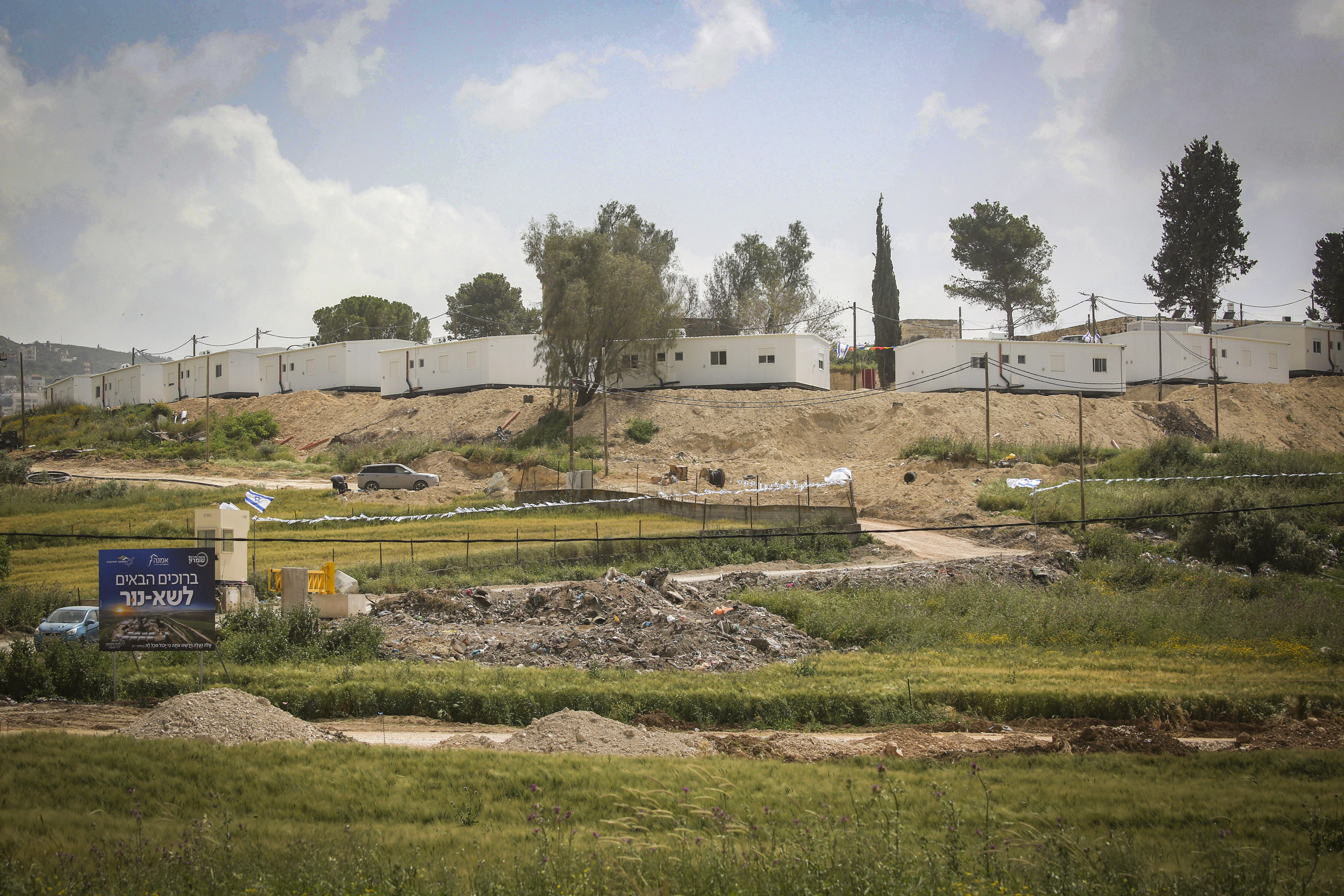
Cabinet ministers, lawmakers, and hundreds of settlement activists marked the reestablishment of Sa-Nur in northern Samaria on Sunday, nearly 21 years after it was evacuated under the 2005 Disengagement Plan.
Sixteen families moved into the site, including Samaria Regional Council head Yossi Dagan, who had been among those evacuated from Sa-Nur two decades ago. Prefabricated homes were set up in recent days to allow the immediate return of residents, with permanent construction plans still awaiting approval.
Speaking at the event, Defense Minister Israel Katz said the government is advancing efforts to legalize roughly 140 unauthorized farming outposts across Judea and Samaria. Finance Minister Bezalel Smotrich called the move a “historic correction” to what he described as the “sinful expulsion” from northern Samaria, framing the return as a national milestone.
Smotrich also urged Prime Minister Benjamin Netanyahu to move toward a “full occupation” of Gaza and the reestablishment of Israeli communities there.
The return to Sa-Nur follows a series of government steps reversing elements of the Disengagement. In 2023, legislation barring Israelis from living in the evacuated northern Samaria settlements was repealed. Subsequent cabinet decisions approved the establishment of dozens of new communities in the area, including Sa-Nur, Homesh, Ganim, and Kadim.
Plans for 126 permanent housing units in Sa-Nur have been submitted but not yet approved, prompting the use of temporary structures for the initial group of residents.
Criticism came from the Peace Now organization, which described the move as harmful, arguing it would increase the military burden on the IDF and restrict access to land for local Arab residents.
As part of preparations for the return, Israel expropriated 500 dunams of private land in December to build a bypass road connecting the site without passing through nearby Arab villages.
The ceremony drew several hundred participants, with organizers describing the move as both symbolic and practical, aimed at reestablishing a permanent Israeli presence in the area.