Turning Fear Into Defiance

Coffee Machines for Draft Dodgers: New Campaign

Tzeva Shachor launches unprecedented incentive program • Yeshiva students visited by military police receive thousand-shekel espresso machines | The strategy behind the provocation (Haredim)

Haredi anti-draft protest

In what may rank among the most unconventional protest tactics in Israel's escalating haredi draft crisis, the activist organization Tzeva Shachor announced Thursday a striking new initiative: any yeshiva student or married Torah scholar who can verify that military police arrived at his home attempting to arrest him will receive a premium espresso machine worth approximately one thousand shekels.

The campaign, unveiled following a three-day fundraising blitz that netted over three million shekels for the organization's operations, represents a calculated effort to reframe enforcement actions as opportunities for strengthening resistance rather than sources of intimidation, according to Rabbi Aryeh Mushkowitz, a senior Tzeva Shachor official who confirmed the details in an interview with Kikar HaShabbat.

"The goal is to transform what they intend as a tool to sow fear and panic into something that actually reinforces the struggle against the arrests," Mushkowitz stated, explaining the strategic thinking behind the coffee machine giveaway. "When military police knock on your door, you'll receive a coffee machine. It's completely real. But anyone who tries to take advantage of us? That won't work. The Jewish people are stronger than that."

From Three Million Shekels to Espresso Machines

The initiative follows an intensive fundraising campaign that concluded after just three days, during which Tzeva Shachor mobilized what Mushkowitz described as an unprecedented wave of grassroots financial support from across the religious spectrum. "We saw incredible success. A number of donors beyond imagination," he noted. "The entire Jewish people contributed their share, and now we're seeing tremendous participation from overseas and from distant communities as well."

The campaign's timing coincides with what appears to be a significant shift in enforcement patterns. According to Mushkowitz, military police activity targeting yeshiva students has declined noticeably in recent weeks, a development he attributes to the effectiveness of community resistance rather than any policy change. "I think the police have calmed down," he said. "They understood this isn't their role, that they can't manage the Jewish people this way. Even the military police aren't knocking on doors the way they thought they would."

The broader context reveals a haredi community mobilizing unprecedented resistance to conscription enforcement, with major hasidic leaders personally attending mass demonstrations and coalition negotiations advancing emergency legislation to freeze arrests of Torah scholars.

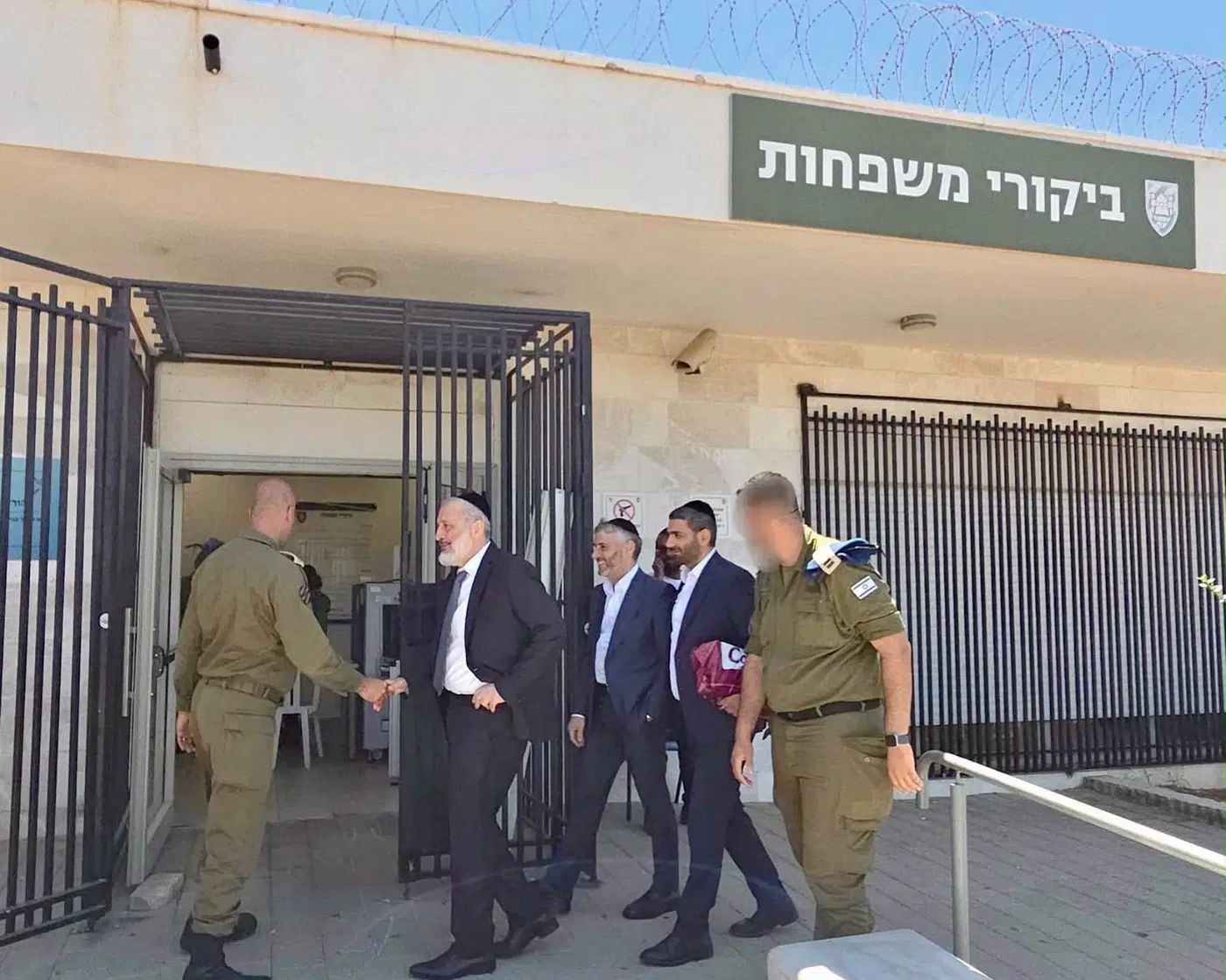
Deri visits draft dodgers in military jail

The Paradoxical Effect of Enforcement

Mushkowitz argued that the government's enforcement campaign has produced results opposite to those intended, pointing to what he characterized as a dramatic decline in voluntary enlistment through specialized haredi military tracks. "We're seeing that the arrests only raise everyone's heads higher," he declared. "The result on the ground is clear: a massive drop in recruitment pathways. Everyone understands today that the worst thing for a haredi person is to join these tracks. We're not breaking — we're getting stronger."

The coffee machine initiative represents only the latest escalation in a confrontation that has seen Prime Minister Netanyahu personally guarantee coalition support for emergency legislation halting criminal proceedings against yeshiva students, while haredi political leaders pursue a controversial strategy of splitting the stalled draft law to pass temporary arrest freezes as emergency measures.

The campaign's provocative nature — offering consumer goods as rewards for evading military service — is likely to intensify already fierce public debate over burden-sharing in Israeli society, particularly as combat veterans and reservists press lawmakers over what they view as preferential treatment for Torah scholars. Yet for Tzeva Shachor and its supporters, the espresso machines serve as tangible symbols of a community determined to resist what it views as an existential threat to traditional Jewish learning.

Whether the initiative will prove sustainable as enforcement pressures potentially intensify remains unclear. But the organization's ability to raise millions of shekels in days and transform military police visits into opportunities for community solidarity suggests the haredi resistance to conscription has entered a new and more sophisticated phase.

Ready for more?

Join our newsletter to receive updates on new articles and exclusive content.

We respect your privacy and will never share your information.

Enjoyed this article?

Yes (10)
No (0)
Follow Us:

Unmissable content


Loading comments...

Also of Interest