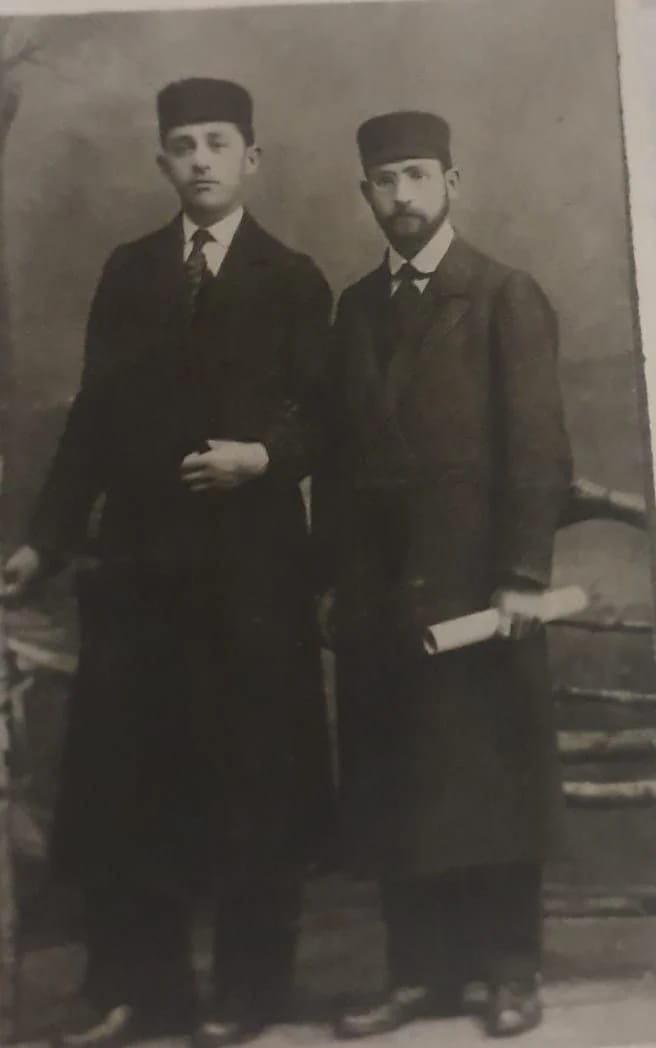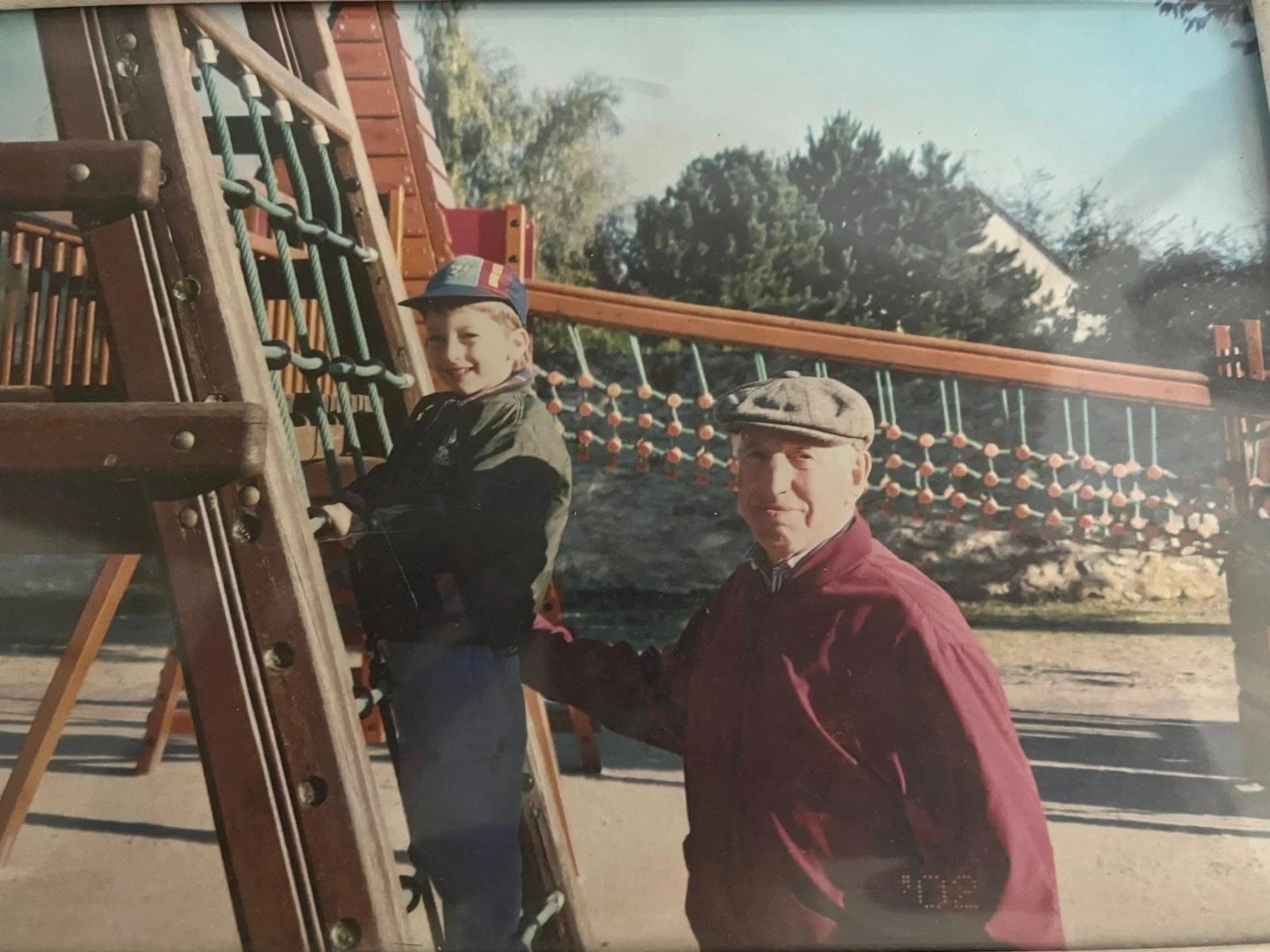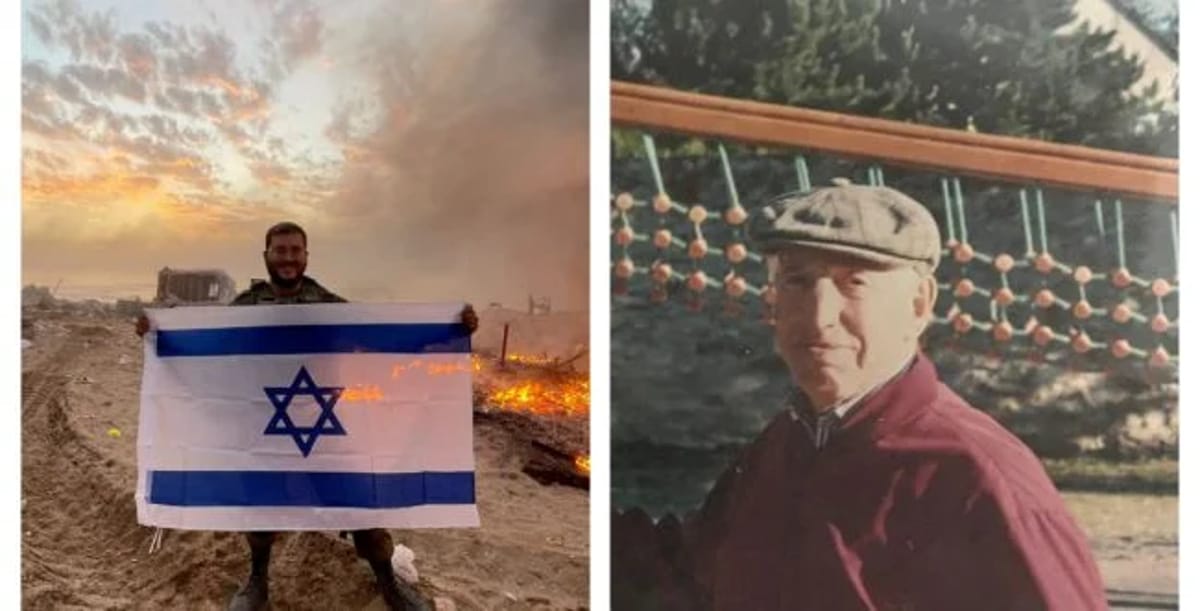
Our family’s story of triumph began when my late grandfather faced death three times during the Holocaust but survived with heroism. It continued with my late father, who immigrated to Israel and built a family, and it lives on with me, as I have the honor of fighting in Gaza to defend the State of Israel that my grandfather dreamed of.
Every year on the eve of Holocaust and Heroism Remembrance Day, I feel a mix of sadness and pride: sadness for what our people went through and pride for what we’ve become since. Alongside the collective and national memory, I know I have another task on this tough day: to tell the story of the miracle, the story of my grandfather’s, my father’s, and my family’s heroism. It’s one of many stories that testify to the courage in facing all the hardships and suffering our people have endured from then until now.
My late grandfather, Avraham Luksenburg, was in his 20s when the war broke out. His father, Moshe Nachum; his mother, Chava; and his younger brother, Sasha, may their memories be blessed, perished. But he and his sister, who managed to escape Poland before the war began, survived. Three times my grandfather stared death in the face, three times he thought it was the end, like the fate of his family. But the well-known saying from our sources, “Even if a sharp sword is placed on a person’s neck, they should not despair of mercy,” applied to him more than anyone.
The Bribe to the Nazi Officer and the Escape Under Fire
Before the war, my grandfather was a watchmaker. After his parents perished in the Lodz Ghetto in Poland, the Germans used him to repair their watches, keeping him alive. Later, the ghetto’s Jews were sent to Treblinka, some to the labor camp, others to the extermination camp.
My grandfather, young and quick, escaped the Nazis several times but decided to return to the camp to find his younger brother, Sasha. He chose to go back to the labor camp and began searching for him. Soon, he realized his beloved brother had been murdered, and a decision crystallized in his heart: “I must escape again, I must survive.”
My grandfather began his escape attempts, identifying the camp’s weak point: the clay work. This was the hardest job in the camp, but it had one advantageit was right next to the wall he thought he could climb. With fear but determination, he approached an SS officer and offered a bribe: “Put me on clay work, and you’ll get a luxurious gold watch in return.” The watch, which he had made before the war, he had managed to keep hidden. The surprised Nazi officer, thinking the Jew had lost his mind, agreed, took the valuable watch, and assigned him to the camp’s toughest job, the clay work.
My grandfather started the grueling work and waited for the right moment. When he spotted his chance, he rushed toward the wall and began climbing quickly. The Nazi officers, noticing the escape attempt, opened deadly fire on him. My grandfather would later recount feeling dozens of bullets whizzing past him, surrounding his body, and piercing the wall he was climbing. But miraculously, not a single bullet hit him, and he escaped the Nazi labor camp by the skin of his teeth.
“Even with a Sharp Sword”: In a Cart with a Nazi Officer and a Firing Squad
The miracles didn’t stop. After his heroic escape, my grandfather jumped into a horse-drawn cart, thinking it would help him flee quickly and get far from the Nazi camp. To his dismay, he discovered the cart was driven by none other than an SS officer. This time, he thought it was truly over. But to his shock, the officer was drunk and reeking of vodka. In a surreal scene, instead of killing him, the drunken Nazi began hugging and kissing him. My grandfather’s life was spared a second time. After they moved a bit away from the camp, he got off the cart, safe and sound.
After a period of many escapes and evasions, toward the end of the war, my grandfather was caught again. The Germans, fearing defeat, stopped sending people to labor camps and began gathering large groups of Jews for mass executions. My grandfather faced death again, standing with a group of Jews preparing for their demise in a firing squad. The Nazi soldiers had their weapons ready and were about to start shooting when an unexpected turn occurred. Moments before the mass execution, a Nazi officer arrived and ordered the soldiers: “Release some of the Jews; we received money for their ransom.”
At that time, Jews and Righteous Among the Nations were working to ransom and save as many Jews as possible, paying Nazi officers for their release. Out of all the masses of Jews killed in that place, the Nazi officer chose my grandfather’s small group to be ransomed and saved for the money received. My grandfather survived a third time. “Even if a sharp sword is placed on a person’s neck, they should not despair of mercy.”
After the war ended, my grandfather fled to France, where he found his sister, the last close family member he had left in the world. He planned to immigrate to Israel but then met my grandmother, married her, and stayed in France.