Dovid Tzvi Gotstein was 23 years old, exhausted from a long work week, and looking for a place to sleep on the ride down to Shabbat.
His father-in-law suggested he move up front. Take the space, sit comfortably, rest. It was a small, offhand kindness — the kind that happens a hundred times in a family without anyone remembering it.
Dovid Gotstein remembers this one. It is the reason he is alive.
On December 27, 2009, a family minibus carrying nine members of the Bernstein and Gotstein families from Beitar Ilit toward a Shabbat at Moshav Komemiyut drove through a railroad crossing near Kiryat Gat. The driver did not see the barrier coming down or the warning lights flashing. The van stalled on the tracks. The train arrived at full speed.
Seven people were killed: Aryeh Bernstein, 43, a veteran ZAKA volunteer; his wife Rivka, 41; their children Yochanan, 16, Chana, 14, and Mordechai Aaron, 9; their daughter Malka Gotstein, 21, eight months pregnant; and Malka and Dovid's son, Mordechai Aaron, just a year and a half old.
The back of the van was severed. The front survived. Dovid, asleep in the passenger seat, woke up in Barzilai Hospital in Ashkelon.
He did not know yet that he had woken up alone.
For three days, sedated and disoriented from serious injuries — fractures to his eye socket, nose and jaw, tears to his liver and spleen, vascular and muscle damage — Dovid communicated with those around him and asked them to call his wife Maly. He did not know Maly was gone. He did not know any of them were gone.
On Sunday, Rabbi Chananya Chulak of Ezra L'Marpeh came to his room and delivered the news in stages, with extraordinary care. A whole family, wiped out in a single moment. His wife. His son. His parents-in-law. His brothers and sisters-in-law. Seven souls.
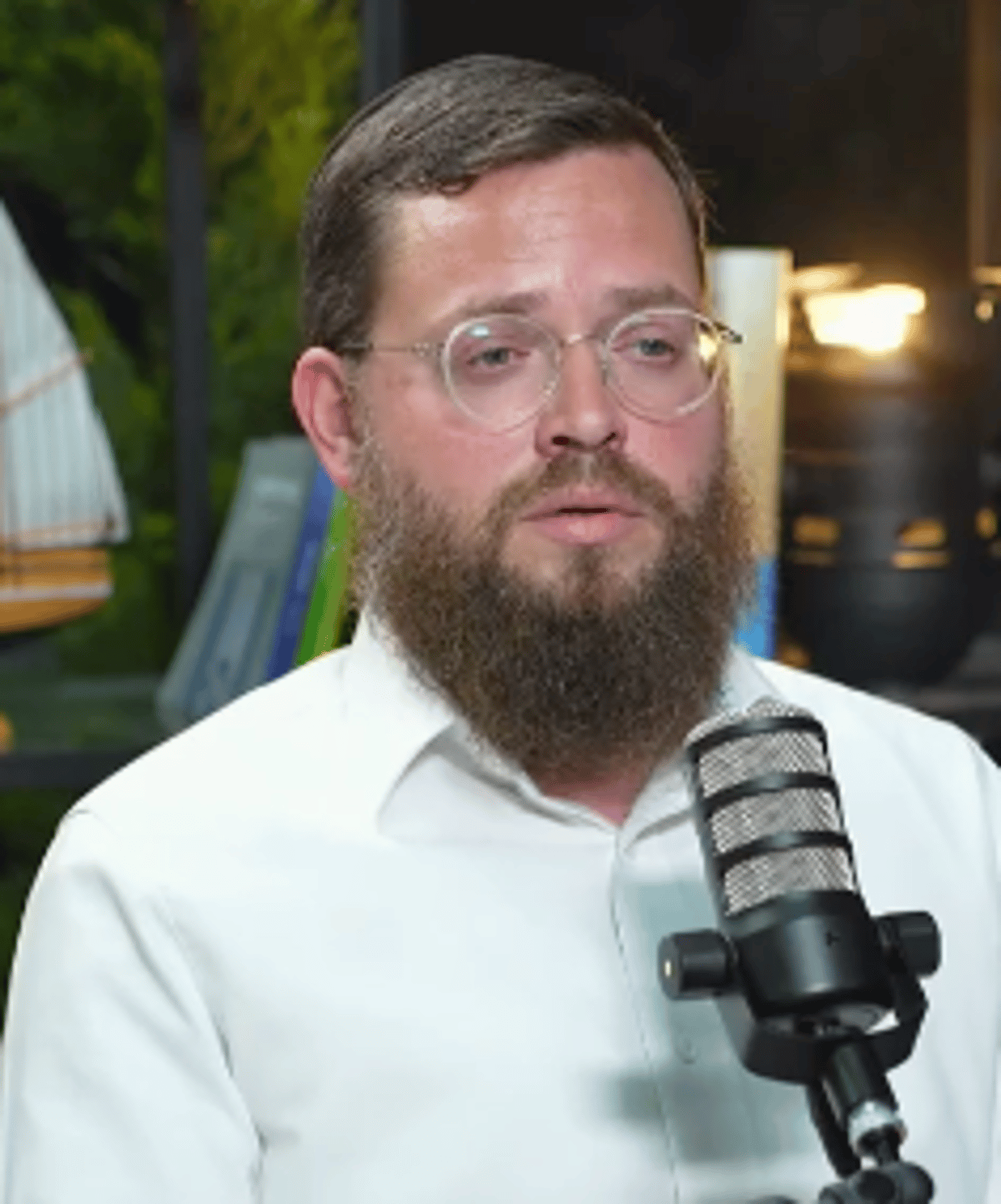
"It was a moment of total destruction," Dovid recalled this week in a deeply moving interview on the Kikar Hashabbat podcast Kikar FM. "The understanding that you are left alone just falls on you. I realized I was going to have to go out into a different life, face things I never planned for and never imagined at 23. A total loss."
What happened next is what makes Dovid Gotstein's story something other than a story about tragedy.
He did not look for someone to blame. The driver, who survived, was handcuffed to his hospital bed in Be'er Sheva in the immediate aftermath. Dovid felt nothing toward him but compassion. "He was a messenger of the Almighty, chosen for a terrible mission that no one would ever want," Dovid said. "He didn't wake up that morning and decide to cause an accident. He has a wife and children and wanted to come home. I have no anger toward him whatsoever."
What Dovid reached for instead, lying broken in a hospital room with the lights out and the visitors gone, was what he calls his "emunah muscle" — the faith he had been raised with, shaped by years close to the Jerusalem tzadikim Rabbi Asher Friend and Rabbi Raphael Gedalya Segal. Alone at nine o'clock at night, unable to move, he made a choice.
"I said to Hashem: Abba, this is from You. Give me the strength to survive it."
He describes the theology simply, without any performance: "You don't get angry at a father. Even when we don't understand His ways and never will, a father only wants good for his children. Sometimes he does it with the gentlest hands, with silk gloves. On one cheek he gives a slap, and on the other cheek he gives a caress. Whoever chooses to see only the slap — eventually sees the caress too."
The doctors expected a long series of complex surgeries. Instead, his body began healing on its own. The tears and fractures closed without surgical intervention. Within two weeks he was home.