My name is Velvl. I sell arba minim in Yerushalayim.
For decades, the scene before Yom Tov in Yerushalayim has not changed much: crowds pack the alleyways, the scent of hadassim and esrogim hangs in the air, and the hum of buying and selling fills the streets. I have seen thousands of customers over the years, experts who scrutinise every detail, and simple buyers looking for a quick solution. But one story, from about five years ago, is engraved in my heart deeper than all the rest. It happened two hours before the chag, in the most pressured and frantic moments of the day.
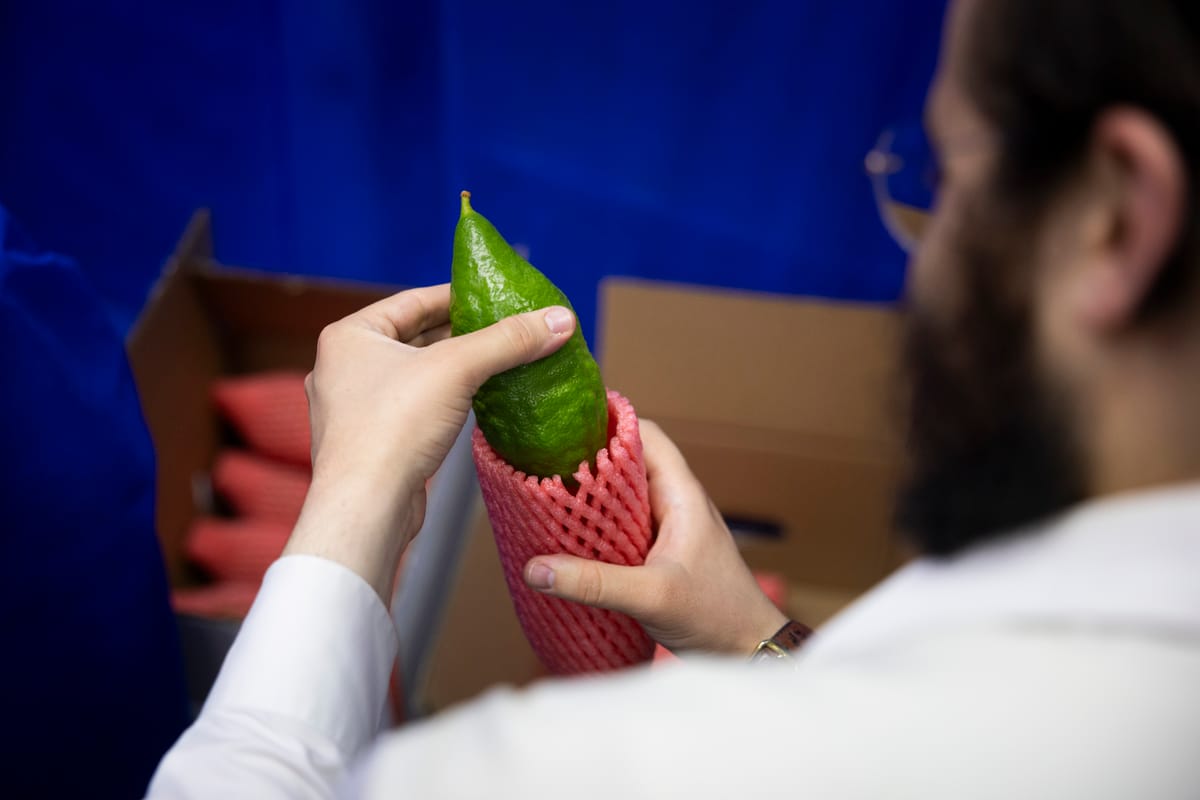
A Yid stood at my door. His gaze seemed uncertain, as though he was not sure he had come to the right place. In appearance he looked chareidi, but I noticed something undefined about him, his walk, his hesitant politeness, the way he looked at my stock, all conveyed a lack of confidence. He stepped slowly toward the laden table, careful not to touch anything, and finally pointed to one particularly striking set displayed at the front. In a quiet, modest voice he asked: "How much does this set cost?"
As an experienced trader who had just worked through long, unbroken hours, I recognised this type of question immediately. Partly out of the fatigue that had built up over weeks of hard work, and partly out of a desire to release him respectfully without entering into a long negotiation that would lead nowhere, I answered with mild indifference: "378 shekels." I threw out a random number that jumped into my head, a sum that seemed reasonable enough not to scare him off, but concrete enough to close the transaction quickly.
I thought that would end the brief conversation and he would move on, but what happened next surprised me completely. The man did not hesitate. He took the esrog with great care, looked at it with appraising eyes, and asked to go and show it to a moreh hora'ah nearby. A few minutes later he returned, smiling from ear to ear, and said: "He said it's something very strong. I'm taking it." After checking the rest of the set with the rav as well and seeing that it was mehudar shebemehudarim, he came back to me, stood before me and said formally and decisively: "I'm buying this set."
At that moment I felt a slight tightness in my stomach and my pulse began to rise. This set, just on the strength of the rare and superior esrog in it, was worth at least 1,500 shekels on the market! I stood there embarrassed, asking myself in alarm: What have you done? How did such a price fall out of your mouth? How did you not notice? I wrestled with myself, but the rule that governs my life was explicit: a word is a word. For me, standing by one's word and maintaining credibility is a supreme value that is not up for negotiation, even if the financial damage hurts.
But the real surprise was still ahead of me.
The man took out from his pocket a bulging, heavy, worn plastic bag, placed it carefully on the table and said: "Here, there's exactly 378 shekels in this." In the first seconds a suspicious and unpleasant thought passed through me. I wondered where all these coins had come from, and whether this was a dubious person who had chas v'shalom stolen money from tzedakah boxes. But before I could dwell on the thought, he looked at me with pure eyes, and in an emotional, trembling voice told his story:
"I've been married a few years now, and the financial situation in our home is very complicated and difficult. Throughout this past year, my wife and I made a decision: we collected shekel by shekel. Every day, even the few agorot coins left over from basic shopping, we immediately put aside in this bag, especially for this mitzvah. Only yesterday evening I dropped in the last coins we had in the house. When I counted it all together at the end, it came out to exactly the sum you asked from me now: 378 shekels. When I came here I didn't know what I would be able to buy, but here, baruch Hashem, I managed to reach exactly my goal."
At that moment something in my throat choked. Tears rose in my eyes on their own.
I looked at the bag laden with coins and understood that this was truly holy money. This is money of mesirus nefesh, money collected pruta by pruta with toil, with tzimtzum and with the deep yearning of a couple who wanted with all their heart to fulfil the mitzvah with hiddur and dedication. All the thoughts about the profit I had lost, all the calculations about the thousand shekels that had vanished from my pocket, evaporated as though they had never been, in a single moment.
My household members, who were present in the room and listening to the conversation, also stood moved to tears. I understood at that moment that there are precious and pure-hearted people in this world, people who walk in temimus and simple emunah, and apparently for them these words and this exact price were sent from my mouth: 378 shekels. Not one agora more, and not one agora less.