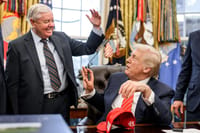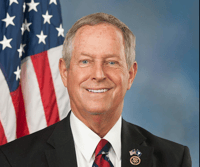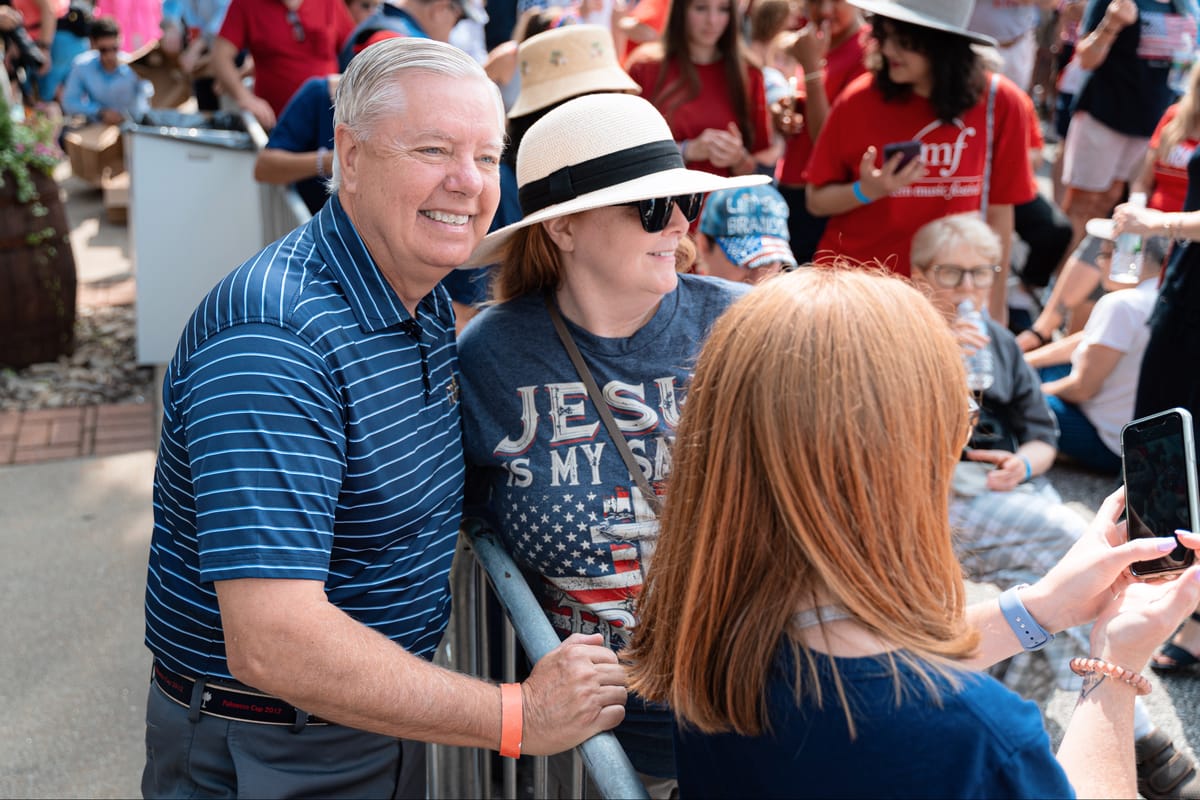
The death of Senator Lindsey Graham has set off a compressed and unusual sequence of events in South Carolina, triggering both an immediate gubernatorial appointment to the Senate and a sprint primary to determine who will carry the Republican banner into November.
Graham, 71, died Saturday night at his home on Capitol Hill. His office attributed the death to a brief and sudden illness, and police scanner audio from that evening indicated emergency responders had been dispatched for cardiac arrest. He had returned from Kyiv earlier that same day after meeting with Ukrainian President Volodymyr Zelensky and touring a drone production facility, and had been scheduled to appear on NBC's Meet the Press on Sunday morning. President Trump, a frequent political ally and occasional sparring partner of Graham's, called him one of the greatest people and senators he had ever known.
Under South Carolina Code Section 7-19-20, Governor Henry McMaster holds sole authority to name a temporary replacement, who will serve until the next Congress convenes on January 3. McMaster is himself term limited and not on any future ballot, having co-chaired Graham's reelection campaign, a position that leaves him answering to no electorate as he makes the pick. No appointment has been announced. Early speculation has centered on Lieutenant Governor Pamela Evette, who is said to be fielding calls about entering the race herself, along with Congressman Ralph Norman, Attorney General Alan Wilson and longtime Congressman Joe Wilson. Trump said Sunday he already has someone in mind but declined to name the person, saying it was too soon after Graham's death.
The appointment to the Senate seat is separate from the question of who will appear on the November ballot. Because Graham secured the Republican nomination through the June 9 primary, in which he defeated Greenville businessman Mark Lynch with roughly 57 percent of the vote, South Carolina Code Section 7-11-55 requires the party to hold a special primary to name a new nominee. Candidate filing is expected to open July 21 and run one week, with the special primary itself falling on or around August 11. If no candidate clears a majority, a runoff would follow two weeks later, around August 25. The eventual Republican nominee will face Democratic nominee Annie Andrews, a Mount Pleasant pediatrician, on November 3.
The disruption comes as South Carolina remains a reliably Republican state in Senate races, having last elected a Democrat in 1998, and Andrews was already running as an underdog against a well funded incumbent. Whether an accelerated and possibly divisive primary changes that calculus remains to be seen. Inside the Senate, Graham's death leaves the Budget Committee, which he chaired, without a leader in the middle of a contentious budget season, and Republicans will need to sort out committee assignments even as they work to preserve their narrow majority.
Graham's death also removes one of the most consistent pro-Israel voices in the Senate, where he was widely regarded as one of Jerusalem's most reliable allies across four decades in Washington. His replacement, whether the interim appointee or the eventual November winner, will inherit not only his seat but the question of who fills that role in the chamber going forward.