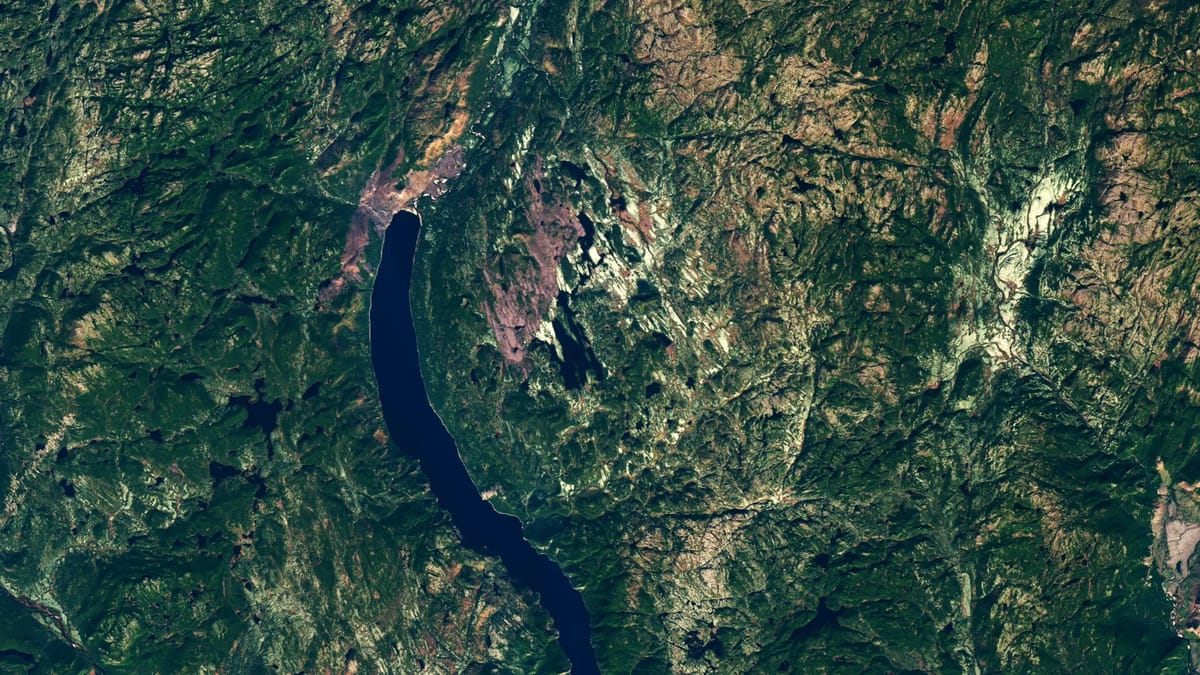
An extraordinary discovery in Canada began with nothing more than a search for a good camping spot. In 2024, Joël Lapointe, an amateur astronomer, was examining satellite imagery of a remote region in Quebec when he noticed an unusual circular structure near Lac Marsal. The formation raised his suspicion that it might be a crater formed by an asteroid or meteorite impact.
Lapointe reached out to experts, prompting researchers to investigate whether this was a previously unknown impact site. Planetary geologist Gordon Osinski from Western University in Canada was initially skeptical but decided to organize an expedition to the area in October 2025. Reaching the location proved exceptionally challenging: the research team had to arrive by seaplane, then wade through water with their equipment and navigate through swampy, dense terrain.
On the second day of fieldwork, researchers found structures in the rocks known as "shatter cones", formations created by the extreme pressures characteristic of celestial body impacts. According to the scientists, this is one of the clearest signs that can be identified in the field confirming an impact event actually occurred. The findings overturned the previous assessment that the geological structure in the area was formed by volcanic activity.
The researchers estimate that the crater, named Uhackatik, spans approximately 25 kilometers and was formed thousands of years ago. The structure includes a central uplift and high cliffs created by the violent event. If an impact of similar magnitude were to occur today in a populated area, Osinski noted, it could cause massive regional destruction and even affect the global climate.
The crater's origin is now considered scientifically verified, though official recognition is expected following review by a committee from the Meteoritical Society. If formally confirmed, it will be the largest impact crater discovered since the 2018 finding of the Hiawatha crater in Greenland, which measures approximately 31 kilometers in diameter.