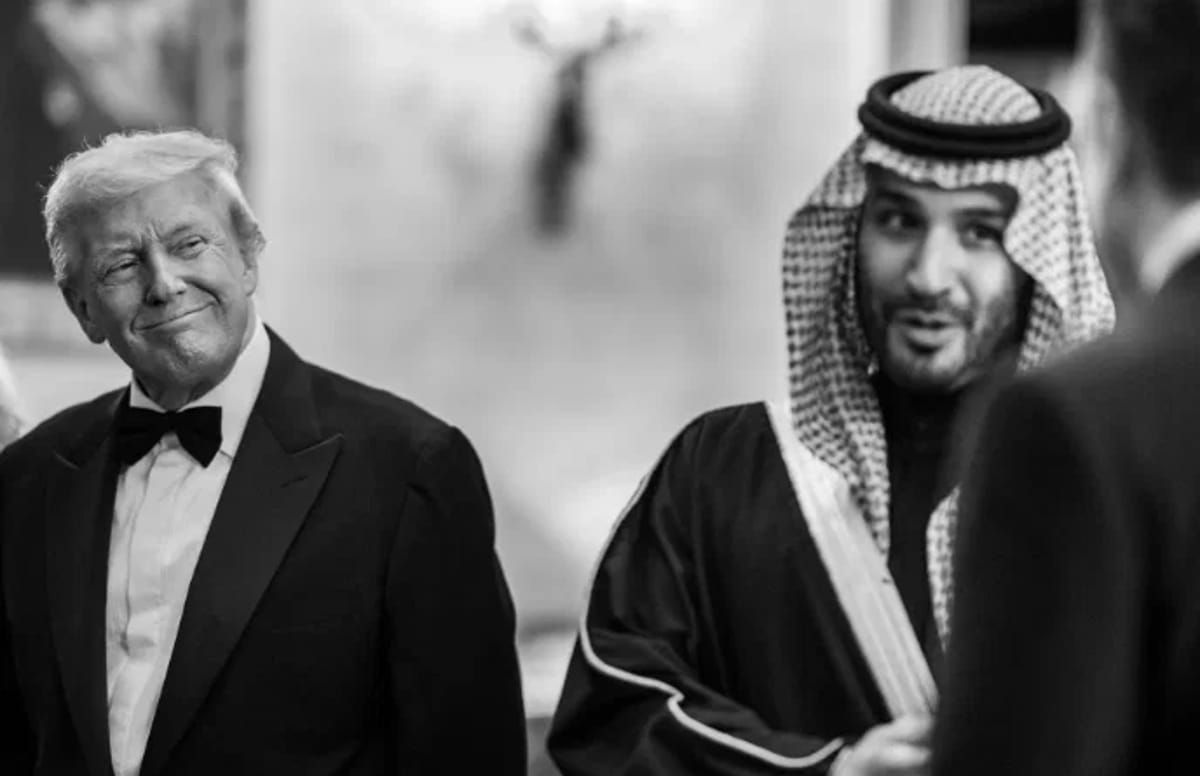
Behind President Trump's abrupt decision to cancel planned military strikes on Iran lies a high-stakes pressure campaign by Saudi Crown Prince Mohammed bin Salman, according to reporting from the Wall Street Journal and multiple U.S. media outlets—but the campaign revealed deep fractures among U.S. Gulf allies over strategy.
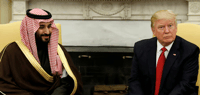
Bin Salman called Trump directly to dissuade him from attacking Iran, citing concerns that Iran could retaliate by attacking Saudi energy facilities and expressing concerns about the targets. The timing was critical: Trump had assembled massive military assets in the region and signaled strikes were imminent.
Trump announced the cancellation on his Truth Social platform late Saturday, saying Iran and other regional countries had asked the U.S. to "hold off any attack" because the "perimeters of a deal has been agreed to." He claimed the emerging agreement would include the "Immediate, Complete, and Total OPENING OF THE HORMUZ STRAIT" and an end to what he called "Iran's nuclear threat."
Yet the diplomatic picture is far more fractured than Trump's public statement suggests. Saudi Arabia's crown prince emphasized the necessity of prioritizing dialogue to de-escalate tensions and the importance of exerting all possible efforts to achieve a truce for preserving regional security and stability.
However, the Wall Street Journal reported that Gulf states are frustrated by the lack of a coherent U.S. strategic plan against Iran. U.S. allies in the Gulf sought from Washington additional air defense interceptors and guarantees that American military forces would protect them if military exchanges with Iran continued.
Notably, not all Gulf states support the push toward de-escalation. The UAE, in particular, has worked actively with Trump in recent days to convince him to adopt more decisive military measures against Iran, according to senior officials from Gulf states involved in the talks. UAE officials have argued that the Revolutionary Guards will not compromise without American escalation, control of the Strait of Hormuz, and consideration of ground operations.
Trump cautioned that the U.S. remained "fully prepared, targeting Iran with a level of military threat, firepower and sortie readiness rarely seen since World War II," signaling that the military option remains on the table.
The Iranian response has been pointed. An Iranian diplomat told the Wall Street Journal that if diplomatic talks fail, the Islamic Revolutionary Guards Corps is considering preemptive strikes against U.S. bases in the region, facilities in Gulf states, and potentially Israel, without waiting for an American military initiative.
The dynamic reflects a shift in Washington's Middle East calculus. Trump appears increasingly swayed by Saudi Arabia's preference for diplomatic resolution over open conflict. Gulf states have made clear to U.S. officials that a full-scale military confrontation would devastate regional energy infrastructure and destabilize critical trade routes.
Security analysts in Israel note that Trump's susceptibility to regional pressure—and his stated preference for diplomacy over prolonged military engagement—has reordered the priorities of U.S. Middle East policy away from the more hawkish approach that initiated the February strikes.