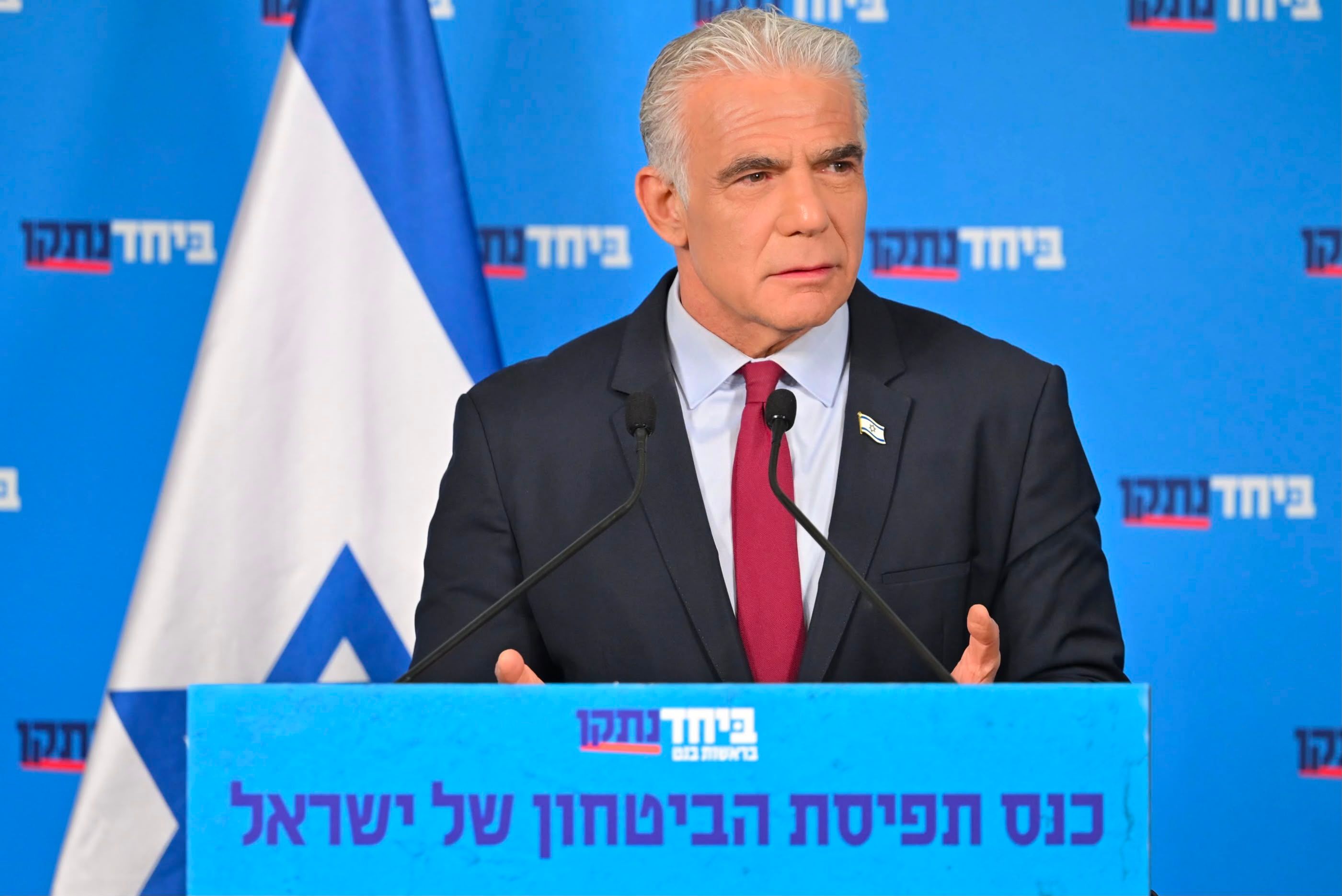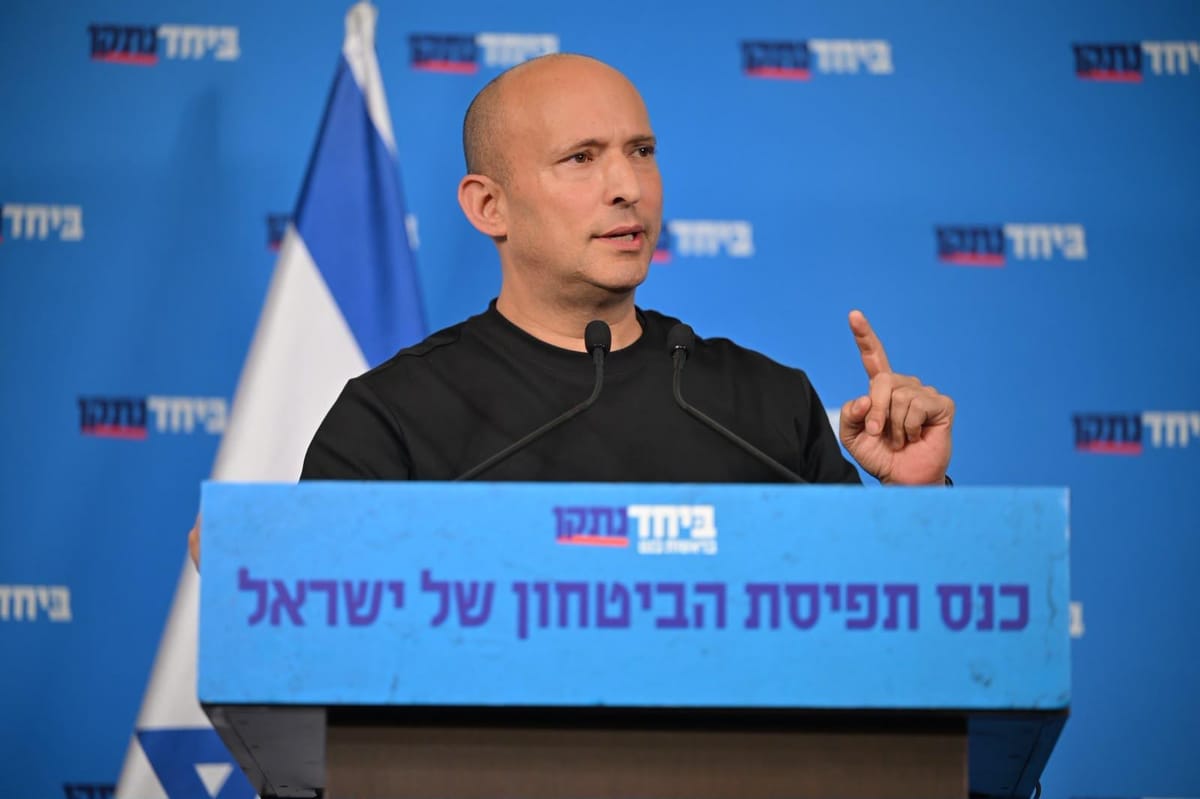
Naftali Bennett, leader of the Yachad party, presented his security platform for a potential future government at a special conference on Wednesday, outlining what he called a fundamental shift in Israel's defense doctrine.
Bennett, whose joint party with Yair Lapid has seen declining poll numbers over the past two years, emphasized the growing importance of artificial intelligence in modern warfare. "There's a historic shift many haven't yet internalized, AI is the weapon of the future," he declared. "In the not-too-distant future, AI capabilities will be more important than even nuclear weapons. Artificial intelligence is the next arms race among superpowers, and despite the current government's neglect over the past four years, we won't let Israel fall behind."
Addressing Israel's northern border, Bennett proposed reversing the current security equation. "If Hezbollah fires at us, we strike Iran," he stated. "An attack by Iranian proxy forces within Israel's borders will carry a price tag within Iran's borders."
Bennett also reiterated his stance on ultra-Orthodox military service, a contentious issue in Israeli politics. He criticized what he called inadequate conscription among the Haredi community, stating: "It's unacceptable that the IDF is short 20,000 soldiers while 100,000 healthy young Haredi men don't serve. In the next government under my leadership, we'll draft everyone, no exemptions, no loopholes." He dismissed proposals for partial exemptions, saying such compromises have historically failed to produce results.
On education, Bennett addressed the core curriculum debate in Haredi schools. "When a third of Israel's first-graders don't study English, mathematics, and Zionism, we have no future," he said. "Who will create the next Iron Dome?" He pledged what he termed an "education revolution" in a future government.
Bennett declared his intention to fundamentally alter the relationship between the state and Haredi institutions: "To save the Zionist state, we'll dismantle the Haredi state-within-a-state. We'll stop funding institutions that don't teach mathematics, English, and Zionism. Not Zionist, not on my dime. There will be one excellent national education system for all Israeli children, including our Haredi brothers. What was will be no more."
Bennett framed his speech as "breaking the conceptual frameworks," detailing four flawed security assumptions he intends to change. First, reversing the equation whereby Iran fires on Israel in response to strikes in Lebanon—instead making Hezbollah attacks trigger Israeli retaliation against Iran itself. Second, defining Qatar as an enemy state, arguing that anyone who doesn't understand this after October 7th is unfit to lead Israel. Third, removing Turkey and Qatar from Gaza governance and replacing them with Egypt, while maintaining Israeli freedom of operation. Fourth, addressing the estimated half-million illegal weapons within Israel by redefining the threat as security rather than criminal, deploying the IDF and Shin Bet, and declaring areas with weapons as closed military zones until cleared.