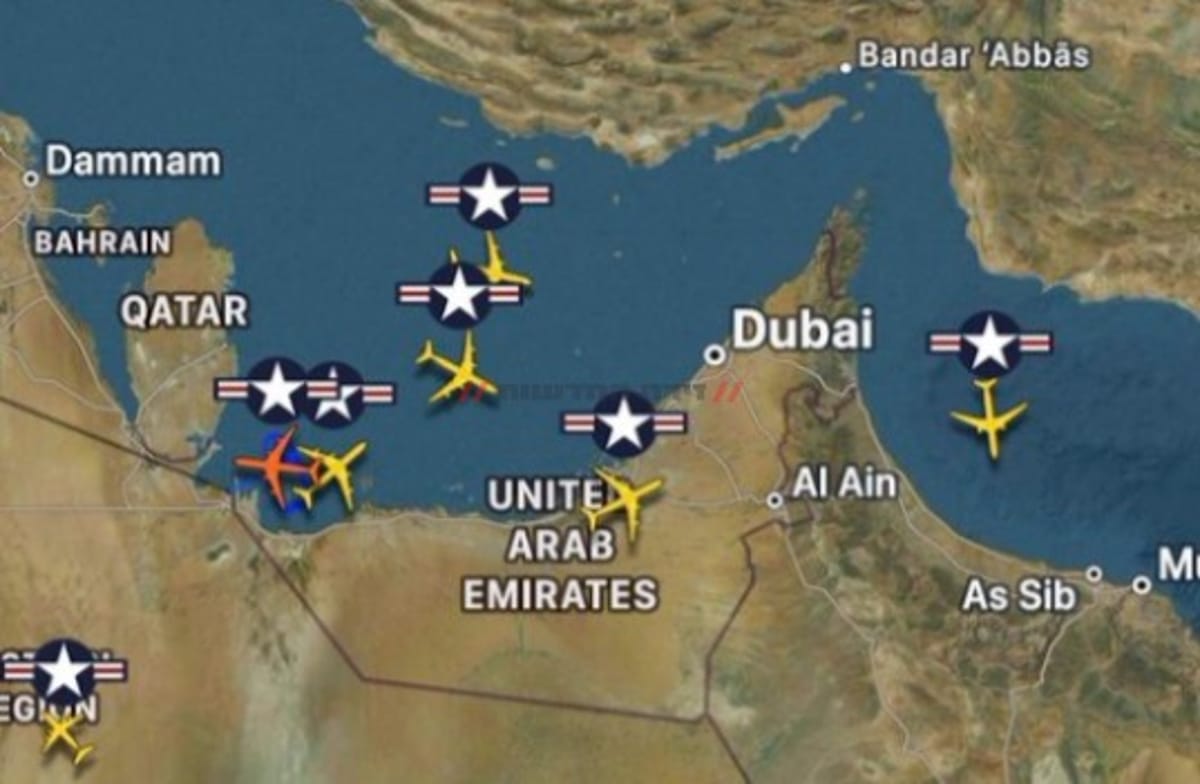
The United States Air Force initiated intensive flight operations over the Persian Gulf, deploying multiple aerial refueling aircraft across strategic airspace in several Gulf states. Flight tracking logs and regional monitoring confirmed that at least six American tanker planes were operating simultaneously near critical maritime corridors. The aerial maneuvers signal heightened operational activity by US forces operating within the United States Central Command area of responsibility.
The flight patterns highlight a major mobilization of heavy support aviation, including KC-135 Stratotanker and KC-46 Pegasus refuelers, stationed throughout regional military installations. Aerial refueling tankers serve as critical force multipliers, extending the operational range, loiter time, and endurance of tactical fighter aircraft and reconnaissance platforms. The heightened presence of these specialized aircraft enables continuous air coverage over the strategic waterway connecting Gulf nations to international shipping routes.
Regional aviation observers noted that the refueling aircraft operated in synchronized tracks over airspace belonging to key allied states in the Gulf. This movement coincides with ongoing American military efforts to maintain maritime security, enforce naval blockades, and support deterrence operations against potential regional threats. By maintaining constant aerial refueling tracks, the Pentagon ensures that combat jets can remain airborne without returning to terrestrial bases to resupply fuel.
According to statements provided by defense analysts to Reuters, the deployment of multiple refueling assets across the Persian Gulf demonstrates an elevated state of operational readiness. Military officials routinely utilize these flight corridors to support routine patrols, escort commercial shipping vessels, and position tactical assets for rapid response protocols. The continuous presence of support aircraft reflects sustained American focus on maintaining strategic dominance and operational flexibility across Middle Eastern flight corridors.