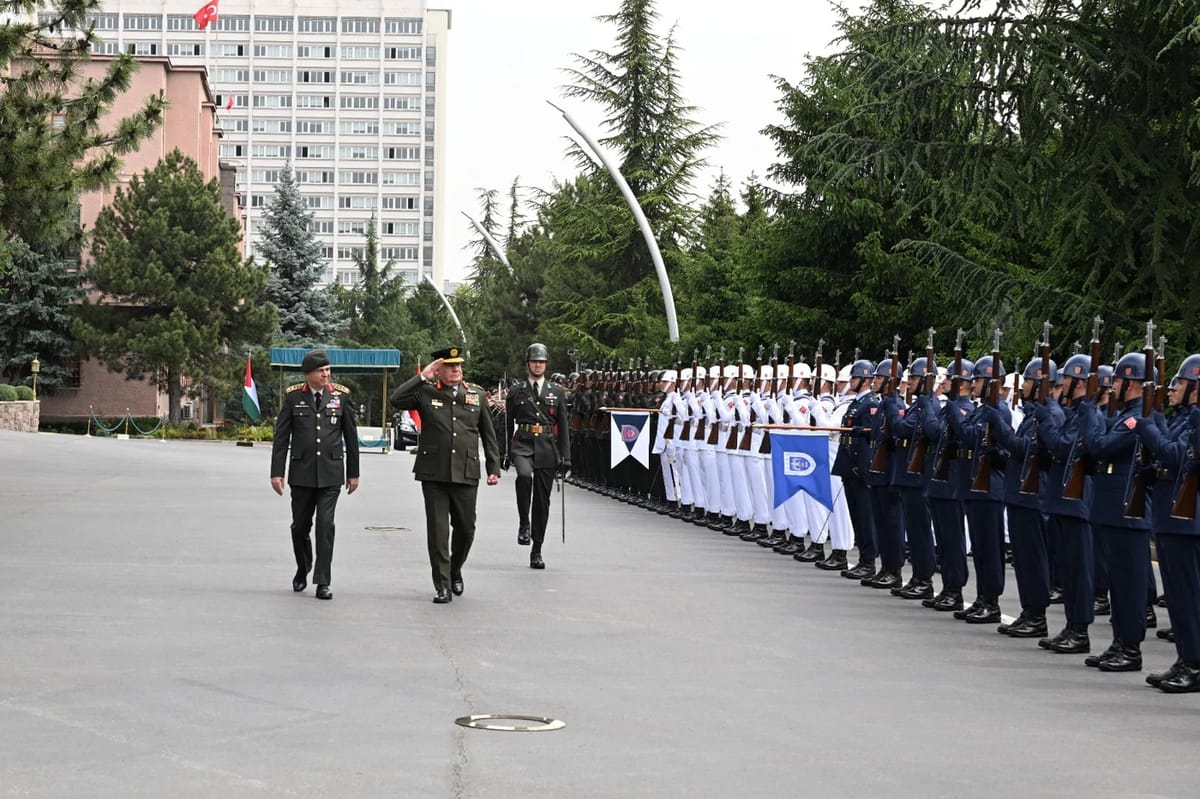
As regional tensions escalated dramatically in late July 2026, Egypt and Jordan made a significant strategic choice: they defended their own territory against Iranian projectiles but refused to launch direct counterstrikes against Tehran, a decision that revealed deep constraints on both nations' freedom of action in the widening U.S.-Iran conflict.
The restraint came despite serious provocations. According to U.S. Central Command, Iran's Islamic Revolutionary Guard Corps launched multiple ballistic missiles at American military installations in Jordan on July 28, forcing Jordanian air defenses to intercept five missiles, according to Jordan's armed forces. Around the same time, Egyptian authorities reported that a fire at two vessels docked at Egypt's Damietta port was caused by a drone strike, marking the first direct attack on Egyptian territory in the escalating conflict.
Neither Cairo nor Amman responded with offensive military action against Iran. Instead, both countries signaled that they would accept defensive casualties but refuse to become active participants in strikes on Iranian territory, a position that surprised regional analysts who anticipated they might join U.S.-led operations.
The decision reflects four interconnected strategic calculations that constrain Egypt and Jordan despite their close alliance with the United States.
Sovereignty and Self-Defense Only
Jordan explicitly stated its position through official military communications: any defensive action on Jordanian soil would be matched by force, but the kingdom would not use its airspace as a launching point for offensive operations against any nation. The message to surrounding states was direct: territory would be protected from transiting projectiles, but Amman would not become a staging ground for attacks on Iranian soil.
Egypt similarly confined its response to defensive measures, emphasizing that its military readiness centered on protecting its own borders and infrastructure rather than projecting power into the broader conflict.
Fear of Economic Collapse and Proxy Retaliation
Both nations understand that a direct strike on Iranian territory would invite systematic retaliation from Iran-backed militias across the region. Pro-Iranian Shiite militias in Iraq, Syria and Yemen have demonstrated capacity to conduct coordinated drone and missile attacks on critical infrastructure, and analysis by defense observers suggests that both Egyptian and Jordanian economic systems are fragile enough to collapse under sustained proxy warfare.
Egypt's already-stressed economy relies on Suez Canal revenues and tourism, both vulnerable to regional instability. Jordan depends heavily on U.S. military aid and access to regional trade routes. A direct attack on Iran would guarantee escalation that neither nation could afford.
According to reporting from multiple outlets, pro-Iranian militias in Iraq coordinated with the Islamic Revolutionary Guard to launch strikes on Saudi Aramco facilities and U.S. bases across the region in late July. On July 29, U.S. Central Command, alongside Saudi forces, conducted joint retaliatory strikes on militia positions in Iraq, reportedly killing approximately 20 Iranian advisers and IRGC personnel. Both Cairo and Amman recognized that joining such operations would place them in the direct line of Iranian proxy fire.
Domestic Political Pressure and Public Opinion
Egypt and Jordan both face significant domestic constituencies deeply sympathetic to the Palestinian cause and skeptical of perceived alignment with Israel against Arab or Muslim nations. Hundreds of Jordanian politicians, lawyers and tribal leaders signed an open letter calling for the expulsion of U.S. forces from the kingdom, a demonstration of the domestic political cost associated with deeper involvement in anti-Iranian operations.
King Abdullah of Jordan has repeatedly expressed concern about regional escalation, with his foreign minister Ayman Safadi warning that Israeli retaliation for Iranian strikes posed a risk of dragging the entire region into a devastating war. That messaging reflects genuine anxiety about domestic stability should governments appear to be fighting on behalf of Israeli security interests alongside the United States.
In Egypt, where public opinion remains volatile following decades of geopolitical turbulence, the political cost of openly joining an anti-Iran coalition while Gaza remains central to Arab consciousness is considered prohibitive.
Preservation of the Mediation Role
Egypt, in particular, has long positioned itself as a critical communications channel between regional adversaries. Launching direct military strikes against Iran would have eliminated Cairo's ability to serve as a mediator in ceasefire negotiations or back-channel diplomacy. Iran's foreign minister, Abbas Araghchi, called Egypt an "important friend and partner" despite the Damietta port strike, a framing that depends on Egypt maintaining some diplomatic distance from direct military operations against Tehran.
For Jordan, a similar but less pronounced dynamic applies. Amman has sought to maintain its role as a bridge between various regional interests, and direct offensive action would have closed off avenues for future negotiation or de-escalation brokering.
The contrast between the behavior of Egypt and Jordan and the aggressive posture of the United States reflects a fundamental difference in vulnerability and risk exposure. Washington can absorb the costs of sustained regional conflict; smaller, economically fragile states cannot. Egypt and Jordan's decisions reveal the limits of U.S. alliance structures in the Middle East when the costs of escalation threaten core state interests.