Gadi Eisenkot presented a draft framework for an independent state commission of inquiry into the October 7, 2023 Hamas attack Wednesday, escalating political pressure on Prime Minister Benjamin Netanyahu just months before national elections and sharpening a fundamental disagreement over accountability for the security failure that claimed 1,200 Israeli lives.
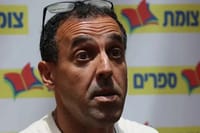
Eisenkot, former IDF chief of staff and leader of the Yashar party now leading in polls, unveiled the proposal at Kibbutz Nir Oz, one of the communities most devastated by the attack. Alongside hostage survivor Gadi Mozes, a Nir Oz resident, Eisenkot framed the inquiry as essential to Israel's national recovery and democratic legitimacy.
"Almost three years after the disaster, Netanyahu and his government are still fleeing responsibility, fleeing the truth," Eisenkot said. "If they were not afraid, they would not be conducting daily false campaigns about the truth in hindsight. They would simply be opening the protocols."
Mandate and Composition
The draft framework, prepared by Mozes and former State Attorney's Advisor Gil Avriel, proposes a commission under the State Inquiry Committees Law with authority to investigate decisions and events by political leadership, the military and security establishment, and relevant civilian agencies in the decade preceding October 7. The inquiry would examine the period from the end of Operation Protective Edge in 2014 through the attack itself.
The framework calls for the Supreme Court president, in consultation with the president of Israel and Knesset speaker, to appoint commission members. A public comment period would run until October 7, 2026, to allow public input before the next government formally establishes the body.
Central Dispute
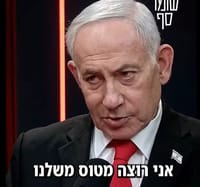
The proposal sharpens the central fault line dividing Israeli political camps. Netanyahu has resisted an independent inquiry since 2023, characterizing it as politically biased. In response, the coalition advanced legislation establishing a politically appointed committee with reduced investigative authority, a move opposition parties have boycotted.
Prime Minister Benjamin Netanyahu has resisted calls for a formal state commission of inquiry, calling it "politically biased." Such commissions, led by senior Supreme Court justices, can summon witnesses, collect evidence, and make recommendations, though the government is not required to follow them.
Opposition Leader Yair Lapid vowed: "In the first month of the next government, we will establish a state commission of inquiry to investigate the October 7 massacre."
Electoral Calculation
The timing of Eisenkot's announcement reflects the political stakes. In an average of all mainstream polls, Yashar is now level with Prime Minister Benjamin Netanyahu's Likud party at 22 seats, making Eisenkot's party not only the largest opposition grouping, but potentially the party with the most support nationwide. Elections are scheduled for October 27, 2026.
Most Israelis want an empowered, independent inquest into the catastrophe, but Netanyahu has resisted the idea, having never admitted personal responsibility. When asked if he would join a government with Netanyahu, Eisenkot said: "Anyone who had a leadership or command position on October 7th is not fit to hold a leadership position moving forward."
Unresolved Questions
When pressed on other contentious issues, Eisenkot offered measured responses that suggested electoral caution. Asked whether Democrats leader Yair Golan would serve as defense minister in an Eisenkot government, he said diplomatically that there were "experienced people" available, avoiding explicit endorsement. On Naftali Bennett's pledge to declare Qatar an enemy state, Eisenkot cautioned against treating such declarations as "election gimmicks," saying such designations required deep examination rather than political theater.
He expressed concern about electoral integrity when asked about concerns over democratic procedures, saying worries about non-democratic elections were "justified," a response that appeared to signal support for additional safeguards around voting procedures.
Hostage Survivor's Endorsement
Mozes, released after months in Islamic Jihad captivity, lent personal weight to the proposal. He framed the inquiry as essential to restoring confidence in Israeli leadership among residents of communities devastated by the attack.
"Without a state commission of inquiry, there will be no sense of security for residents of the Sderot periphery," he said, using colloquial language for the Gaza-adjacent region. "Healing of Nir Oz and the periphery cannot be real without a state commission of inquiry. The next government must establish one."
Military Objectives Unmet
Eisenkot also addressed the current military situation, declaring that Israel's war objectives against Hamas have not been achieved despite military victories and significant casualties. "The goal was to destroy the military-governmental power of Hamas and Islamic Jihad, and that goal has not been achieved," he said. "Achievement will come only when that objective is reached."
The statement reflected criticism from within Israel's security establishment that the conflict has not progressed toward clear political resolution despite lengthy operations in Gaza.
Reconstruction as Political Frame
Eisenkot closed by framing post-war reconstruction of Gaza-adjacent communities as a political imperative. Standing at Nir Oz, where some residents have returned while others remain displaced, he spoke of the need to attract young families and demonstrate that Israel had emerged "stronger, more just and more united" from the ordeal.
"The challenge is that from this very difficult place where we were on October 7, the State of Israel becomes a stronger state, capable of flourishing in security," he said. "The response to the murderers of October 7 will be seeing a doubling of settlement, many children and young families."