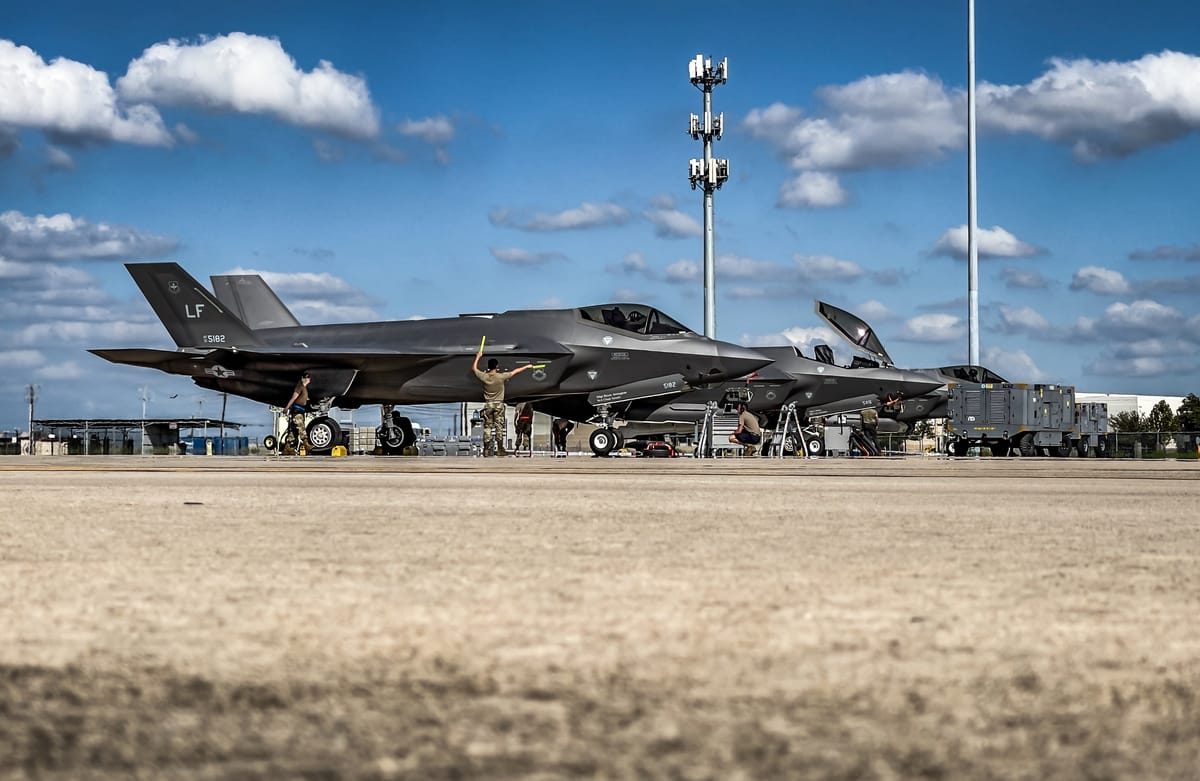
Defense contractor Lockheed Martin confirmed that ongoing Congressional budget debates in Washington will not alter its annual manufacturing target of 156 F-35 fighters, maintaining the highest production rate for advanced combat aircraft in defense history. Company Chairman Jim Taiclet stated that firm customer orders and active international demand dictate assembly line operations rather than temporary political negotiations.
Official defense delivery metrics indicate that by the end of the second quarter, 1,344 F-35 aircraft had been delivered to international customers across all three operational variants, including the conventional takeoff A model, the short takeoff B model, and the carrier capable C model. The active order backlog stands at an additional 317 aircraft, securing continuous production line operations for at least the next two years.
Behind every combat jet stands an extensive network of hundreds of primary suppliers across the United States and partner nations. Executive leadership emphasized that real customer demand drives manufacturing momentum, ensuring component delivery remains stable during periods of fiscal uncertainty in Washington. Beyond new aircraft manufacturing, defense contractors secured ongoing orders totaling 1.6 billion dollars to supply specialized spare parts and advanced avionics for the approximately 1,300 F-35 fighters currently deployed across global defense forces.
The aircraft incorporates advanced defense technologies, including the Northrop Grumman AN/APG-81 active electronically scanned array radar, electro-optical targeting systems, high thrust Pratt & Whitney engines, and encrypted data communications links. The integrated weapons architecture supports air to air missiles such as the AIM-120 and AIM-9X, alongside precision guided munitions including JDAM assemblies and GBU-53/B StormBreaker bombs.
Despite robust manufacturing metrics, an audit released by the Government Accountability Office revealed operational challenges impacting existing operational units. The report documented a drop in mission capable rates over a four year period, declining from 67 percent to 44 percent primarily due to chronic spare parts shortages and software integration issues.
In response to the audit findings, the F-35 Joint Program Office formulated a 13.7 billion dollar remediation plan designed to accelerate spare parts delivery, expand maintenance depot capabilities, and resolve software reliability issues across deployed squadrons. International demand for the platform remains consistent as defense ministries integrate the aircraft into long term military modernization programs.