Get our mobile app
Download on the App StoreGet it on Google Play

Regional arms race

Iran breaks ceiling on missile range

Army spokesman confirms: US forces pulled back 1,000 km from Iranian coast - and Tehran is already working on longer-range, faster and more accurate missiles to reach them

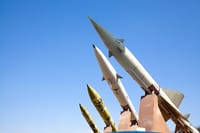
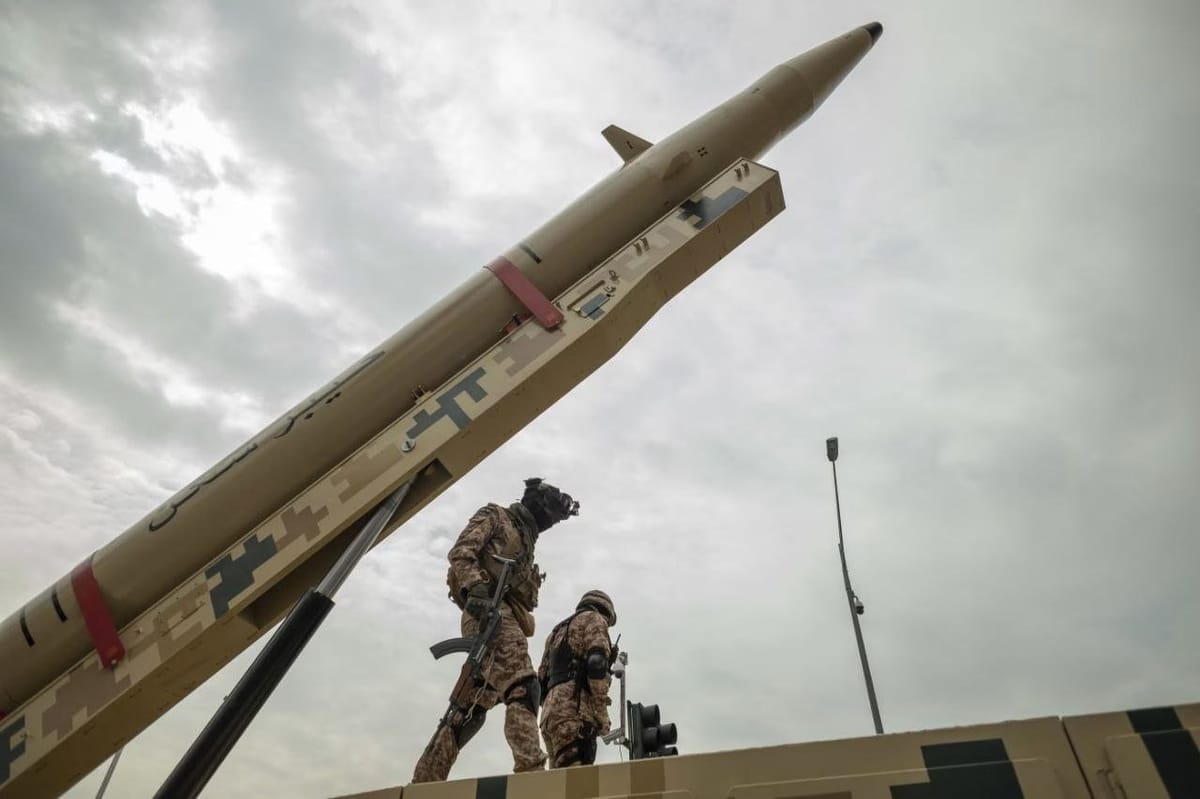
Iranian missile ready for launch

Tehran is not hiding its intentions. In an open interview with the state-run Fars news agency, Brigadier General Mohammad Akrami-Nia, spokesman for the Iranian army, declared that "during the war we reached the conclusion that we must increase the range of our missiles, and we have already begun moving in that direction." The statement marks a significant strategic shift in Iranian military policy.

The tactical reason is clear, according to his remarks: the US Navy and accompanying forces have moved their positions far from the original blockade line, to a distance of about a thousand kilometres from the Iranian coast, outside the Gulf of Oman and the Arabian Sea. To continue posing a real threat to aircraft carriers, destroyers and bases, Iran understands that its current range is no longer sufficient.
Beyond extending range, Akrami-Nia emphasised significant upgrades in speed and accuracy as well. The next generations of missiles, both for ground forces and the navy, are expected to include marked improvements, likely including acceleration in the development of hypersonic capabilities. He noted that missiles already used in the war, including missiles that struck American bases in Kuwait and naval cruise missiles that hit vessels, have proven themselves.

For years Iran maintained a declared limit of around 2,000 kilometres, a range sufficient to cover Israel and most American bases in the Middle East. The current statement signals an official intention to break through that ceiling extensively, which could place broader parts of Europe and additional regions under potential threat.

Iran already possesses an advanced missile arsenal. The two-stage ballistic missile "Sejjil" is powered by solid fuel and capable of crossing the distance toward Israel in about seven minutes. Unlike liquid-fuel-based missiles that require hours of preparation and fuelling, the Sejjil is stored ready for immediate launch within mere minutes from underground missile cities. The missile holds an operational range of approximately 2,000 to 2,500 kilometres.

Missile launch in Iran
Missile launch in Iran (Photo: Islamic Revolutionary Guard Corps)

The Western response

Israel and the West have advanced defence systems that have proven themselves, such as Arrow 2 and Arrow 3 for interception outside the atmosphere, David's Sling, and American AEGIS systems with SM-3 and SM-6 missiles. The strategic challenge is clear: increasing range and speed is designed, among other things, to challenge interceptor stockpiles through dense barrages.

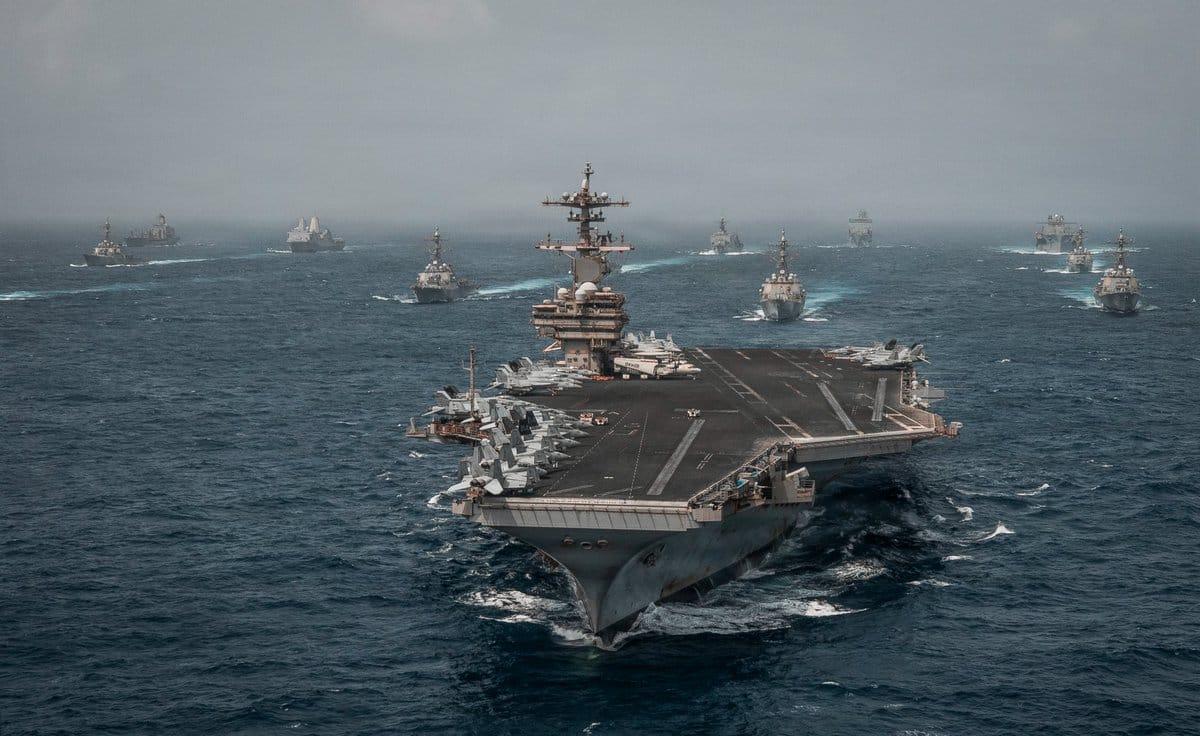
Meanwhile, the United States continues with increased military pressure. According to official American sources, the United States is preparing to deploy up to three carrier strike groups and accompanying ships in the Middle East during November. The move represents one of the largest and most aggressive concentrations of naval power seen in the region since 2003.

US naval forces in the Middle East
US naval forces in the Middle East (Photo: US CENTCOM)

According to the deployment plan, the three giant carriers being considered for positioning include USS George Washington, which has already operated in the Arabian Sea, USS George H.W. Bush, currently in the Indian Ocean, and USS Theodore Roosevelt, which recently departed San Diego and is currently crossing the Pacific Ocean. This massive force is expected to concentrate together approximately 20,000 crew members and fighters, up to 150 advanced combat aircraft, and a long line of destroyers armed with lethal missiles and advanced interception capabilities.

In addition, the amphibious ready group "Makin Island" is being sent to the region from California, to join the "Boxer" group that has already been operating in this area for months. Each amphibious group alone carries more than 4,000 sailors and Marines ready for combat. With this addition, the number of American troops stationed in the Middle East will jump to approximately 50,000 fighters.

President Donald Trump hinted in an interview that he intends to renew and expand heavy bombardment against the ayatollahs' regime in Iran. Meanwhile, diplomatic efforts, primarily through Qatar, are stuck, partly because of Iran's continued blockade of the Strait of Hormuz.

The Iranian statement is not merely a technical announcement. It is a clear message: Tehran is drawing lessons, upgrading capabilities, and preparing for the next scenario — whether diplomatic or military. The Middle East, and perhaps beyond, will have to deal with the implications.

Ready for more?

Join our newsletter to receive updates on new articles and exclusive content.

We respect your privacy and will never share your information.

Enjoyed this article?

Yes
No
Follow Us:

Unmissable content


Loading comments...

Also of Interest