As negotiations over shipping through the Strait of Hormuz languish without visible progress, Iranian state media launched an escalating propaganda offensive this week, declaring the Trump administration weak and claiming Tehran has seized the upper hand in the contest that has roiled global oil markets since spring.
The Keyhan newspaper, regarded as the Islamic Republic's official voice, published a stark headline Wednesday declaring Trump had "failed again," while another state outlet, Vatan-e Emrooz, framed the crisis as an economic war where Iran controls the decisive battlefield. The rhetorical salvo reflects Tehran's strategy of projecting strength even as the negotiations remain mired in fundamental disagreements.
"Trump is stuck in the mud of his own creation," according to an article in Keyhan, which accused the U.S. president of attempting to conceal weakness through threats. The paper claimed that reports from Western media outlets documented shortages in American missile interceptors and turmoil in global energy markets, which it argued proved Washington's vulnerability rather than strength.
The Pattern of Broken Deadlines
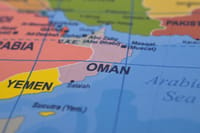
The Iranian claims arrive as both sides struggle to explain their contradictory public statements about the state of talks. The Trump administration has repeatedly announced that negotiations are imminent or ongoing, only to have Tehran flatly deny that direct discussions are taking place. Treasury Secretary Scott Bessent told CNBC on Tuesday that an agreement could materialize "today or tomorrow," while Iranian officials simultaneously said they were negotiating only with Oman, not with the United States.
This pattern has repeated several times since spring. On April 7, Trump warned that "a whole civilization will die tonight" if Iran did not agree to end the war and reopen the Strait of Hormuz. Hours later, a two-week ceasefire between the countries was announced. On April 21, the day before the ceasefire was set to expire, Trump said he expected "to be bombing" if negotiators couldn't reach a deal. Later that day, he extended the ceasefire. CNN
The cycle has undermined credibility on both sides. Each Trump ultimatum followed by an extension or reversal has eroded the implicit threat behind U.S. demands, while Iranian insistence that it is not negotiating directly with Washington—even as indirect talks through Oman continue—has created persistent confusion about whether either side is genuinely committed to resolution.
Iran's Economic Leverage
The Iranian state media's confidence reflects an assessment, shared by some international analysts, that the disruption to global energy supplies gives Tehran structural advantages in a prolonged standoff. The Strait of Hormuz handles roughly 20 percent of the world's oil shipments, making it one of the most critical chokepoints in global commerce.
According to Iranian officials, control over the waterway and the threat of further disruption constitute Iran's most effective tool for extracting concessions from Washington. Vatan-e Emrooz framed the conflict as fundamentally economic, asserting that "control of oil flows and domination of the maritime passage is Iran's central lever of pressure, and manipulating the global energy market is the most effective instrument for achieving gains against Washington."
The framing is not without merit. With traffic through the bottleneck still at a trickle of its peacetime flow, the international oil benchmark Brent crude rose again by 2.7% Tuesday, reflecting uncertainty in the market rather than any confidence in the diplomatic process. The persistent elevation in global oil prices reflects market anxiety about whether a deal can be reached, or whether the conflict will intensify further. NBC News
The Question of American Ammunition
A recurring theme in Iranian media is the assertion that the U.S. military has exhausted critical supply stocks, particularly air defense interceptors. The claims reference reporting about shortages in long-range missiles that have been deployed to defend American positions and regional allies from Iranian attacks.
However, the extent to which these shortages have undermined Trump administration flexibility remains contested by defense analysts. Some argue that supply constraints may push the White House toward negotiation; others contend that the U.S. retains substantial military capacity and that Iranian characterizations of American weakness are exaggerated.
The Regional Audience
The propaganda campaign serves multiple audiences simultaneously. Domestically, it projects confidence in Iran's leadership ahead of what could be an extended stalemate. Regionally, it may be designed to reassure allies and resistance groups that Tehran has not capitulated to American pressure. Internationally, the claims attempt to shift the perception of who is willing to compromise versus who is unreasonably rigid.
Notably, the Iranian media offensive began just as regional mediators—including Oman, Qatar, and Saudi Arabia—continued working behind the scenes to narrow differences between Washington and Tehran. Those quiet diplomatic efforts have produced tentative agreements on technical questions, such as shipping corridor design and safety protocols, but have not resolved the fundamental political barriers to a comprehensive deal.
Unresolved Core Disputes
The essential disagreement remains unchanged. The Trump administration demands that Iran cease all interference in the Strait of Hormuz and submit to enhanced verification of its nuclear program. Iran insists on retaining a supervisory role over transit through the waterway and rejects what it characterizes as American demands for unfettered access to its military facilities.
Neither side has signaled willingness to concede on these core positions. The result is a grinding diplomatic impasse, with talks conducted through intermediaries rather than direct engagement, even as the two sides exchange increasingly caustic rhetoric.
The Endgame Uncertainty
The Iranian narrative of American failure may contain elements of wishful thinking. Yet it also captures something real: the indefinite extension of a crisis that has already reshaped global energy markets and regional security dynamics. Whether that situation favors Iran or the United States depends on questions that remain unanswered, how long oil markets can sustain elevated prices, whether regional actors will continue mediating indefinitely, and whether either leadership has room to compromise without appearing to capitulate.
For now, Iranian state media has chosen to proclaim victory and mock Trump's apparent inability to force a settlement. Whether that confidence proves justified or merely reflects propaganda designed to disguise desperation will become clear only as the stalled negotiations unfold.