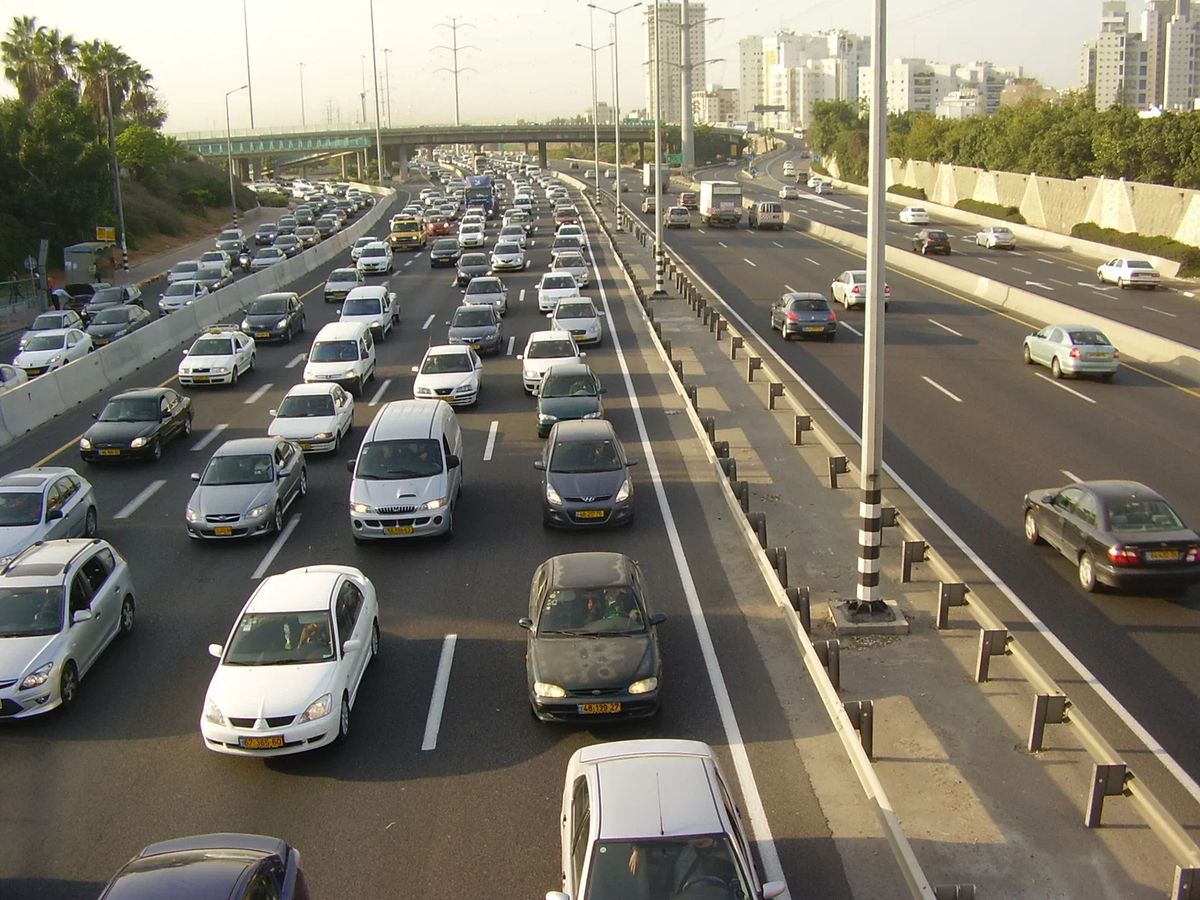
Israeli planning authorities are advancing a sweeping, multi-billion-dollar infrastructure initiative designed to fundamentally reshape Route 4, one of the country’s most heavily congested transit arteries. The ambitious blueprint, designated as National Infrastructure Plan (TTL) 110, aims to dismantle the historical gridlock plaguing the central metropolitan region while transforming how the highway interacts with bordering municipalities, including the densely populated city of Bnei Brak.
Newly disclosed details of the sweeping initiative reveal that the centerpiece of the modernization project involves digging a massive subterranean vehicular tunnel directly beneath the existing highway. Running between the Mesubim and Em HaMoshavot interchanges, the tunnel is designed to segregate regional through-traffic from localized transit.
According to planning documents obtained by Kikar HaShabbat, the strategic objective is to siphon off drivers transiting through the central district without stopping, thereby easing severe bottlenecking at the surface level. By isolating through-traffic underground, transportation officials expect to dramatically improve traffic flow into adjacent municipal commercial centers and residential hubs.
The surface-level footprint of Route 4 will simultaneously undergo an extensive overhaul. Current designs incorporate a dedicated right-of-way for public transportation lanes. Furthermore, a central median strip has been legally preserved to accommodate a future light rail line, matching the Ministry of Transport and Road Safety's long-term master plan to expand mass transit infrastructure across the Tel Aviv metropolitan area through 2050.
Beyond traffic remediation, the scope of TTL 110 introduces an unprecedented consolidation of regional utilities. The plan outlines the creation of a dedicated utility tunnel stretching between the Sorek switching station near Rishon LeZion and the Morasha switching station near Ramat HaSharon.
This secondary underground conduit will centralize electricity, fuel, and telecommunications corridors that are currently scattered in fragmented, over-ground lines across the region. Officials note that burying these sprawling utility lines will systematically eliminate stringent zoning and planning restrictions that have historically stifled development on lands adjacent to the highway, potentially unlocking prime real estate for future residential housing, commercial high-rises, and public facilities.
The plan represents a fundamental paradigm shift in how Israeli urban planners view major transportation corridors. Historically, Route 4 has functioned as a severe physical barrier—a concrete wedge dividing neighborhoods and effectively isolating adjacent municipalities from one another.
Recent updates to the project profile indicate that the National Infrastructure Committee within the Planning Administration is deliberately embedding structural flexibility into the blueprints. The long-term objective is to facilitate a gradual evolution of the corridor from an expansive, high-speed intercity highway into a tightly integrated metropolitan avenue. By incorporating pedestrian and vehicular overpasses alongside localized urban developments directly flanking the route, planners hope to restore regional urban continuity.
While TTL 110 remains within the formal regulatory planning phases and must clear final statutory approvals, the scope of the project points to a broader conceptual shift away from conventional lane-widening toward a holistic, multi-layered redesign of critical national infrastructure.