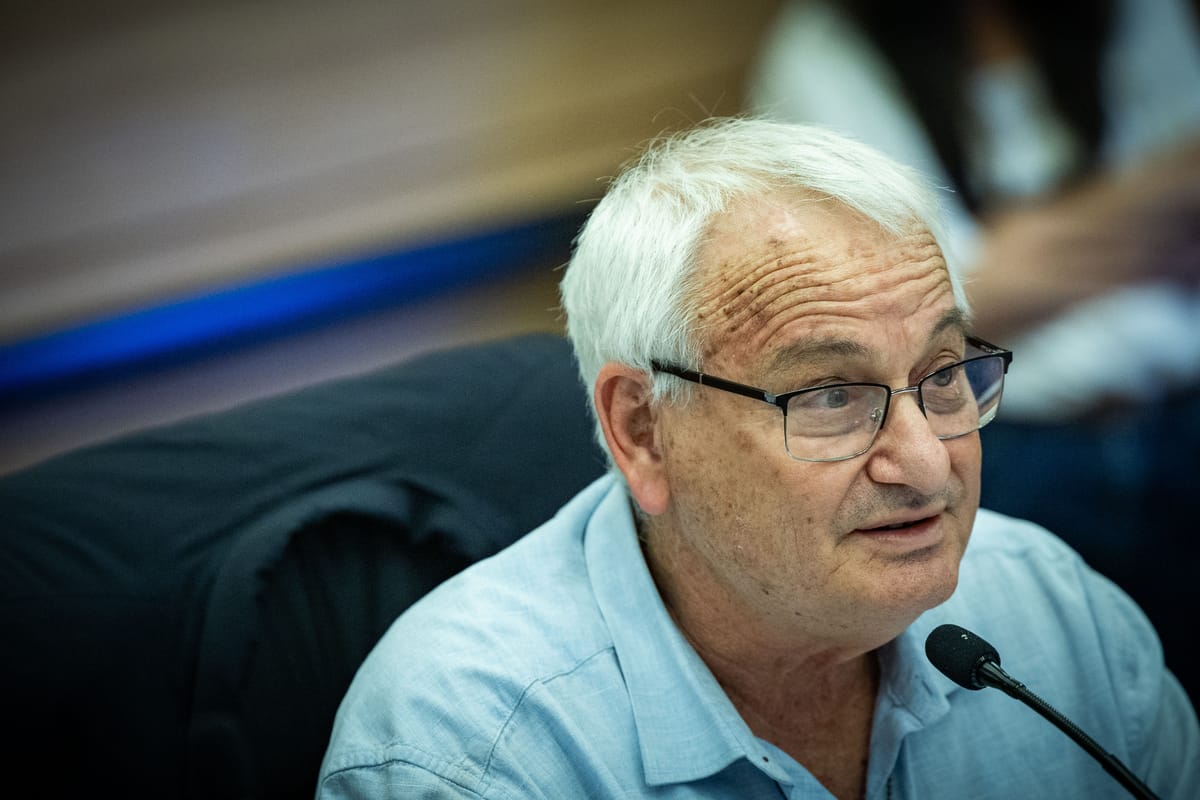
The Knesset State Control Committee convened Thursday for a hearing on seawater desalination facilities and oversight, against the backdrop of an unprecedented crisis that has struck Israel's water sector in recent weeks. At the end of August, an unusual algae bloom and extreme spike in seawater turbidity led to the shutdown or curtailment of five of Israel's six major desalination plants.
Committee chairman MK Alon Schuster said the current crisis has brought longstanding deficiencies back into focus. "The current crisis resurfaces the shortcomings highlighted by the State Comptroller in his reports, chief among them the lack of adequate long-term planning and the need to preserve natural water sources as a strategic reserve," Schuster stated. "We cannot predict everything, but we need to prepare ourselves for emergency events of this kind."
"Alongside strengthening the desalination system, the state must avoid exclusive reliance on it as much as possible and ensure that the Kinneret and the aquifers are preserved as backup sources for crisis situations," he added.
Representatives from the State Comptroller's office noted that the crisis illustrates the need they warned about in recent audit reports. According to them, Israel is expected to rely increasingly on desalination facilities due to growing water demand and declining natural water supply, and therefore preparation is required for cases where continuity of their operation is impaired.
Among other issues, the Comptroller pointed to the need to preserve natural water sources, rehabilitate aquifers, develop the drilling and treated wastewater systems, and establish desalination facilities on schedule and with geographic distribution.
The hearing revealed that the Water Authority has not completed a comprehensive master plan for the water sector. Comptroller representatives noted that failure to complete long-term planning damages the ability to prepare for crisis situations. It was also revealed that the plan for developing the desalination sector through 2050 was not approved on the timeline examined in the audit; in May 2026, the Water Authority council approved production capacity in the desalination sector for 2050 and 2075, and in June 2026 the government approved desalination facility production capacity for 2050.
Data from the State Comptroller's office presented at the hearing shows that in 2024, approximately 540 million cubic meters of water were produced by desalination facilities, compared to a production capacity of approximately 800 million cubic meters set in the concession agreements. The cumulative desalination volume in 2024 was lower by approximately 225 million cubic meters than production capacity—an amount equal to roughly one-third of the available water volume in the Kinneret. It was further reported that as of September 2026, the Kinneret level is approximately 0.41 meters below the lower red line.